


 US Treasury Yields Ease After Strong 10-Year Auction as Global Bonds Struggle
  Mike Rogers Calls for End to US-Canada Tariff War
  France to Release 10 Million Barrels of Diesel to Ease Fuel Prices
  David Schwartz to Reveal XRP Ledger Future at Ripple Swell 2026
  European Stocks Fall as Oil Rises Ahead of Fed Minutes
  US-Led Coalition Targets Global Factory Overcapacity
  Cardano Price Eyes $0.30 as ADA Whale Activity Surges
  Asian Currencies Steady as Dollar Eyes Fourth Weekly Gain
  Iran Refuses to Halt Uranium Enrichment Amid US Nuclear Demands
  DWF Labs Sues BitGo for $114 Million Over Alleged Token Sales Breach
  Solana Price Drops 3% Despite Samsung USDC Partnership
  US Government Moves $1 Billion in Bitcoin Amid Sale Speculation
  US Stock Futures Flat as Fed Minutes, Earnings Loom
  Bangladesh GDP Growth Accelerates to 4.6% on Industrial Rebound


 Add as a preferred source on Google
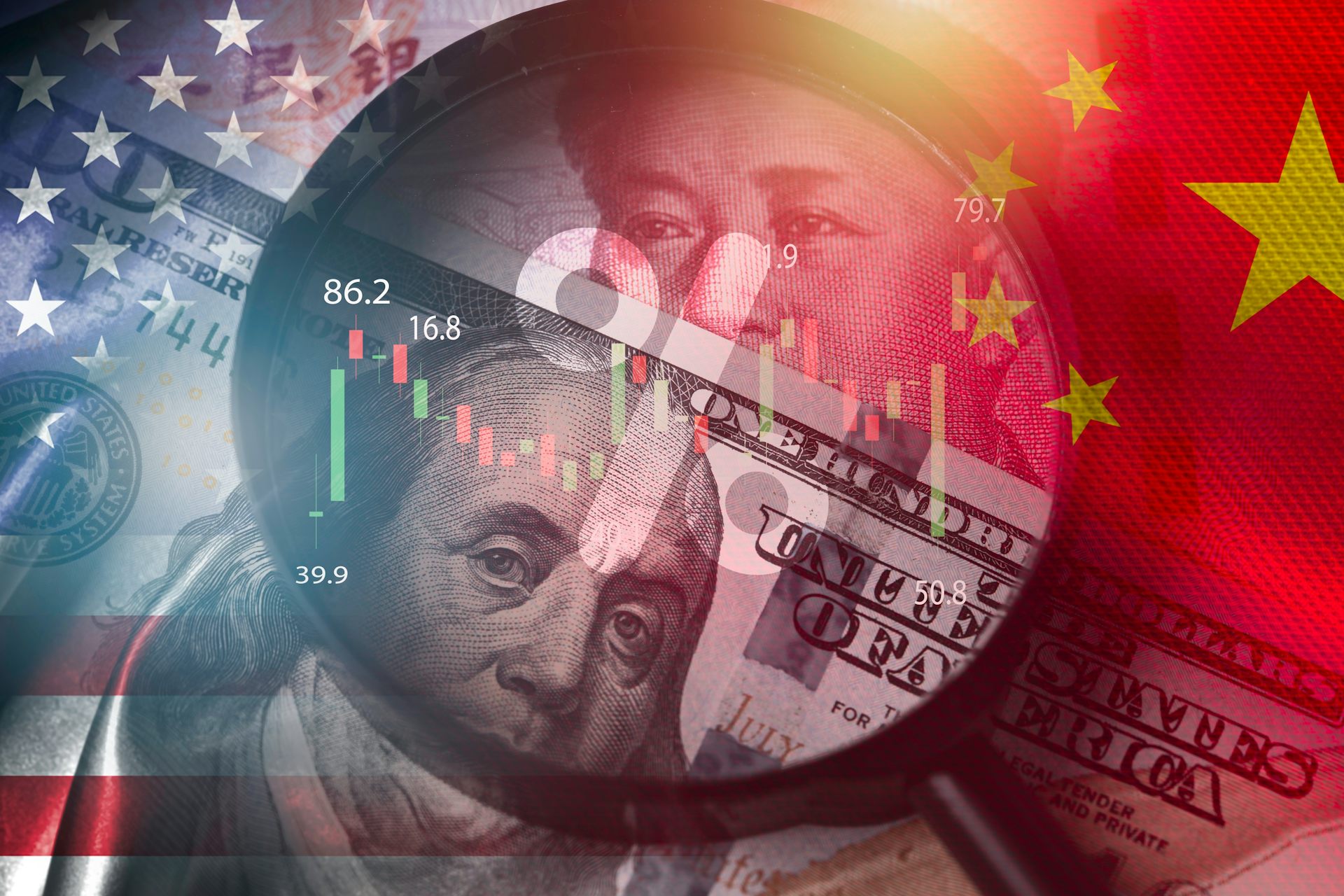


For a superpower like the US, free trade is, in practice, an invitation to partake in its wealth. But it also implies an obligation, including political support (or at least non-opposition) and an expectation that the poorer nation will give back part of its new riches by buying the superpower’s exports. This, in essence, is the system that has worked wonders for the US for nearly 75 years.
From 1978, the People’s Republic of China signalled its acceptance of this invitation by opening its first “economic free zones” in several of its provinces, which began to open up the Chinese economy to the outside world. It was an extraordinary moment, when former enemies the US and China willingly chose a new path focused on trade.
Then in 2001, after more than two decades of a relationship characterised by mutual admiration, mistrust and suspicion, China joined the World Trade Organization (WTO) – and over the next 11 years, further built up its relations with the US.
But China did not play completely fairly. It subsidised and protected its nascent industries, manipulated its currency and forced technological transfer (meaning that foreign companies had to enter joint ventures with local firms, sharing their technology and intellectual property).
At the same time, China did not abandon its communist system as the US would have liked. Nonetheless, it was getting richer – and companies from other advanced economies were in turn benefiting from its new wealth.
But between 2012 and 2015, China made some serious mis-steps from the the US’s point of view. The Chinese government made clear it had ambitions to surpass the US both economically and militarily. As such, the “obligation” that arose when it accepted the US’s free trade offer was effectively voided.
On top of this, China was shutting down its market to some of the most innovative, fast-growing and strategic US companies – namely Alphabet (Google) and Meta (Facebook and Instagram) – shattering the expectation of reciprocity that free trade implies.
A new order
Donald Trump’s first election win in 2016 was symptomatic of the breakdown of this old order as the president denounced trade agreements like Nafta, started trade wars with China and the EU, and imposed tariffs. His re-election marks the definitive transition to a new order.
Trump’s vision for international trade is highly transactional, where countries fight for market share and access to resources. Economic gains for some nations spell losses for others. This, arguably, is the definition of unfettered mercantilism – a protectionist system where countries try to maximise exports while minimising imports.
Trump’s proposals to integrate Canada and Greenland, and reintegrate the Panama Canal, into the US – as he mentioned again in his inaugural address – exemplify this vision of global trade. Danish sovereignty over Greenland now appears less acceptable to the US, in a world where China is a formidable economic adversary. Resources, in particular the rare earth minerals used in the manufacture of batteries for electric vehicles, might be a large motivating factor.

Trump’s play for Greenland is part of a changing world order. Hadrian/Shutterstock
Capturing more market share for China’s exports has long been an aim for its manufacturers. China did this very well in a rule-based trade system where the country was able to defend itself at the WTO from accusations of dumping (selling its goods abroad below the cost of production) and other unfair trade practices. But it’s far less clear how the country will sustain this in a more protectionist world.
Pursuing greater market share through short-term dumping might become self-defeating. Foreign markets could close completely to Chinese exports when governments – at least, those powerful enough to resist diplomatic pressure from China – realise their local industries are being hit. Recent data showing Chinese trade increasing while its corporate profits are declining points in this direction.
Unless there is a major political breakthrough in relations with the US under Trump, China is likely to be pushed to retaliate by putting up even more trade barriers, such as tariffs and regulations.
Historical lessons from the last mercantilist era – from the end of the Spanish Golden Age to the French Revolution – tell a story of ever-changing alliances and ruthless political and economic competition between nations, as well as constant conflicts. Now, too many contemporary signals – including trade wars, challenges to long-term alliances and trade agreements, and the stockpiling of key materials – point towards this pattern for the world to ignore them.
For business leaders, this will have important consequences. Concepts like comparative advantage, economies of scale and the flexibility of being able to manufacture in various parts of the world – which have driven the rapid growth of international trade in the last four decades – are likely to become less important.
Instead, security, strategic sectors such as energy and mineral mining, and industrial policy will take precedence. This could change business leaders’ perceptions of risk, how trade networks are structured, and the flow of global investments. And for consumers, higher prices and reduced choice might also become more apparent as the consequences of this new trade order begin to materialise.







