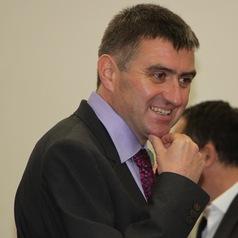
University of Portsmouth I’m a lecturer at the University of Portsmouth, teaching video game design and development. I specialise in narrative and cognitive psychology and bringing those to storytelling and game design.
Professor of Political Economy, University of Warwick Ben recently won a highly prestigious Leverhulme Major Research Fellowship for a project entitled, ‘The Office for Budget Responsibility (OBR) and the Politics of UK Growth amidst Brexit, Uncertainty and Austerity’. This will run from October 1st 2018 to September 30th 2021. Ben's wider research interests lie in comparative and international political economy, and he has published widely on the IMF, French and comparative capitalisms, the politics of economic ideas, capital mobility and economic policy autonomy, the political economy of social democracy, and French and British politics in journals including The British Journal of Political Science, Journal of Common Market Studies, The Journal of European Public Policy, The Review of International Political Economy, New Political Economy, Party Politics, and Political Studies.
Senior Lecturer in Media, Sheffield Hallam University I am a Senior Lecturer in Media and the Course Leader for BAHons (Media). I am currently teaching multiple modules for BA(Hons) Media and MA in Global Communication and Media. My research focuses on cultural and technical aspects of social media including influencers, platforms, content, audience, participatory culture and algorithmic networks. My current research focuses on YouTube video networks, audience engagement with YouTubers, and gamification elements on online streaming apps. I was awarded a PhD in Digital Media and Communication, and an MSc in Design and Digital Media (with Distinction) both at the University of Edinburgh.
Lecturer in Intellectual Property Law, University of Sheffield Andrea is an academic researcher and teacher specialised in Intellectual Property Law. Before joining the School of Law of the University of Sheffield, he worked as Senior Research Fellow at Max Planck Institute for Innovation and Competition (Munich, Germany) where he led the research team on the Law of Geographical Indications. He also worked as 'Adjunct Professor in Intellectual Property, Innovation and Sustainable Development' at the University of Milan. He advises private and public stakeholders on matters related to Geographical Indications, including the European Commission. His scientific outputs are award-winning and regularly published in top IP Law Journals. In 2022, his book 'The Transformation of EU Geographical Indications Law' (Routledge 2021) was elected 'Best Trade Mark Law Book 2021' by the readers of the top IP information website 'IP Kat'.
Research Fellow, University of South Wales I joined the University of South Wales (USW) in January 2015 and worked alongside Professor Fiona Brookman on the Homicide Investigation and Forensic Science Project (funded by The Leverhulme Trust). The project examined the role of forensic science and digital technologies within British homicide investigations. Through this project, I have gained substantial experience of interviewing homicide detectives, forensic scientists, and digital experts, and observed several live homicide investigations, from crime scene through to court. Findings from the project have been disseminated widely, for example, they have helped to inform the Home Office Impact of Forensic Science project. We are continuing to analyse the data and engage with key stakeholders from the Home Office, Forensic Capability Network and National Police Chiefs’ Council. I am also working alongside Dr Cheryl Allsop at USW. In May 2022, we were awarded £121,802 from the Home Office STAR fund to work on cases of missing people considered murdered. The project, 'Missing-Murdered: Identifying Vulnerabilities and Risk Factors’ will run until the end of March 2023 and seeks to understand commonalities and characteristics to assist in developing toolkits for frontline police officers to mitigate against the challenges and risks associated with recognising and responding to homicide in missing persons investigations. Assessing accurately who will come to harm is difficult yet, when dealing with cases of missing persons considered murdered, the initial response to the missing person report is the most important factor for solving the homicide and any delays in recognising and responding to a potential homicide will reduce the chances of solving it. The project will help the police to spot the triggers which might indicate homicide when dealing with missing person reports. Prior to joining USW in January 2015, I worked for Leicestershire Police for over twelve years. This included roles as a Crime Recorder/Receiver and Research Officer. Between June 2007 - November 2010, I worked as the Protecting Vulnerable People Intelligence analyst, with analytical responsibility for the Public Protection Investigation Unit, which included the child abuse investigation unit, sexual and dangerous offenders, serious sexual offences, and child sexual exploitation. I utilised analytical techniques and specialised IT software (i2 Analyst Notebook) to create analytical products, which assisted detectives in the investigation of crime and the presentation of material at court. Most recently (November 2010 - January 2015), I was a Review Officer - I worked as part of a team reviewing undetected homicides, domestic homicides, stranger rapes, cold cases, serious and organised crime, and long-term missing persons. I outlined recommendations for further work, identified good practice, and ensured the investigation conformed to nationally approved standards, had not overlooked any investigative opportunities and had been conducted with integrity and objectivity. As part of this role, I gained experience of using police databases such as HOLMES (used for major crimes) and COMPACT (used for missing person investigations). I also observed post-mortems and completed placements with forensic services, the dog section and firearms unit.