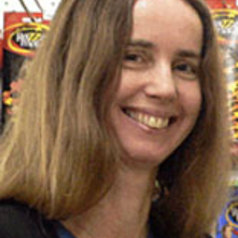
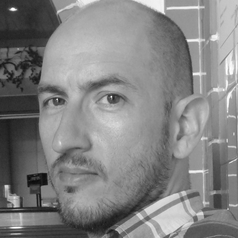
Stephen Taylor is Professor of Financial Accounting and Associate Dean-Research in the Business School at the University of Technology – Sydney. He is the current chair of BARDSNet and a member of the advisory board for the European Academic Guide to Journal Quality. Journals in which his research has been published include Journal of Accounting and Economics, Contemporary Accounting Research, Journal of Financial and Quantitative Analysis, Journal of Corporate Finance, Journal of Banking and Finance, Journal of Business Finance and Accounting, Journal of Accounting and Public Policy, Abacus, Accounting and Finance and Australian Journal of Management. He is currently an Associate Editor of Accounting Horizons and serves on editorial boards including Contemporary Accounting Research, Auditing: A Journal of Practice and Theory, International Journal of Accounting, Accounting and Finance and Australian Journal of Management. He has had a number of large ARC Grants (Discovery and Linkage). He is currently a Director of SIRCA Ltd and the Capital Markets Co-operative Research Centre (CMCRC), as well as being a member of the Advisory Council for the Centre of International Finance and Regulation (CIFR). He is an academic advisor to Plato Funds Management.
Professionally, I spent 17 years working in software engineering for organisations such as British Telecom, Telstra Australia, Fitch Ratings, James Cook University and Lumata. Academically, I have recently returned to university to do a doctoral thesis on robot ethics. The working title is "Moral Code: Programming the Ethical Robot." To date, I have given 3 conference papers on programming ethics into robots.
Professional Memberships: Secretary of the Cultural Studies Association of Australasia Australian and New Zealand Shakespeare Association (member) Research Interests: Australian and global migration, multiculturalism, race and ethnicity, cultural studies, sport (esp. soccer), popular culture, Australian studies, Eurovision, gender studies. Most Recent Research Outcomes: "Skirting the issue: finding queer and geopolitical belonging at the Eurovision Song Contest," Contemporary Southeastern Europe, vol. 2, no. 1 (2015), pp. 136-154. Review of Tony Bennett (ed.), Challenging (the) humanities, (Melbourne: Australian Scholarly Publishing, 2013), Queensland Review, vol. 21, no. 2 (December 2014), pp. 235-236. “Of Nerds and Men: Dimensions and Discourses of Masculinity in Nerds FC,” in The Sports Documentary: Critical Essays, eds Zachary Inglis and David Sutera, Lanham, MD: Scarecrow Press, 2013. “In the spirit of reconciliation: migrating spirits and Australian postcolonial multiculturalism in Hoa Pham’s Vixen,” in Spectral Identities: Ghosting in Literature and Film, eds Melanie Anderson and Lisa Sloan, Newark: University of Delaware Press, 2013.
Professor Beth Webster is the Director of the Centre for Transformative Innovation at Swinburne University of Technology. Her area of study is the economics of how knowledge is created and diffuses through the economy. On these topics alone she has authored over 100 articles in outlets such as RAND Journal of Economics, Review of Economics and Statistics, Oxford Economic Papers, Journal of Law & Economics and Cambridge Journal of Economics. She has been appointed to a number of committees including the Lomax-Smith Base funding Review; CEDA Advisory Council; the Bracks Automotive review; the Advisory Council for Intellectual Property; the European Policy for Intellectual Property Association; the Economic Society of Victoria and the Asia Pacific Innovation Conference. She is also holds honorary research positions at the Universities of Melbourne, Oxford and Tasmania. She has a PhD (economics) from the University of Cambridge and economics degrees from Monash University.
Alexandre is a PhD student in the School of Architecture, Design and the Built Environment. Alexandre has a strong interest in environmental sustainability through design and his research is looking at optimised lifespans for passenger cars: more specifically, how automotive design can contribute to and influence the reduction of material demand through strategies such as structure modularity, re-use of (more) parts, upgradability, improved manufacturing and re-manufacturing. Alexandre's interest stemmed from reflection on the automotive industry as a whole, producing more than 80 million cars a year worldwide, and how vehicles are used and disposed, often too soon, despite their potential to last longer. Also the impending scarcity of raw materials due to an expected rise in global population and a growing middle class who will demand more new products and put more pressure on an already polluted and saturated environment. Alexandre's research will address the design stage and its influence on product use, durability, longevity and new forms of personal mobility; it will also consider assembly and disassembly processes and business models in order to understand how this interconnected relationship of three processes / disciplines can contribute to reducing material demand from a product longevity perspective and divert materials from end-of-life and give them an extended life. A design framework will be devised to assist automotive designers to incorporate optimised lifespans throughout the development of passenger vehicles. In order to accomplish this Alexandre interviewed key people in the automotive industry who have influence in car design and development. The data gathered from experts will be analysed and will inform the design framework. Alexandre has an automotive industry background and a degree in automotive product design. Alexandre also studied business administration and lectured in Product Design and Marketing for two years. Alexandre is also a storybook author with a published anthology.
After obtaining an undergraduate degree from Appalachian State University in Boone, NC and then a masters degree from the University of North Carolina Wilmington, Dr. William Brink, CPA, CFP began his career in public accounting working for McGladrey in Wilmington, NC. These years of professional experience would prove to be helpful as Dr. Brink attended the University of South Carolina for his doctoral degree in Accountancy. Today, Dr. Brink lives in Oxford Ohio and is an Assistant Professor of Accountancy at Miami University.