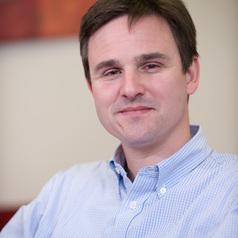
Professor of Ecology, The University of Western Australia Raphael Didham is Professor of Ecology in the School of Animal Biology at the University of Western Australia, with a joint research position at CSIRO Ecosystem Sciences. Professor Didham received his PhD from Imperial College of London in 1997 and completed a postdoctoral fellowship at the University of Delaware, USA, before holding a faculty position at the University of Canterbury, NZ, for 10 years. The goal of Professor Didham’s research is to quantify the synergistic effects of multiple drivers of global change on biodiversity and ecological resilience of remnant natural ecosystems within production landscapes, with a particular focus on conserving invertebrate biodiversity and maintaining natural pest control services.
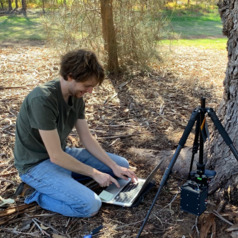
Postdoctoral Fellow in Biosecurity, Murdoch University I am an entomologist, evolutionary biologist, behavioural ecologist, and biosecurity researcher. I completed my PhD at the University of Western Australia in 2019, where I worked on the social evolution of sexual conflict with Prof Leigh Simmons and Prof Joseph Tomkins. Subsequently, I spent a year at the University of Exeter investigating the interplay between kin groups and alternative reproductive tactics with Prof David Hosken, Prof Nina Wedell, and Prof Joseph Tomkins. In 2021, I was fortunate enough to secure a Forrest Fellowship at UWA and CSIRO, where I collaborated with Prof Raphael Didham and Dr Bruce Webber to conduct groundbreaking new research on the ecology of warfare between native and invasive ants. At the time of writing, I am a Postdoctoral Fellow in Biosecurity at Murdoch University's Harry Butler Institute, where I am investigating the risk of hitchhiker pests in the global shipping pathways, along with Prof Melissa Thomas and Prof Simon McKirdy. I am generally interested in the effects of behaviour on species ecology, particularly in insects, and am keen to expand on my previous work on the ecology and dynamics of non-human warfare.
Postdoctoral Teaching and Research Fellow, University of Sydney Dr Danica Jenkins has a PhD in European Studies at the University of Sydney. Her research areas are the intellectual and cultural history of Russia, Eastern Europe and South Eastern Europe.
Director School of Medicine and Psychology, Australian National University Professor Paul Fitzgerald is the Head of the School of Medicine and Psychology at the Australian National University. He is an academic psychiatrist with a MBBS degree, Masters of Psychological Medicine and research PhD from Monash University. He has conducted an extensive range of experimental studies and clinical trials, focused on the development of novel treatments options for patients with depression, schizophrenia, obsessive compulsive disorder, PTSD, autism and Alzheimer’s disease with a special interest in repetitive transcranial magnetic stimulation (rTMS). He has had continual NHMRC grant support for 20 years and over $10 million in research support in the last 5 years. He has published several books, over 500 journal articles and been cited over 25,000 times. He has established multiple clinical rTMS services, founded several device and clinical service companies and led a national application to MSAC in the Federal Department of Health which resulted, in 2021, in Medicare funding ($280 million in year 1) for rTMS therapy for patients with depression.
Adjunct professor, Physics, L’Université d’Ottawa/University of Ottawa My current research interest is in astrophysics, cosmology, and general relativity, especially the dynamics of the universe under evolutionary physical constants beyond the standard model. I have shown that variations of constants are correlated and thus are not possible to observe as, in most observations, they cancel, e.g., lunar laser ranging, binary pulsar timing, gravitational lensing, and evolution of planetary orbits. I have hypothesized that the observed redshifts of distant galaxies are not only due to the expansion of the Universe but also caused by the photons losing energy due to cosmic drag while traveling over large distances. I currently teach astrophysics and cosmology to senior undergraduates and graduate students. I enjoy teaching and learning through teaching.