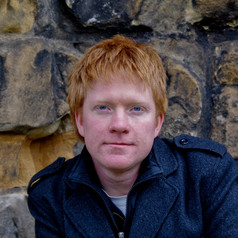
Research Associate Professor & UWA Research Fellow, The University of Western Australia Aaron Robotham did his PhD at the University of Bristol between 2005-2008. This involved analysing the contents of groups of galaxies discovered in the Australian led 2dF Galaxy Redshift Survey. He subsequently moved to St Andrews in the UK and began working on the Galaxy And Mass Assembly (GAMA) survey, which had a large amount of observing time on the Anglo-Australian Telescope in NSW. Using this data Aaron constructed common groups of galaxies, and used this information to infer the dark matter contents of the local Universe. In order to continue working on GAMA, and to move nearer to collaborators, Aaron moved to ICRAR/UWA in Perth in 2011. Initially this was only meant to be a short trip, but he has stayed there ever since. He continues to be involved in GAMA, and is also now working closely with Australian radio astronomers and simulators who model the Universe in order to understand what we see.
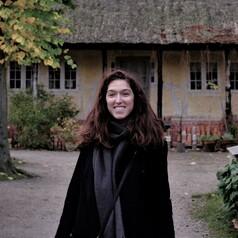
PhD Candidate, School of Social and Political Sciences, University of Glasgow Ana Alonso Curbelo's PhD Topic is The Role of the News Media in Perpetuating Electoral Fraud Myths in the UK and US. Through multiple Quantitative Text Analyses, this project seeks to examine the British and American news media’s role in perpetuating myths about voter and electoral fraud in UK and US elections. The central research questions include whether news coverage is based more on fact or elite rhetoric, the role of tabloids and the partisan press in the UK relative to the US, what policies are linked to fraud (e.g., immigration), and the particular frames used by the media.
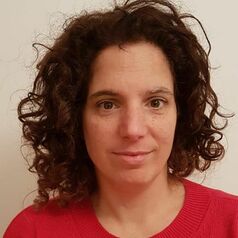
Senior Lecturer in Political Communication, University of Glasgow I joined the subject of Politics at Glasgow in September 2006 from the London School of Economics (LSE), where I completed my PhD in Political Communication. My research focuses on political communication: how politics is mediated and how this affects the conduct and nature of the democratic process. Most of my work has focused on the UK and Scotland but I have also done comparative work about countries including Argentina, Germany and China. During the early years of my career, I focused on the personalisation of politics, especially its media dimensions. I still work on the topic but, in the last few years, I have become keenly interested in understanding how the hybrid media environment is affecting ‘classic functions’ of political communication and its impact on democracy. I have recently published work about the Scottish independence referendum campaigns and have work in progress about non-party campaign organisations or ‘satellite’ campaigns. Most of my current work focuses on analyzing how different types of media shape discourse and especially the policy process. This includes a recent paper about Windrush, published in the International Journal of Press/Politics, and a project (funded by NIHR & MRC) about the role of social media on shaping the Chinese government’s policy response during COVID. I have also started to explore how different platform affordances shape to what extent and how topics are politicised.
Senior Lecturer in Marketing and Consumption, De Montfort University I am an inter-disciplinary marketing and consumer research academic engaged in research that investigates how individuals negotiate and consume both their sense of physical being and their self-identity within the spaces they occupy. Specifically, my research activity has centred upon minoritized consumers and vulnerable groups (disability and marketplace access, gender-based violence, religious minorities), focusing on the challenges, threats, and opportunities individuals face in their daily lives. My research work sits at the intersection of Identity and voice, positive social impact, and the broad wellbeing agenda. Through adopting the sensibilities of a transformative consumer research approach, I am passionate about engaging in research that can: benefit society; allows for an engagement with other disciplines; and adopts non-extractive and collaborative approaches with stakeholder groups through creative methodologies (digital storytelling, poetry, applied theatre, co-creative strategies and participatory research). Currently, I am engaged in a number of externally-funded research projects funded by The British Academy, The Arts and Humanities Research Council, and Innovate UK. Working with colleagues across a range of disciplines (Health and Life Sciences, Education, Film Studies, Theatre) these projects focus on trans-disciplinary research in South Asia and focus on skills provision for young rural women in India; gender-based violence among migrant women in India and intervention strategies through the use of applied-theatre; and the Indian film industry, heritage and migration. Central to these projects is the use of insightful, methodological approaches from the digital humanities (digital storytelling and photovoice). In terms of my approach to teaching, I believe in creating a learning environment that challenges and questions the status quo through harnessing a culture of critical enquiry. Encouraging students to consider a multiplicity of perspectives in marketing and consumer behaviour has been at the heart of my approach to teaching both undergraduate and postgraduate students. Subject areas I have taught are Consumer Behaviour, Marketing Communications, Creative Communications, Global Branding, International Marketing and Consumer Culture Theory.
PhD Candidate, Renewable Resources, McGill University Bonjour, Hi (as they say in Montréal). I am a French PhD candidate at McGill University. I am submitting my thesis in July, and will defend my doctorate in the fall (2023). I work on the feeding ecology and its role in contaminant accumulations in North Atlantic killer whales. Research Highlights: I am particularly interested in dietary chemical tracers like fatty acids or stable isotopes in apex marine predators. As the ultimate marine predators, killer whales accumulate high concentrations of biomagnifying contaminants like polychlorinated biphenyls (PCBs), organochlorine pesticides, or brominated flame retardants. These contaminants may threaten the whales' health and their long-term population stability. Hence, by measuring various feeding tracers in the whales' blubber, we can use models to reveal their diets. Understanding killer whales' feeding ecology is key to assessing the risks caused by the accumulation of toxic contaminants. Science Communication: I am a bilingual science communicator (??/??) and a huge whale nerd. I am the founder and chief editor of Whale Scientists, a platform I created to share early career researchers' passion for marine mammals with the public.
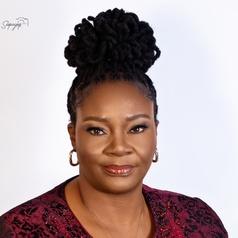
Lecturer in Art and researcher, University of Nigeria Amuche lives and works in Nsukka, Nigeria. She teaches sculpture, cultural and creative arts at the University of Nigeria, Nsukka, having obtained a PhD in Art Education in 2017. She is passionate about deploying various artistic processes to speak to the sustainability of the environment. She also promotes practices to mitigate the adverse impacts of human activities on the environment. She founded the Sculpted Basket Project in 2008. As part of the Sculpted Basket Project, she educates pupils, students, administrators, mothers, traders and others about sustainable environmental concepts through socially engaged activities. Amuche is a multi-skilled, experienced, reliable and adaptable creative with several years of socially focused art practice. She has over fifteen years experience in higher education administrative and academic environments. In the past four years, she has become increasingly involved in mobilizing parents and youths for Creative Climate work. Amuche’s exhibition history includes three solo exhibitions and over six curated group exhibitions. She also participated in, as well as facilitated creative workshops, supported administrative and executive officers in her university before converting to the academic cadre. She has been able to apply the experiences gained in administration, teaching, mentoring and research to some of the recent climate change-focused work she has engaged in. Knowledge of the application of information technology in everyday life and the academic field makes up a large part of her experiences. She is currently a member of a research group in the Humanities, African Humanities Research and Development Circle (AHRDC) from where she conducts research and publishes scholarly articles. She has contributed a chapter to the book Nigerian Resources Wars (2021) edited by Egodi Uchendu. She is a pioneer and 2021 Fellow of the prestigious Climate Parent Fellowship of the Parents for Future and Our Kids Climate.