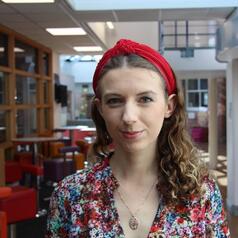
Lecturer in Criminology, University of Sheffield Ciara’s work lies at the intersection of the criminological and the historical, and her research interests include (though are not limited to) the history of sexual violence, victimology, policing and youth subcultures. She joined the School of Law in August 2023. Before coming to Sheffield, she worked as Service Coordinator for the Crime Victims Helpline, an independent charity in Ireland which provides information and emotional support for victims of crime. As part of her role with the Crime Victims Helpline she worked as lead researcher for the Republic of Ireland on the BeneVict project. Spearheaded by Victim Support Europe and co-funded by the EU, this project examined the implementation of the Victims’ Rights Directive throughout EU member states. She completed her PhD in University College Dublin, where she held an Irish Research Council Government of Ireland Postgraduate Scholarship and a Sutherland School of Law Doctoral Scholarship. She is currently working on a monograph based on her PhD research which examines representations of Irish youth subcultures from the 1950s to the present. Alongside Dr Richard McMahon she is co-editor of the Studies in Irish Crime History book series published by Cork University Press. Since February 2022 she has also acted as the Social Media Coordinator for the British Society of Criminology Historical Criminology Network (#HCNet).
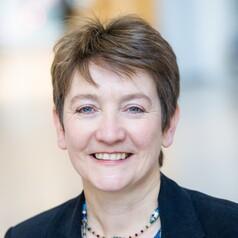
Research Associate, University of Central Lancashire Clare has worked on a number of qualitative research projects relating to work and employment. Her research interests lie broadly in organisation studies with two particular strands of focus: one encompassing concepts of care in work and employment, and the other exploring the role of silence, absence and inaction in organising processes.
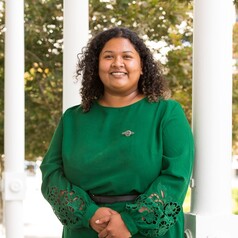
Research Assistant, University of Auckland I’m currently working as a research analyst and a writer. Having worked at high schools, universities, and not-for-profit organisations, I am learning to blend my public policy, education, and physics expertise.
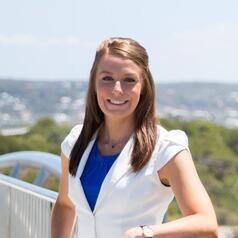
Research Affiliate, Centre for the Study of Existential Risk, University of Cambridge Catherine’s postdoctoral research at CSER, Cambridge, focused on developing our understanding of global risks, governance mechanisms and technical solutions in relation to complex critical infrastructure systems. Her work primarily spanned environmental risks, future foods biotechnology and artificial intelligence alongside complementary digital technologies across the water, energy and food sectors as well as the transport, waste and space sectors. Catherine completed her PhD in Engineering at Cambridge on energy transition, climate change and agri-food supply chain risk. She also holds a BEng(Civ) and BEng(Env), both with First Class Honours, Dean’s Medal and University Medal, from University of Newcastle, Australia. Catherine is now a management consultant at a top tier firm serving investors, corporates and startups in the real asset space (natural resources, infrastructure, real estate and related material supply chains) on strategy, transactions and sustainability. She leverages 10+ years’ industry experience at the intersection of real assets, technology and sustainability, having previously advised climate tech startups, dappled in real estate and proptech, and worked as an engineer at a top Fortune 500 company in the energy sector and government corporation in the water sector. Catherine has been published in the Nature portfolio, is a John Monash Scholar and was recognised in Forbes 30 Under 30 for Industry Innovation.
Reader in Environmental Hydraulics, Cardiff University My research area is environmental hydraulics in river systems with an emphasis on nature-based solutions for flooding, the hydro-environmental impact of in-stream installations (e.g. turbines, weirs, culverts, gates) and microplastic pollution. I have worked in the field of environment hydraulics and flooding for over 25 years and my research bridges the disciplines of Civil Engineering and Environmental Science. I was awarded Chartered Engineering status (CEng) in 2008.