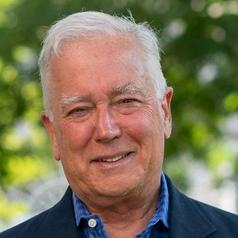
President, Dickinson College Jones retired as chief judge of the U.S. Middle District Court of Pennsylvania. He was appointed to the federal bench by President George W. Bush and unanimously confirmed by the United States Senate on July 30, 2002. Jones has presided over a number of high-profile cases. In 2003, Jones struck down portions of Shippensburg University’s speech code on the basis that it violated the First Amendment’s free speech guarantee. In that same year, Jones ruled in a decision later affirmed by the United States Supreme Court, that the U.S. Department of Agriculture’s statute assessing milk producers in order to fund advertising, including the Milk Mustache/got milk® campaign, did not infringe the free speech rights of the producers. In 2005, Jones presided over the landmark case of Kitzmiller v. Dover School District, after which he held that it was unconstitutional to teach intelligent design within a public school science curriculum. In 2006, he ruled that the Commonwealth of Pennsylvania’s ballot access procedures for minor political parties did not violate the Constitution. In 2014, Jones resolved the matter of Whitewood v. Wolf by striking down as unconstitutional Pennsylvania’s ban on same-sex marriage. Before becoming a federal judge, Jones was a lawyer in private practice in his hometown of Pottsville, Pa. In November 1994, then Pennsylvania Governor-elect Tom Ridge named Jones as a co-chair of his transition team. In May 1995, Ridge nominated Jones to serve as chairman of the Pennsylvania Liquor Control Board. Jones has received numerous accolades during his career. He received the Outstanding Alumni Award from the Dickinson School of Law, as well as an honorary doctorate in law and public policy from Dickinson College, where he was recognized as one of the 25 most influential graduates in the college’s history. In 2009, the college’s faculty voted to induct Jones into its Phi Beta Kappa chapter. In 2006, Jones was named by Time magazine as one of its Time 100 most influential people in the world. He also received a Rave Award for Policy from Wired magazine and was the recipient of the first John Marshall Judicial Independence Award, given by the Pennsylvania Bar Association. In 2009, he was the recipient of the Geological Society of America’s President’s Medal, and in the same year he was inducted into the George Washington Spirit Society. In 2013, Chief Justice John Roberts appointed Jones to the Committee on Judicial Security, a standing committee of the Judicial Conference of the United States, and in 2018 Roberts appointed Jones to the Committee on Space and Facilities.
Senior Lecturer in Applied Writing and Humanities, Newman University I am a Senior Lecturer in Applied Writing and Humanities at Birmingham Newman University. Prior to this appointment I was a British Academy Postdoctoral Fellow at the University of Nottingham. My research interests include language in the media, digital communication, family diversity and gendered identities. I have published a range of research in these areas, including the 2019 monograph Language, Gender and Parenthood Online, and my 2023 book Connected Parenting. I am convenor of the Language, Gender and Sexuality special interest group, which sits within the British Association of Applied Linguistics. I am also a member of the editorial board for the journal Discourse, Context and Media.
Director of Undergraduate Programmes, ISC Paris Business School I currently serve as the director of undergraduate programme at the Institut Supérieur du Commerce and worked as a marketing professor from 2004 to 2013.
Professor of Sociology, Washington University in St Louis Jake Rosenfeld's research and teaching focus on the political and economic determinants of inequality in the United States and other advanced democracies. He is primarily interested in the determinants of wages and salaries, and how these vary across time and place. He received his Ph.D. from Princeton University. Rosenfeld's 2014 book What Unions No Longer Do (Harvard University Press) shows in detail the consequences of labor’s decline: curtailed advocacy for better working conditions, weakened support for immigrants’ economic assimilation, and ineffectiveness in addressing wage stagnation among African-Americans. The book has received wide attention in the national press and in such outlets as The New Yorker and Harvard Business Review. His 2021 book, You're Paid What You’re Worth and Other Myths of the Modern Economy (Harvard University Press), seeks to answer the basic question: who gets what and why? He argues that four dynamics are paramount: power, inertia, mimicry, and demands for equity. Power struggles legitimize pay for particular jobs, and organizational inertia makes that pay seem natural. Mimicry encourages employers to do what peers are doing. And workers are on the lookout for practices that seem unfair. Rosenfeld shows us how these dynamics play out in real-world settings, drawing on cutting-edge social science, original survey data, and a journalistic eye for compelling stories and revealing details. The book has been featured in the Wall Street Journal, Washington Post, and Harvard Business Review.
Postdoctoral Associate, department of Microbiology and Immunology, Western University Graduated from the school of veterinary medicine in 2016 and completed my doctoral studies in biological sciences in 2021, I have worked with a variety of microbial species of interest in human and animal health focused mainly on identifying the pathophysiology of various diseases, as well as treating them.
Professor of Microbiology and Immunology, Western University Our laboratory has a primary focus on bacterial exotoxins produced by the bacterial pathogens Streptococcus pyogenes and Staphylococcus aureus. One major focus is on the bacterial superantigens which function by directly activating T cells of the adaptive immune system, and we are interested in understanding how the toxins contribute to both colonization and disease. In addition, we are interested in mechanistic studies of toxic shock syndrome, and in particular the regulatory cues that control expression of the superantigen toxic shock syndrome toxin-1 (TSST-1). Lastly, we are engineering superantigens for use as targeted anti-cancer immunotherapeutics.