Lecturer in Marketing, University of Birmingham Dr Julie Whiteman is a Lecturer in Marketing at Birmingham Business School, University of Birmingham. Julie researches the ideological consumption of gender, sexuality, race and social class in popular culture and asks how this interacts with consumer subjectivity and social action. Prior to her career in academia, Julie worked as a marketeer in the creative industries for 15 years. Julie works to challenge practices of discrimination and exclusion and to promote inclusive, responsible marketing and representation through her research and teaching.
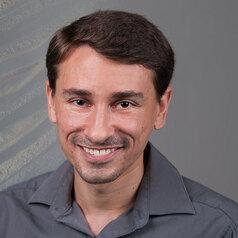
Professor of Earth and Atmospheric Sciences, Georgia Institute of Technology Dr. Wray is a planetary scientist who joined the faculty at Georgia Tech in 2011. His research uses space mission data to study planetary surface processes and compositions. He has been a member of six different NASA or ESA Mars mission science teams, and previously served as Chair of the Geological Society of America's Planetary Geology Division.
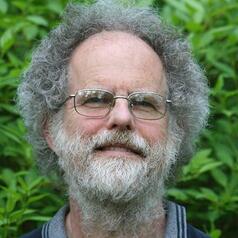
Professor of Ecology and Evolutionary Biology, Cornell University I was an undergraduate student at Oxford University UK, a graduate student at Aberdeen University UK, and a postdoc at Universities of East Anglia, Oxford and York UK. I've held faculty positions at Universities of York and Cornell. I am interested in the construction of post-glacial small mammal communities and have studied the natural colonization history of European shrews, voles, mice and small carnivores, revealing a wide range of species- and lineage-specific responses in terms of source areas and pattern of spread. Unnatural colonization history (i.e. transport by humans) is also of interest to me, particularly the way that the phylogeography of small mammals transported by humans can inform about the history of the humans moving them. Those separate lineages that make up a species and which are formed in different places and colonize in different ways, are genetically differentiated to various degrees and may become separate species themselves. I am interested in the speciation process and the analysis of hybrid zones to inform about that. I have, in particular, studied the origin of chromosomally distinctive lineages, and the hybrid zones between those lineages, using shrews and mice as models. I teach a variety of courses at Cornell including: BioEE 1780 Introduction to Evolutionary Biology and Diversity, BioEE 4500 Mammalogy and BioEE 4501 Mammalogy. I am Leader for Diversity and Inclusion in EEB, chairing the department’s DEI committee and representing the department in college and university diversity and inclusion efforts.
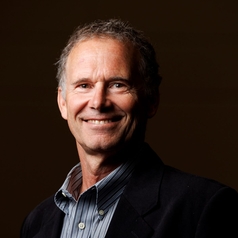
Clinical Psychologist and Professor of Counseling, University of Montana John Sommers-Flanagan is a professor of counselor education at the University of Montana and author or coauthor of over 60 professional publications, nine books, and numerous video trainings with Psychotherapy.net and Alexander Street Press. Some of his books, co-written with his wife Rita, include Tough Kids, Cool Counseling, (2nd ed., American Counseling Association, 2007), How to Listen so Parents will Talk and Talk so Parents will Listen (John Wiley & Sons, 2011), Clinical Interviewing (6th ed., Wiley, 2017), and Counseling and Psychotherapy Theories in Context and Practice (3rd ed., Wiley, 2018). John is a sought out keynote speaker and professional workshop trainer in the areas of (a) counseling youth, (b) working with parents, and (c) suicide assessment. He has published many newspaper columns, Op-Ed pieces, and a recent article in Slate Magazine. His work has been intermittently featured in Counseling Today, the ASCA School Counselor magazines. John’s resource and opinion blog at johnsommersflanagan.com receives approximately 12,000 hits per month. He is also co-host of the national Practically Perfect Parenting Podcast. In his wild and precious spare time, John loves to run (slowly), dance (poorly), laugh (loudly) and produce home-made family music videos.
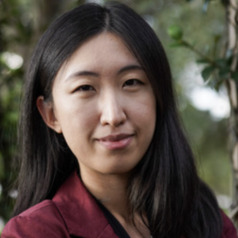
Assistant Professor of Communication, School of Communication and Information, Rutgers University I am an Assistant Professor at Rutgers University’s School of Communication and Information, Department of Communication. My work examines the intersection of mis/disinformation, structural inequalities, and contentious politics. I specialize in computational methods, quantitative methods, and mixed-methods. Google Scholar My research asks: How do people make informed decisions in today’s digital media environment with growing concerns over mis/disinformation, structural inequalities, and contentious politics? My work focuses on: (1) identifying dissemination of and discourses around mis/disinformation on digital platforms; (2) examining efforts aimed at mitigating mis/disinformation, e.g., fact-checking, content moderation, social media skepticism, media literacy, and cross-racial solidarity building in the face of racialized disinformation; and (3) studying how the broader media ecology interacts with identity and social inequality in shaping misperceptions, policy preferences, and support for racial justice movements. Methodologically, I use computational methods (natural language processing, machine learning, network mapping), experiments (quasi-experiment, web-based dynamic experiment), large-scale panel surveys, mixed-methods approaches, and work on the integration of textual, behavioral, and/or social geographical data. My work has been published in peer-reviewed journals including Journal of Communication, Human Communication Research, New Media & Society, Political Communication, Information, Communication & Society, Social Science & Medicine, Mass Communication and Society, and Social Media + Society. My work also appeared in public-facing outlets including The Washington Post, Brookings TechStream, and MediaWell. My research has been funded by the Social Science Research Council, the International Fact-Checking Network, and the Knight Foundation. I have received the Thomas E. Patterson Best Dissertation Award from the American Political Science Association, Paper of the Year award from Mass Communication and Society, and several Top Paper awards from the International Communication Association and the Association for Education in Journalism and Mass Communication. I received B.A. in Journalism and Sociology from Peking University, M.A. in Journalism and Mass Communication from the University of Wisconsin-Madison, and Ph.D. in Mass Communication from the University of Wisconsin-Madison.
PhD Candidate - Nutrition and Genetic Epidemiology, University of South Australia I am an allied health professional (Certified Practicing Nutritionist), and an NSA Associate Nutritionist. I am undertaking my PhD at the Australian Centre for Precision Health, at University of South Australia, under the supervision of Profession Elina Hypponen. My work focuses on vitamin D and genetic epidemiology.