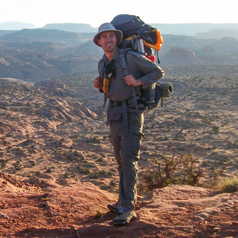
Research Fellow in Microbial Evolution, Manchester University I am a Wellcome Trust Research Fellow in Microbial Evolution Research Manchster (MERman) and the Manchester Fungal Infection Group (MFIG, http://www.inflammation-repair.manchester.ac.uk/mfig). My main research interests are: One Health and Fungal infections, Antimicrobial Resistance (AMR), Climate change and Genetic tools in non-model organisms (Fungal pathogens) I started my Research career at the University of Manchester obtaining my PhD. This project was focused on transcriptional regulation during Aspergillus fumigatus infection of the mammalian lung through high-throughput screening of mutants. As an example, we screened the library for azole sensitivity and resistance where my passion for AMR came from. During my PhD project we have developed CRISPR methodologies for genome editing of A. fumigatus. The focus was on CRISPR-mediated protein tagging and point mutations to avoid using dominant selection markers during transformation. This methodology is widely adopted now in several research laboratories and is still driving much of my research. I am currently working on a project linking climate change to antifungal resistance, working on dual-use fungicides and novel antifungals. I work on evolution in soil through various techniques combining environmental microbiology, molecular fungal biology and infection biology.
Postdoctoral research fellow, National Drug Research Institute, Curtin University Research Fellow at the National Drug Research Institute, researching alcohol consumption and related harms. Dr Nicholas Taylor has worked within the field of alcohol policy research since 2015. Much of his research has focused on evaluating the impact of policies and interventions in nightlife settings on alcohol-related violence. He has also investigated how pricing policies have influenced alcohol consumption in the Northern Territory. His work involves using epidemiological data to map the impact of interventions on alcohol consumption, violence, and other alcohol-related harms.
Postdoctoral Research Fellow, Department of English Literary Studies, University of Cape Town Nhlanhla Dube is a native of Harare, Zimbabwe. He holds a PhD in English studies from Stellenbosch University. He is currently a postdoctoral research fellow in English literary studies at the University of Cape Town. His research interests are geocriticism, spatiality, literary Bulawayo and John Eppel. He has published peer reviewed papers on law and literature and literary pornography. You can follow him on Twitter @nhlanhladube09.
Professor and Chair, Centre for Ecological and Evolutionary Synthesis (CEES), University of Oslo Research interests: Population biology (ecology and genetic structuring); large-scale ecological and evolutionary patterns; effects (ecology and evolution) of climate variation; terrestrial, marine and freshwater systems. I am a Core Member, Research Professor and the Chair of CEES. In addition, I am a Chief Scientist at the Institute of Marine Research. My research interests span a broad spectrum of ecological and evolutionary topics, most of which are rooted in population biology. Before the early 1990s, much of my work was purely theoretical. Later, I have adopted the research strategy of 'asking' available data what the underlying ecological or evolutionary process might most likely be - all within a theoretical perspective. I strongly favour comparative studies - by comparing similar features between different (but comparable) systems, we typically learn more than we otherwise would have done. Variations in population densities in time and space - and the underlying demographic processes - have been a main interest of mine over the years. An important example is the interdependent relation between density-dependent and density-independent processes, where the ecological effect of climate is an important example of the latter. Most of my work relates to basic issues. (I have never claimed that my research is of any immediate use, although I do hope it will be in the long run.) However, I find great pleasure in working on more applied issues as well; I have never been ashamed of my research being of practical use here and now. These applied interests have brought me into work on pest control (e.g., rodents in Africa), harvesting (marine and terrestrial), bio-economics (e.g., the ecological dynamics of dry-land pastoral systems) and epidemiology (Plague). I am convinced that it is helpful to try to understand what has happened in the past, in preparing for what might happen in the future, e.g., ecological and evolutionary effects of climate change. For this reason, I value the existence of long-term time series - and the analysis of them. I love interacting with colleagues, and find great pleasure in building and maintaining teams. I am an ISI highly cited researcher. Besides being an active scientist I am also a public advocate for science, actively participating in the discussions of how best to structure and strenghten the scientific community. I am an elected member of The Norwegian Academy of Science and the Letters, DNVA; I was the vice-president/president of that Academy 2009-2014. I am also an elected member/fellow of several other academies, including the Royal Norwegian Society of Science and Letters, DKNVS, Academia Europaea, French Académie des Sciences and the Finnish Society of Sciences and Letters. I have been awarded honorary doctorates (Doctor Honoris Causa) at the University of Antwerpen, Belgium (2001) and at the École Normale Supéreure, Lyon, France (2011), and I am honorary Professor at Addis Ababa University in Ethiopia. I am Chevalier (Knight) in the French National Order of the Legion of Honour. I am the president of the International Biological Union (IUBS) as well as member of the Scientific Council of the European Research Council (ERC). I also do quite a bit of editorial work, including as Editor-in-Chief of Climate Research.
Assistant Professor of Geology, University of California, Riverside Though my research interests span many aspects of geology, at the core I aim to improve our understanding of active faults and the evolution of landscapes. I strive to employ a multi-disciplinary field-based, lab-supported, collaborative approach to explore far-reaching, broader picture research that is widely beneficial and societally relevant. My research is currently focused on the New Zealand and California plate boundaries.