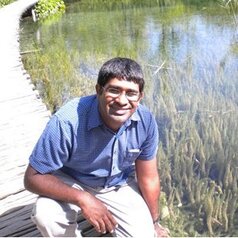
Verne M. Willaman Professor of Astronomy & Astrophysics, Penn State Dr. Mahadevan's research interests include exoplanets, astronomical instrumentation, large scale surveys, astrophotonics, astrobiology and precision measurements in astrophysics.
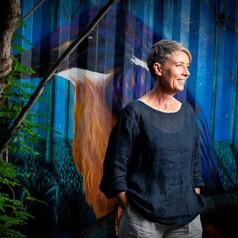
Lecturer in Education, Monash University Dr Stephanie Wescott is a lecturer in humanities and social sciences in the Faculty of Education’s School of Education, Culture and Society. Her research examines how education practice, policy and curriculum intersects with and is influenced by current socio-political conditions, and she is particularly interested in post-truth and its relationship to knowledge and expertise in education. She is currently researching misogynist radicalisation among boys in Australian schools.
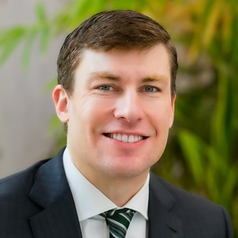
Associate Professor of Media and Culture, Anglia Ruskin University Sean’s research explores the politics of media and popular culture. He has published a number of books and has advised on television and radio programmes. He led the Film and Media unit’s submission to the REF in 2021, having coordinated its successful return in 2014, for which he convened an impact case study, which centred on a six-part television documentary series on which Sean was Series Adviser, and which drew on his book, 'Irish Blood, English Heart': Second-Generation Irish Musicians in England (Cork University Press). This AHRC-funded book was named Music Book of the Year in the Sunday Times. Sean is currently writing a book on popular music and political conflict, entitled Combat Rock. He is also developing research on popular-cultural invocations of the Anglo-Scottish border. Sean is co-convenor (and co-founder) of the Modern Irish History seminar at the University of Cambridge, which is supported by the Irish Embassy in London. He has been a member of the AHRC Peer Review College, and has appeared on Channel 4 News, the BBC World Service, RTÉ, DW-TV (Germany), CBC TV and Radio (Canada), and ABC Radio (Australia). He has written for the Irish Times, and has been cited in The Times, the Guardian, and NME. Research interests The Politics of Popular Culture Popular music Music Journalism Irish studies Migration/ethnicity
Professor and Director, Australian Centre for Health Engagement, Evidence and Values, University of Wollongong After a decade working in the NSW health system, I completed an MPH and PhD in public health. I spent a dozen years working in an applied ethics centre, so have special interest and expertise in health ethics. I am now the founding Director of the Australian Centre for Health Engagement, Evidence and Values (ACHEEV) at the University of Wollongong. The work of ACHEEV focuses on health: the health of people, other animals, society and the planet, and how all of these things are connected. Our mission is to make health systems more inclusive and democratic, and in everything we do, we ask how we can work towards greater justice and equity. ACHEEV specialises in deliberative and values-based research methods: these allow us to grapple with what matters to people, and to support groups of Australians to generate recommendations for decision-makers on thorny policy problems.
Senior Vice President for Research and Development, Professor of Practice in Chemical Engineering, Khalifa University Dr. Steven Griffiths is Senior Vice President for Research and Development and Professor of Practice at the Khalifa University of Science and Technology. At Khalifa University, his responsibilities include development and implementation of the university’s research strategy, management of the university’s research institutes and centers and management of the departments that are accountable for research partnerships, research services, technology management and innovation, research computing and research laboratories. In addition to his executive management role at Khalifa University, Dr. Griffiths is a member of the Emirates Research and Development Council, advisor to the UAE Research Program for Rain Enhancement Science, a Zayed Sustainability Prize Selection Committee member, a member of the Dubai Future Council on Energy, an elected member of the Global Energy Prize International Award Committee, a Governing Board member of the Graphene Engineering Innovation Center at the University of Manchester, a member of the UAE Artificial Intelligence Expert Group, a board member of the Microsoft Energy Core and a Board member of Human CorpMission established by the Rosatom Corporate Academy and the Higher School of Economics National Research University. He advised the government of Alberta, Canada on provincial innovation system structuring throughout 2014 and continues to support the global advancement of research and innovation via evaluator and mentor roles in regional and international research and innovation competitions and programs. Dr. Griffiths is Associate Editor and Editorial Board member of Elsevier’s international journal Energy Strategy Reviews and Editorial Board member of Elsevier’s international journal Smart Energy. He further is a non-resident Fellow of the Payne Institute for Public Policy at the Colorado School of Mines, which is a leading Institute focused on energy, natural resource and environmental policy. Dr. Griffiths’ international research engagements further include an appointment as research affiliate at the Laboratory for Atmospheric and Space Physics at the University of Colorado-Boulder. In addition to these roles, Dr. Griffiths serves as advisor to journals and magazines focused on energy systems and technology innovation while regularly providing insights and commentary on technology and innovation for regional and international publications. Prior to his position at KU, Dr. Griffiths was Vice President for Research and Associate Provost at the Masdar Institute of Science and Technology. Dr. Griffiths transitioned to the Masdar Institute from his role as Executive Director of the Technology and Development Program at the Massachusetts Institute of Technology (MIT), which is a position he undertook while simultaneously serving as the Founding Executive Vice President and Chief Technologist of Light Pharma Incorporated. Dr. Griffiths holds a PhD in Chemical Engineering from MIT and an MBA from the MIT Sloan School of Management.
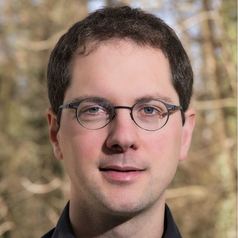
Chercheur et directeur du Centre national de recherches météorologiques (Météo-France - CNRS), Météo France Domaines de recherche : • Simulation numérique de l’évolution des propriétés physiques de la neige ; développement et utilisation du modèle de manteau neigeux détaillé Crocus. • Investigations expérimentales et in situ de l’évolution temporelle des propriétés optiques, thermiques et microstructurales de la neige alpine. Développement et utilisation d’outils de mesure objectives de propriétés physiques de la neige (conductivité thermique, surface spécifique, …). • Applications des modèles de manteau neigeux pour des problématiques multiples (risque d’avalanches, enjeux hydrologiques, tourisme de montagne) à courte échéance ainsi qu’en projection climatique. Directeur du CNRM depuis le début de l’année 2021, Samuel Morin a auparavant dirigé le Centre d’études de la neige de 2015 à 2020. Il a obtenu son habilitation à diriger des recherches en 2014 à l’Université Grenoble Alpes. Il est diplômé de l’École normale supérieure de Paris depuis 2006.