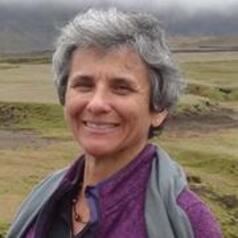
Associate Professor of Environmental Planning, University of Waikato Associate Professor Silvia Serrao-Neumann is the convenor for the Environmental Planning Programme. She is co-leading a team of researchers in the MBIE Endeavour project 'Reducing flood inundation hazard and risk across Aotearoa-New Zealand' ($15.5m, 2020-2025). She is also a partner investigator in the Australian Research Council Discovery (DP160103371) “Managing environmental change through planning for transformative pathways” (AU$581,000), and in the BIOTA SYNTHESIS - Nucleus of Analysis and Synthesis of Nature-Based Solutions (FAPESP 2020-2025). She is an Adjunct Research Fellow at the Cities Research Institute, Griffith University, Australia. Before joining The University of Waikato she was a Senior Research Fellow for the Cooperative Research Centre for Water Sensitive Cities at the Cities Research Institute, Griffith University, Australia. Her association with the CRC-WSC involved the investigation of catchment scale landscape planning for water sensitive city-regions in light of climate change. Since 2009 she has participated in many interdisciplinary research projects relating to climate change adaptation, including the South East Queensland Climate Adaptation Research Initiative (SEQ-CARI), a 3-year multi-sectoral study of climate change adaptation in South East Queensland, focusing on the sectors of urban planning and management, coastal management, physical infrastructure, emergency management and human health; and the Climate Change Adaptation for Natural Resource Management in East Coast Australia. Her research also focuses on community planning for disaster recovery and resilience, scenario planning, and action/ intervention research applied to planning for climate change adaptation. She has published widely on topics related to water resource management, climate change adaptation, and urban and regional planning.
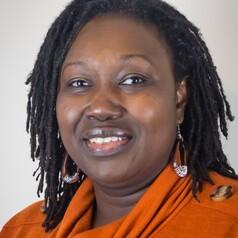
Lecturer Humanitarianism and Development, SOAS, University of London Sarah is a Research Fellow with the Humanitarian Policy Group. She is a peace and conflict scholar by training with more than 20 years' experience working on conflict prevention, post conflict peacebuilding, humanitarian disarmament, advocacy and development-related issues in Africa. Sarah’s previous research within the humanitarian sector has been in peace and development writ large especially on the adverse impact of explosive ordnances such as landmines and other explosive remnants in post conflict contexts. She therefore has vast knowledge of the branch of humanitarian sector that is mine action. While her regional research focus has been largely been the Greater Horn of Africa with extensive experience on Somaliland, Tanzania and Ethiopia, Sarah has also got research experience in Angola, Sierra Leone, and Cambodia. Before joining ODI, Sarah was previously working at the African Leadership Centre (King’s College London) as a Research Associate on a project funded by the Global Research Challenges Fund project, that focused on developing a combined technological and socio-economic approach to freeing affected communities from anti-vehicle mines. She previously worked in various academic institutions in research management and administration roles. Previously she has worked in the humanitarian aid sector, working on policy and advocacy issues with the Jesuit Refugees Service - Eastern Africa at the Regional office in Kenya. Sarah has an MA in Conflict Resolution and PhD in Peace and Conflict Studies from the University of Bradford’s Peace Studies and International Development Department.
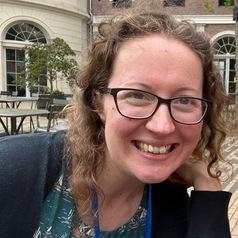
Assistant Professor in Human Geography, Northumbria University, Newcastle I am a Political Geographer interested in forced migration, resistance, citizenship and creative practice. I have a longstanding interest in how systems of asylum governance across Europe are lived, experienced and resisted. This has included research on the role of creativity within immigration detention centres, resistance to dispersal accommodation, and the everyday lives of those who have recently have been granted refugee status. My work has been widely published in academic books and journals, including an edited collection on Critical Geographies of Resistance. I've also worked closely with support organisations to improve refugee voice within organisation structures, fed my research into debates in Parliament, and worked with local authorities on integrating systems to try and improve support for new refugees.
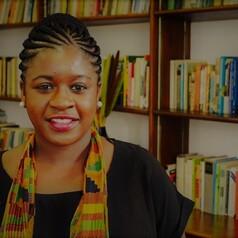
Postdoctoral Researcher, The Nordic Africa Institute Shingirai Mtero (PhD) is a cross-disciplinary African scholar whose research and teaching areas include: African Gender Studies, African Feminism(s), African Peace & Security, International Criminal Justice and Critical Security Studies. She is currently a Postdoctoral Researcher at the Nordic Africa Institute, working on the project: Making Politics Safer- Gendered Violence and Electoral Temporalities in Africa. She holds a PhD in Political & International Studies from the Department of Political and International Studies at Rhodes University, where she served as a Lecturer for five years. She was a 2018 Mandela Washington Fellow and a 2017 Visiting Research Fellow at the Danish National Research Foundation’s Centre of Excellence for International Courts at the University of Copenhagen. She serves on the Knowledge Network of the United Nations Office of the Special Adviser on Africa and has functioned as an independent consultant for the Institute for Justice and Reconciliation and Friedrich Ebert Stiftung –South Africa.
Associate Professor in Law, UNSW Sydney Sean is the Director of the Gilbert + Tobin Centre of Public Law and teaches and writes mainly in the areas of constitutional law, native title and Aboriginal land rights. After working as a judge's associate in the Federal Court, with various Aboriginal and other community organisations and in the Commonwealth Parliament’s research service, Sean joined the UNSW Faculty of Law in May 2002. He is the Director of the Gilbert + Tobin Centre’s Indigenous Legal Issues Project.