Senior Lecturer, Neuropharmacology, University of Bath My research focuses on understanding the molecular mechanisms underlying the response to stress and how this may lead to depression and anxiety. I serve on Council for the British Association for Psychopharmacology. I also sit on the Education and Training Committee and Animal Welfare and In Vivo Pharmacology Group of the British Pharmacological Society. At the University of Bath I am a Public Engagement Advocate and support innovative ways to increase engagement with research. I also work with Understanding Animal Research to promote the importance of being open about animal research in the development of medicines.
Honorary Senior Lecturer, UNSW Sydney Dr Sharon Salmon is Technical Officer, Global Outbreak Alert and Response Network (GOARN), WHO Regional Office of the Western Pacific. Prior to re-joining WHO, Sharon was the Assistant Director of Nursing, Infection Prevention at the National University Hospital, Singapore and Associate Consultant, Ministry of Health Singapore. She has 20 years of IPC experience including extensive international consultative experience, providing technical advice for IPC national programmes, hospital assessments and development of national guidelines across several countries in Asia. Sharon holds a Bachelor of Nursing and Master of Public Health from the University of Sydney and a PhD from the University of NSW, Australia.
Head, Policy Lab, Human Technology Institute, University of Technology Sydney Sophie Farthing is Head of the Policy Lab at the Human Technology Institute (HTI), University of Technology Sydney (UTS).
Associate Professor of Environmental Studies, Trent University Stephanie Rutherford is an Associate Professor in the School of the Environment at Trent University. Her research inhabits the intersections among political ecology, environmental justice, animal studies, and the environmental humanities. She is the author of Villain, Vermin, Icon, Kin: Wolves and the Making of Canada (MQUP 2022) and Governing the Wild: Ecotours of Power (UMinn 2011). She was also a co-editor of Methodological Challenges in Nature-Culture and Environmental History Research and Historical Animal Geographies (both with Routledge). Her new research is a community-based partnership that maps environmental injustice in Peterborough, Ontario.
Lang Chair and Professor of Marketing, University of Guelph Sourav Ray is the Lang Chair and Professor of Marketing at the Gordon S. Lang School of Business and Economics at University of Guelph, Canada. Sourav’s research interests span strategic marketing issues related to technology-intensive markets, distribution channels, and dynamic pricing. Methodologically, he uses a combination of economic modeling, scanner data analyses, surveys, and field experiments. Sourav has a PhD in Marketing from University of Minnesota, and aerospace engineering degrees from Texas A&M University and IIT Kharagpur in India. Sourav has taught at McMaster University and Concordia University. He has supervised several several doctoral students in Marketing while at McMaster University, where he was the Michael Lee‐Chin & Family Professor in Strategic Business Studies and Professor of Marketing.
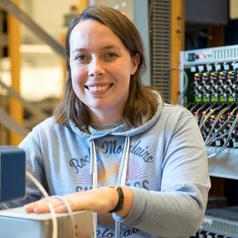
Postdoctoral Research Associate, Particle Physics, University of Liverpool I am a senior Research Associate in the Particle Physics group at the University of Liverpool. My research is focused on Muon Physics. In particular, I work on resolving the tension between the experimental and theoretical determinations of the muon anomalous magnetic moment. I have been working on the Fermilab muon g-2 experiment since 2014. After gaining my PhD from the University of Liverpool, where I built hardware and developed reconstruction algorithms for the g-2 tracking detectors, I moved to Fermilab as a Research Associate in the muon department. During my time working on g-2 I have been involved with many different aspects of the operations and analysis of the experiment. In my current role as magnetic field Analysis Coordinator, I analyze data from multiple systems to make an ultra-precise measurement of the muon-weighted magnetic field, which is one of the two main quantities required to determine the value of the muon anomalous magnetic moment. In 2022, I joined the University of Liverpool once again, to continue my work on g-2 as well as other muon experiments.