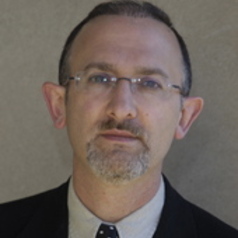
Steve Worthington is an Adjunct Professor at Swinburne University. He was previously Professor of Marketing at Monash University's Department of Marketing from 2002 to 2013, prior to which he worked at several universities in the United Kingdom and in executive roles at a UK bank and UK supermarket group. At Monash, Steve taught Strategic Marketing in the MBA program and Relationship Marketing and Marketing Financial Services in the Master of Marketing program. His research interests are focused on the distribution of financial services, particularly through the channel of payment cards. These topics are of interest to both academics and practitioners. His paper Banking without the Bank, International Journal of Bank Marketing was ranked 12th highest downloaded article in 2012 (was 2nd most downloaded in 2011) and remains the 4th highest in terms of immediacy. This focused on the opportunities and challenges facing new entrants into the financial services market, particularly from brands such as Tesco Bank and Virgin Money. Steve is a member of the Financial Services Institute of Australasia and of the Academic Standards Board of the International Academy of Retail Banking. He is also an associate of the Australian Centre for Financial Studies (ACFS) for whom he wrote a paper entitled, Regulatory Interventions and their Consequences in the Australian Payment Card System, which was published in October 2013.
Scott Ewing is a Senior Research Fellow at the Swinburne Institute for Social Research and at the ARC Centre of Excellence in Creative Industries and Innovation. He has fifteen years experience as a social researcher, both at Swinburne and in the private sector. He is currently managing the Australian component of the World Internet Project, a global survey of internet use and non-use.
I am a theoretical physicist working at the University of Bath. I completed my doctoral studies at the University of Oxford in 2007 and have subsequently held research fellowships at the Centre for Quantum Technologies in the National University of Singapore and Keble College, Oxford, as well as a senior scientist post at the Clarendon Laboratory in the University of Oxford. My current research focuses on the dynamical properties of so-called strongly-correlated many-body systems, e.g. ones where interactions and cooperative emerging effects are dominant. Systems I study range from ultra-cold atoms to solid-state materials like high-temperature superconductors.
Steve Peers received a B.A. (Hons.) in history from McMaster University (Canada) in 1988, an LL.B. from the University of Western Ontario (Canada) in 1991, an LL.M. in EU Law from the London School of Economics in 1993, and a Ph.D from the University of Essex in 2001. His research interests include EU Constitutional and Administrative, Justice and Home Affairs, External Relations, Human Rights, Internal Market and Social Law. He has written over fifty articles on many aspects of EU law in journals including the Common Market Law Review, European Law Review, International and Comparative Law Quarterly, Yearbook of European Law and the Cambridge Yearbook of European Legal Studies, as well as many chapters in books. He has worked as a consultant for the European Parliament, the European Commission, the Foreign and Commonwealth Office, the House of Lords Select Committee on the European Union and the Council of Europe, and contributed to the work of NGOs such as Amnesty International, Justice, Statewatch, ILGA-Europe and the Immigration Law Practitioners’ Association (ILPA).
My current research focus is aimed at characterizing changes in the bone marrow during disease and infection. During a virus infection, an immune response is rapidly induced. This immune response is required to kill the virus and infected cells. However, the immune response often also causes a lot of the damage and pathology that is observed. I also work with the NHMRC-funded Centre of Excellence in Severe Asthma. In this role I have a strong focus on communications and translation of research findings into the clinic and education medical professionals. I completed my PhD studies with Dr Kelly McNagny at The Biomedical Research Centre, University of British Columbia in Vancouver, BC, Canada (2010). My research focused on the role of CD34 (and the related molecule podocalyxin) in pre-clinical disease models.
Professor Reich is Professor in the Division of Global Affairs and Department of Political Science at Rutgers University, and a leading international authority on globalisation and on enhancing human security. Professor Reich has had a distinguished career in academic research and administration. His work has been published in the leading journals in his field, and by major university presses. He played a significant leadership role in establishing the Ford Institute for Human Security in the Graduate School of Public and International Affairs at the University of Pittsburgh, an Institute that was created by funding that he generated. Reich served for six years as the inaugural director. Professor Reich currently holds an appointment in the Division of Global Affairs at Rutgers University’s Newark campus. His recent books include Good-Bye Hegemony! Power and Influence in the Global System (with Richard Ned Lebow, Princeton University Press, 2014), Global Norms, American Sponsorship and the Emerging Patterns of World Politics (Palgrave, 2010), and Child Soldiers in the Age of Fractured States (University of Pittsburgh Press, 2009)