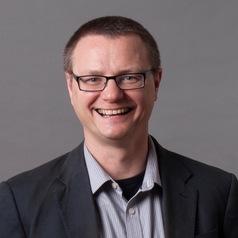
Howard Paterson Chair of Theology and Public Issues, University of Otago David Tombs is a lay Anglican theologian and the Howard Paterson Chair of Theology and Public Issues, at the University of Otago, Aotearoa New Zealand. He has a longstanding interest in contextual and liberation theologies and their application to social issues. He is originally from the United Kingdom and previously worked at the University of Roehampton in London (1992-2001), and then in Belfast, Northern Ireland, for the Irish School of Ecumenics, Trinity College Dublin (2001-2014).
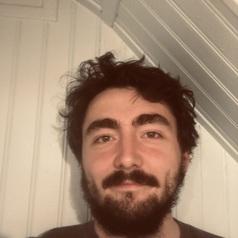
PhD Candidate, Child and Youth Studies, Brock University I am a PhD candidate in Child & Youth Studies. I am a research assistant as well as an instructor in Sports Management. My research focuses on the principles of decolonization and anti-racism in education as well as sport
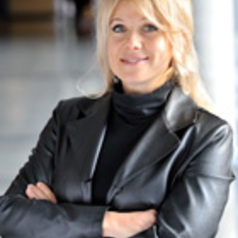
Full Professor of Compared Politics, L’Université d’Ottawa/University of Ottawa (French follows) Marie-Christine Doran is a Full Professor of comparative politics at the School of Political Studies, University of Ottawa, specializing in democratization, human rights, and violence in Latin America. She is also a consultant on Latin American issues for the Ministry of Foreign Affairs of Canada (Global Affairs Canada) since 2015. She holds a Social Sciences and Humanities Research Council of Canada-SSHRCC grant on “Violence and Democracy: the Criminalization of Struggles for rights in Latin America (2018-2025), for which she is main researcher of a team of 7 specialists and Director of the Observatory on Violence, Criminalization and Democracy. Since the beginning of her career, Marie-Christine Doran has obtained research grants totalizing over 1 700 000 $ CAN for projects focused on the persistence of violence in democratic context in Latin America, the nature of political regimes, the weight of authoritarian political and legal legacies, the impact of social movements for rights, justice and memory, and the impact of violence by state and non-state actors on women, LGBTQ+ communities, indigenous and Afro-descendant defenders, in order to find solutions that reinforce democracy. She is a researcher at the International Panel on Exiting Violence (IPEV), and other international research platforms in Europe and Latin America, including the Brazilian CAPES International Research Network on Conflict Management in Plural Public Spaces Her published work include numerous peer-reviewed articles in four languages, some of which can be found at Academia and Researchgate, as well as two books, Le réveil démocratique du Chili. Une histoire politique de l’exigence de justice, (foreword by Alain Touraine,: Karthala 2016); as well as Human Rights as Battlefields. Changing Practices and Contestations (Palgrave Macmillan, 2019) and a third forthcoming book, Criminalizing Democracy:the Hidden Face of Violence in Latin America, to be published at Routledge in 2024. She is regularly invited to comment on Latin American politics and violence in Canadian and international media. French Marie-Christine Doran, PhD Marie-Christine Doran est professeure titulaire de politique comparée à l’École d’études politiques de l’université d’Ottawa, spécialiste de la démocratisation, des droits humains et de la violence en Amérique latine. Elle est aussi consultante pour le Ministère des Affaires Mondiales Canada depuis 2015.Elle est chercheure principale d’une subvention du Conseil de recherches en Sciences humaines du Canada-CRSH pour le projet « Violence et démocratie : la criminalisation de la lutte pour les droits en Amérique latine » pour lequel elle dirige une équipe de 7 chercheur.e.s, ainsi que l’Observatoire violence, criminalisation et démocratie-OVCD. Depuis les débuts de sa carrière, elle a obtenu près de 1 700 000 $ (CAN).en subventions de recherche, au Canada et à l’international, pour des recherches portant notamment sur la persistance de la violence en contexte démocratique latino-américain, la nature des régimes politiques, le poids des héritages politiques et juridiques autoritaires, l'impact des mouvements sociaux pour les droits, la justice et la mémoire, ainsi que l'impact de la violence exercée par les acteurs étatiques et non étatiques sur les femmes, communautés LGBTQ+, les défenseurs autochtones et afro-descendants, afin de trouver des solutions qui renforcent la démocratie. Elle est chercheure dans plusieurs équipes internationales en Europe et Amérique latine dont l’International Panel on Exiting Violence (IPEV) et l’équipe brésilienne CAPES International Research Network on Conflict Management in Plural Public Spaces. Elle a été Fellow à l’université Harvard University, et professeure invitée, notamment à École des Hautes études en Sciences Sociales (Paris). Ses publications en 4 langues incluent de nombreux articles dont plusieurs sont disponibles sur Academia et Researchgate. mais aussi 2 ouvrages : Le réveil démocratique du Chili. Une histoire politique de l’exigence de justice, (foreword by Alain Touraine,: Karthala 2016); as well as Human Rights as Battlefields. Changing Practices and Contestations (Palgrave Macmillan, 2019), un 3ème ouvrage, Criminalizing Democracy:the Hidden Face of Violence in Latin America, paraîtra chez Routledge en 2024.Elle est régulièrement invitee à commenter l’actualité latino-américaine dans les médias canadiens et internationaux.
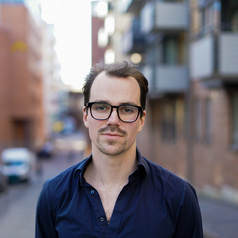
PhD Candidante in Organizational Psychology, Lund University Happiness and personality through the lens of language. How are you? You probably ask this question many times a day, and most of the times, the answers are not through numbers, but through words. Using modern Language AI techniques, such as Large Language Models (LLM; the type of models behind chatbots such as ChatGPT) and Topic modelling, I research how the Language we use can help us understand happiness and personality. Specific happiness related subjects I research include everyday activities, alcohol consumption, and happiness definitions. For personality, I have worked with the Assessment of implicit motives through LLMs and the personality assessments of LLMs on social media. I did graduate school at Lund University, was a predoc at the University of Pennsylvania, and I am doing my PhD at Oslo Metropolitan University. I do several research projects with The World Well-Being Project, allocated at Stony Brook University, University of Pennsylvania, and Stanford University.
University Fellow in Digital Health & Society, University of Salford Dr Lisa Garwood-Cross is a researcher in Digital Health and Society at the University of Salford, Manchester. Her work looks at the impact of social media and digital technologies on society, particularly in relation to health and wellbeing. Her current work explores social media health influencer cultures and how audience trust translates into health influence. Her previous work includes a study of YouTube sex education influencers and the 'COVID Sex Lives' project that looked into the impact of the pandemic on the sex lives and digital habits of men who have sex with men. Lisa also works with health organisations about digital capabilities in the healthcare workforce and social media.