PhD Candidate, Teaching Assistant & Guest Lecturer, School of History, Anthropology, Philosophy and Politics, Queen's University Belfast I am a current third year PhD candidate at Queen's University, Belfast. For my PhD I am studying the impact of electoral systems in the devolved areas of the UK and have studied politics and governance across Western Europe. I am a guest lecturer in contemporary Irish politics and a teaching assistant on a number of modules including political theory, statistics and European politics. My work has been published in the Party Politics journal, and I have worked for three years in the UK's education industry.
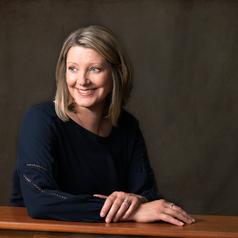
Professor of Communication and Political Science, University of Delaware Dannagal G. Young (Ph.D. University of Pennsylvania's Annenberg School for Communication, 2007) is a Professor of Communication and Political Science at the University of Delaware where she studies the content, audience, and effects of nontraditional political information. She has published over sixty academic articles and book chapters on the content, psychology, and effects of political information, satire, and misinformation [Go to CV]. Her book Irony and Outrage: The Polarized Landscape of Rage, Fear, and Laugher in the U.S. examines satire and outrage as the logical extensions of the respective psychological profiles of liberals and conservatives (Oxford University Press, 2020: here). Her current book project, Wrong: How Media, Politics, and Identity Drive our Appetite for Misinformation with JHU Press is available for preorder and will be published in fall 2023. Dr. Young's 2020 TED Talk explaining how our psychology shapes our politics, and how media exploit these relationships, has been viewed over 1.9 Million times. She publishes extensively in the popular press with essays and Op-eds in outlets including Vox.com, The Washington Post, and The Atlantic. She has appeared on CNN, PBS Newshour, ABC News, NPR, and various national and international podcasts. As of 2020, her research has been cited in over 70 popular press articles, news stories, and interviews at such outlets as The Washington Post, USA Today, Politico, Christian Science Monitor, Variety, the New York Times, the Atlantic, PBS, Slate, and Vox. Her popular University of Delaware course "Propaganda and Persuasion" was released by The Great Courses in 2023. In recognition of her public facing work, in 2021, Dr. Young became the inaugural recipient of the Dr. Robert M. Entman Award in Democracy and Political Communication from the School of Media and Public Affairs (SMPA) at The George Washington University. Young is a Research Fellow with the University of Delaware's Center for Political Communication and was awarded the University of Delaware's Excellence in Teaching Award in 2014. She holds affiliations with the University of Pennsylvania's Annenberg Public Policy Center and the University of Arizona's National Institute for Civil Discourse (NICD), where she co-edited of "A Crisis of Civility: Political Discourse and its Discontents" (Routledge, 2018).
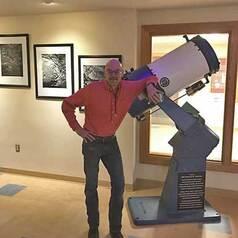
Professor of Geosciences, Pennsylvania Western University With his trademark high energy, vast academic knowledge and inquiry-based pedagogy, Dr. David Hurd has gained a reputation as one of the region’s most engaging professors. A two-time recipient of the Educator of the Year Award at PennWest Edinboro, Dr. Hurd is consistently nominated for a multitude of awards and was awarded the Emmons Award through the Astronomical Society of the Pacific. This is a highly prestigious award recognizing and celebrating outstanding achievement in the teaching of college-level introductory astronomy for non-science majors. Hurd also delivered the keynote address to the first and only national conference of planetarians in St. Louis in 2017. In addition to his invaluable contributions in the classroom, Dr. Hurd manages the PennWest Edinboro Planetarium and provides the local community with interactive and engaging live and online planetarium programs. Every year, thousands of K-12 and general public participants visit the planetarium for educational programming. The planetarium has received national recognition for Dr. Hurd’s inclusion of all learners in STEM objectives. Considered a pioneer in the field, he has dedicated the last 20 years to producing and implementing tactile astronomy materials for the blind and has facilitated workshops on teaching astronomy to the visually impaired.
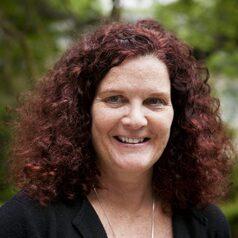
Professor of Geology & Environmental Geosciences, College of Charleston Ph.D. - University of Hawai'i at Manoa M.S. - Southern Illinois University - Carbondale B.S. - SUNY Fredonia A.S. - Corning Community College I have been at the College of Charleston since 1995. I am also the Director for NASA South Carolina Space Grant and EPSCoR programs. And the current Vice Chair for the National Council of Space Grant Directors.
Assistant Professor, Chemistry, Binghamton University, State University of New York The Swierk group is broadly interested in understanding and controlling radical reactions initiated by single electron transfer, most often via photo- or electrochemistry. Use of spectroscopic and electroanalytical methods is central to much of the research in the group. One major area of emphasis within the group deals with understanding photoredox reactions. This class of reactions is transforming modern synthetic chemistry by substituting hard-to-handle, expensive and toxic reagents (e.g., HSnBu3) with short-lived excited states that can themselves be potent oxidants or reductants. Challenging bond-forming reactions can be accessed with this chemistry and, often, a variety of functional groups can be tolerated. Despite the promise of photoredox methods, a mechanistic understanding is lacking. Using a variety of experimental approaches and kinetic modeling, the Swierk group seeks to completely characterize photoredox catalytic cycles and identify the kinetically limiting steps, with an eye towards informing the design of new reactions. A second area of emphasis deals with electrosynthetic reactions and seeks to understand the role of electrode materials and double-layer structure on novel, bond-forming reactions initiated electrochemically. Systems of interest range from the desulfurization of fuel oils to small molecules for pharmaceutical applications. Standard electrochemical methods (e.g., CV, LSV, impedance) are partnered with the development of new spectroelectrochemical methods. There is also an NIH-funded effort in the lab focused on the safety and photochemistry of tattoo inks. Despite the popularity of tattoos and the billions of dollars spent every year on laser tattoo removal, we do not understand how tattoo inks transform under illumination and what risks they may pose to human health. The Swierk group utilizes a transdisciplinary approach that draws from analytical chemistry, materials science and cell biology to address the simple question, "How do tattoos fade?" In addition to the major project areas described above, there is also work in the group on the synthesis of carborane transition metal complexes for photophysical and catalytic applications, deep eutectic solvents for organic reactions, and photoelectrochemical methods for initiating radical reaction mechanisms.
Ph.D. Candidate in Civil Engineering, Drexel University Mohammad, a Ph.D. candidate in Civil Engineering at Drexel University, focuses on bio-inspired self-healing materials with a strong background in advanced material manufacturing and characterization. His current research is dedicated to harnessing nature's ingenuity to develop groundbreaking solutions for damage-responsive self-healing in concrete. He has also been involved in the development of vascular self-responsive composites for thermal regulation in buildings. His previous work includes the performance assessment of organic-based sealants, providing robust protection against concrete degradation. Moreover, Mohammad has worked on the conversion of waste coal combustion by-products into construction materials, striving to foster sustainability and minimize environmental impact.