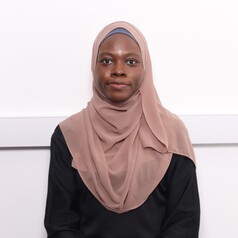
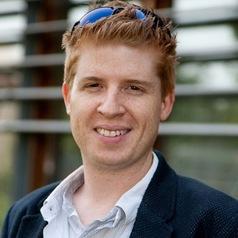
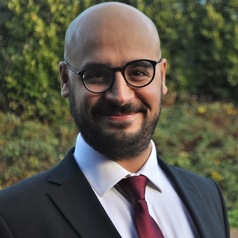
PhD Candidate, School of Architecture, University of Liverpool Adefola Toye is a PhD student at the University of Liverpool’s School of Architecture. She completed a bachelor’s degree in Architecture and a master's in Environmental Design at the University of Lagos. Adefola is a recipient of the 2020 A3-ARCHNET Prize for Writing on African Architectures and a 2021 Student Fellow of the Society of Architectural Historians (SAH). Her PhD research in collaboration with The National Archives, London, focuses on the tropical modernist architecture of Nigeria’s first universities and its role in the development and identity of independent Nigeria.
Lecturer, Institute for European Policymaking, Bocconi University Viktoriia Lapa is a Lecturer in the Department of Law at Bocconi University, Milan and an Affiliated Scholar at the Center for Constitutional Studies and Democratic Development, Bologna. She obtained her Ph.D. from Bocconi University. Her research interests cover national security in international trade law, Euroatlantic integration commitments within constitutions and Ukraine's EU accession.
Associate Professor of Intercultural Communications (Tourism and Languages), Edinburgh Napier University Phiona Stanley has degrees from the University of Edinburgh (MA Honours in Politics, 1994), the University of Sydney (MEd, 2006), and Monash University (PhD, 2010); in addition, she has vocational qualifications in TESOL --RSA Cert (1993) and RSA Dip (1997)-- and the DELE Superiór in Spanish (2002). She currently works as Associate Professor of Intercultural Business Communication at Edinburgh Napier University in Scotland. Phiona's academic publishing includes five Routledge books on topics including: Westerners teaching English in China, backpackers learning Spanish and engaging in volunteer work/staying in homestays in Latin America, and the gendered cultural pressures women experience to 'fit in' socially, even now. Methodologically, she has contributed to autoethnography, editing two books on the research method's intersections with culture/the intercultural. She has also published around 40 peer-reviewed journal articles and book chapters. Thematically, Phiona's work is all about mobilities and about the 'intercultural' in its broadest sense: complex comings and goings of humans, non-humans, and objects in specific times and places. Within a broad focus on how cultures operate, she is particularly interested in gender, embodiment, and other normative 'rules', and in the tensions between conventionality and singularity. This has required an ambitious traversing of disciplinary boundaries and innovative cross-pollination of theory.
Associated Professor in Tourism, Edinburgh Napier University Craig Wight is an Associate Professor at Edinburgh Napier University. He has authored a number of publications on tourism and heritage management in top rated journals and in edited collections. He has also undertaken a wealth of tourism, hospitality, leisure and cultural research and consultancy for a range of national and international clients within the public, private and voluntary sectors. He is a recognised expert in the area of genocide heritage in European city destinations and recently gave an interview to the New York Times on this topic. Most recently, Craig has produced research looking at visitor reactions to genocide heritage museums on social media, and public responses to moral transgression at European Holocaust heritage sites.
Associate Professor of Human-Computer Interaction, University of Nottingham Max L. Wilson is an Associate Professor of Human-Computer Interaction, in the Mixed Reality Lab, and Director of Student Experience in the School of Computer Science. His EPSRC, European, and Google funded research is focused on the use of fNIRS brain data, about mental workload and other cognitive activity, as a form of personal data, that can be used to evaluate technology and work tasks. This work has emerged from his earlier research on the evaluation of user interfaces for interacting with information. Max is on the steering committees of both ACM CHI and ACM CHIIR conferences, as well as a member of the SIGCHI Conferences Working Group, and a Deputy Editor at the International Journal of Human-Computer Studies.
Assistant Professor, Computer Science, University of Nottingham Horia A. Maior is an Assistant Professor and Multidisciplinary Researcher in the Mixed Reality Lab (https://www.nottingham.ac.uk/research/groups/mixedrealitylab/), Horizon Digital Economy Research Institute (https://www.horizon.ac.uk/), Cyber-physical Health and Assistive Robotics Technologies Research Group (https://www.chartresearch.org/) and Brain and Physiological Data Group (https://brain-data-uon.gitlab.io/) in the School of Computer Science at the University of Nottingham. His research is focused on understanding challenges and opportunities when comes to responsible research and innovation in Brain Computer Interfaces, Human Computer Interaction, Human Robot Interaction and Trustworthy and Responsible AI. Horia is involved in the wider research and innovation ecosystem and acts as a trustee at the Foundation for Science and Technology (https://www.foundation.org.uk/), and part of outreach and public engagement initiatives with the local community and acts as a trustee at Inspire Foundation Nottingham (https://www.inspirefoundation.org.uk/)