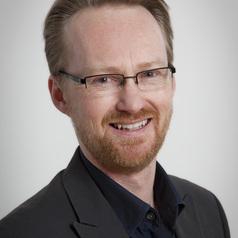
Professor of Urban Planning, Faculty of Architecture, Building and Planning, The University of Melbourne Dr Alan March is Professor in Urban Planning. He undertakes research and teaching in the area of urban planning and disaster risk reduction, including bushfire. Alan has twice won the Global Planning Education Network prize for Best International Planning Paper (2007, 2011). His teaching includes disaster risk reduction, urban design, planning law and planning theory subjects, and he was awarded a Faculty teaching prize in 2007. Alan has successfully supervised over 80 student theses encompassing a range of urban design and planning research topics. He has successfully supervised eight PhD theses to completion. Alan was an Associate of the Melbourne Sustainable Society Institute and has been the Leader of the research theme Risk Resilience and Transformation & and of Cities and Towns. Alan has practised since 1991 in a broad range of private sector and government settings and has had roles in statutory and strategic planning, advocacy, and urban design. He has worked in Western Australia, the UK, New South Wales and Victoria. Alan’s early career included projects as diverse as foreshore protection plans, rural to urban subdivision approval and design, the Mandurah Marina and Urban Design Guidelines for the Joondalup City Centre. In England, he has worked in brownfield and inner city redevelopment, including land assembly and urban regeneration projects. Alan has extensive experience in inner city redevelopment projects in Melbourne since 1996. Alan's publications and research include examination of the practical governance mechanisms of planning and urban design, in particular the ways that planning systems can successfully manage change and transition as circumstances change. He is particularly interested in the ways that planning and design can modify disaster risks, and researches urban design principles for bushfire. His current work also considers the ways that urban planning is seeking to establish new ways to spatialise urban management.
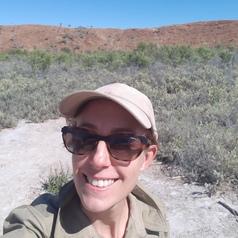
Research Fellow, James Cook University Cassandra is a palaeoecologist, with a background in botany and geography, specialising in the use of pollen and charcoal to reconstruct past environments. Her research interests include the action of climate change and fire dynamics on ecosystem variability, and human-landscape relationships on vegetation pattern, with emphasis on tropical savanna environments, mangrove and island flora. Cassandra has wide experience working across northern Australia, extending into southern lowland Papua New Guinea.
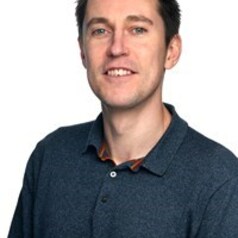
Senior Lecturer in Sport, Health and Exercise Sciences, Brunel University London Dr Daniel Bailey is a Senior Lecturer in Sport, Health and Exercise Sciences in the Division of Sport, Health and Exercise Sciences, Department of Life Sciences. He is Co-Director of the Centre for Physical Activity in Health and Disease after previously establishing and leading the Sedentary Behaviour, Health and Disease Research Group. Dr Bailey's research investigates the relationship between sedentary behaviour and chronic health conditions, with a particular focus on non-communicable disease. This research includes the epidemiology of sedentary behaviour and associations with non-communicable disease risks, controlled laboratory studies examining the acute effects of breaking up prolonged sitting on cardiometabolic biomarkers, and the development and evaluation of interventions to reduce sedentary behaviour and increase physical activity in a range of population groups at risk of adverse health such as people with Type 2 diabetes, office workers, individuals with a spinal cord injury, and older adults with frailty.
Research Fellow in Social Anthropology, University of Sussex Dr. Smytta Yadav is an anthropologist whose research has primarily focused on labor, precarity, informality, autonomy, global production networks, globalization, urbanization, industrialization, and heritages. She has held research fellowships at prestigious institutions such as the University of Manchester, Queen's University Belfast, the University of York, and the University of Bristol. Additionally, Dr. Yadav has extensive teaching experience, having taught Anthropology at the University of Sussex and lectured in Human Geography at the University of Brighton. Previously, she also taught Cultural Anthropology, Globalization, and International Development at the Maxwell School of Citizenship at Syracuse University and at the State University of New York.
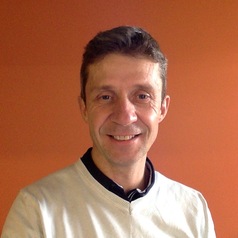
Professeur des Universités en Physiologie de l'Exercice / Neurosciences Intégratives, Directeur Unité Recherche EuroMov Digital Health in Motion, Université de Montpellier Professeur des Universités (2008) Membre honoraire IUF (2008-2013) Habilitation à Diriger des Recherches (2003) Thèse de Sciences Biologie de la Santé - Physiologie de l'Exercice (2000) Depuis 2000, je travaille sur les thématiques de la cinétique du coût énergétique, la neurophysiologie de la fatigue, les liens cerveau - mouvement avec des applications en santé, sport et neurergonomie. Activités de recherche : https://www.researchgate.net/profile/Stephane_Perrey