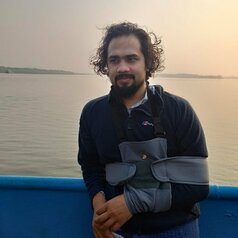
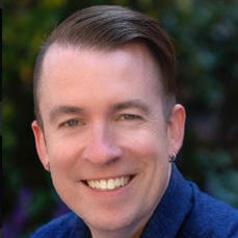
Assistant Professor of Aging, Arizona State University M. Aaron Guest, PhD, MPH, MSW is a socio-environmental gerontologist and Assistant Professor of Aging in the Center for Innovation in Healthy and Resilient Aging at the Edson College of Nursing and Health Innovation at Arizona State University. He is an interdisciplinary trained social-environmental gerontologist interested in the predominant social and environmental domains an individual exists in and how this knowledge can lead to new understandings of health. His work pulls from a diverse, theoretically rich background, including training in public health, with an emphasis on health promotion, social work, with a focus on macro-level policy and community change, health communication, dissemination and implementation science, social network analysis, sociology, and geospatial approaches to understanding health. Through this work, he seeks to develop novel, tailored health interventions that can be utilized to increase the diffusion and translation of health innovations and thus increase access and utilization of critical health programs and services for older adults and their families. In short, he aims to create the optimal person-environment fit for the most advantageous health benefits for individuals as they age. The scope of his research can be grouped into two overarching themes: Interventions for Decreasing Health Inequities and Improving Health Equity in Aging and Aging in the Social & Built Environments. The thematic connection between these domains is a commitment to, and interest in, the social and built environments in which individuals age – and the development of understandings of the ideal person and environment fit from this knowledge. In addition to these roles, he serves as the Chair of the Age-Friendly University Global Network Secretariat, based at Arizona State University.
Assistant Professor of Mechanical Engineering and Mechanics, Drexel University Dr. Wes Chang is an Assistant Professor in the Department of Mechanical Engineering and Mechanics, and a Faculty Affiliate in the Department of Materials Science and Engineering, at Drexel University. Wes completed his BS (2014) and MS (2016) in Chemical Engineering at Stanford, and his PhD (2021) in Mechanical Engineering and Materials Science at Princeton. After completing his doctoral thesis, he continued working on lithium metal batteries as a Postdoc at Columbia University in collaboration with electric vehicle companies. He spent the following year (2022 – 2023) as the Beckman Postdoctoral Fellow at Caltech, where he worked on lithium-mediated electrochemical ammonia synthesis. He is the recipient of the Electrochemical Society F.M. Becket Fellowship and the Arnold O. Beckman Postdoctoral Fellowship. Outside of academia, he has previously worked in the battery industry and management consulting for energy and utilities, and regularly serves as a technical advisor to energy-focused startup companies and investment firms.
Associate Professor of Romance Languages and Literatures, Director of Latin American, Caribbean, and Latinx Studies Program, Bowdoin College Margaret Boyle's teaching and research spans the literature and culture of early modern Spain and colonial Latin America. She is the author of Unruly Women: Performance, Penitence and Punishment in Early Modern Spain (University of Toronto Press, 2014) and co-editor of Health and Healing in the Early Modern Iberian World: A Gendered Perspective (University of Toronto Press, 2021). Her primary interests include Hispanic women's literary and cultural history, comedia history and performance, and health humanities, including medical, spiritual and food cultures.
Graduate Researcher in Ecology, Evolution and Behavior, University of Minnesota I have a Masters in Neuroscience from King's College London, 2 years of research experience at the Max Planck Florida Institute for Neuroscience, and have been pursuing a PhD in Ecology from the University of Minnesota since 2018. Here, I have worked with my advisor Paloma Gonzalez-Bellido on several projects centered on visually driven hunting behavior in invertebrates
Associate Professor of Theatre, College of the Holy Cross Scott Malia is an Associate Professor of Theatre and Chair of the Theatre & Dance Department at College of the Holy Cross, where he teaches courses on theatre, film and television, with an emphasis on LGBTQ+ identities and comedy. His directorial credits include "She Kills Monsters," "The Curious Incident of the Dog in the Night-Time," "Middletown" and "Cloud 9." His plays "The Interview," "A Few Adjustments" and "Buffering" were featured in the Boston Theatre Marathon, and he has translated Carlo Goldoni’s "The Servant of Two Masters" into metered verse. His writing has been featured in Theatre Journal and New England Theatre Journal, and his book, "Giorgio Strehler Directs Carlo Goldoni," was published by Lexington Press in 2013.
Lecturer in History, University of Galway Tomás Finn is a lecturer in History at the University of Galway. He specialises in Irish and British history. An internationally recognised scholar, he is regarded as an authority on modern Irish political history. His research and publications have made a significant contribution to historical scholarship. The importance of his prize winning book on Tuairim in understanding the evolving intellectual climate in Ireland and its role in persuading governmental institutions to adopt new policies and a chapter on Donal Barrington, the Supreme Court Judge, in an edited volume have shown that public intellectuals in Ireland and among its diaspora, in fact, did influence the key policy decisions that shaped modern Ireland. This concern with intellectuals and social movements and the process of modernisation is reflected in his current work. He is currently co-editing two books and has chapters in each of these, one on Youth Political Parties and the other Muintir na Tire, the rural social movement. His work thus reflects the Department of History and School of History and Philosophy's ongoing research strengths in the areas of Activism and Justice, Religion and Society and Childhood, Youth and Family. He focuses on the intersection between intellectuals, civil society and church and state in understanding the process of modernisation.