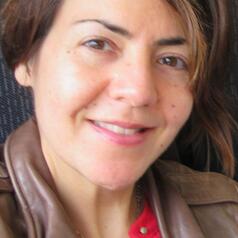
PhD Candidate in Economics, Macquarie University I am a PhD candidate in economics at Macquarie University. My research lies at the intersection of economics and public health, using advanced methods in applied econometrics to explore the intricate connections between economic factors and health outcomes. My current focus revolves around investigating socioeconomic inequalities in hearing health. My expertise includes applied econometrics, health technology assessment, health economic modelling, economic evaluation in health care and energy economics.
Professor, Electrical and Computer Engineering, Université Laval Christian Gagné is a professor at the Electrical Engineering and Computer Engineering Department of Université Laval since 2008. He is the founding director of the Institute Intelligence and Data (IID). He holds a Canada-CIFAR Artificial Intelligence Chair and is an associate member to Mila. He is conducting research on the development of methods for machine learning and stochastic optimization. A significant share of his research work is on the practical use of these techniques in domains such as computer vision, microscopy, health, energy and transportation.
Senior Researcher, Department of Physics, University of Oxford I am an expert in stratospheric processes and their links with weather and climate. I am a senior researcher at AOPP in the Physics Department and also affiliated to the National Centre for Atmospheric Science (NCAS). My research interests include understanding the role of stratospheric mechanisms for weather and climate prediction, as well as the use and development of alternative techniques to include such mechanisms in state-of-the-art Earth System Models. I have previously worked as a Senior Researcher at the University of Reading and at the Ecole Normale Superieure in Paris. I keep active collaborations with ECMWF, where I also worked for several years on model improvements for the stratosphere and assessment of corresponding impacts at different timescales. Before that I obtained a Marie Curie personal Fellowship that I carried out at the Royal Netherlands Meteorological Institute (KNMI), right after being a NERC Research Fellow at the University of Leeds. As part of WCRP activities, since 2012 I lead a group of top international scientists working on Brewer-Dobson Circulation research for the SPARC Reanalyses Intercomparison Project (SRIP). I have HE teaching experience at graduate and undergraduate courses, have designed and taught courses on “Climate and Weather Prediction Models”, “Intelligent Instrumentation” and “The Ozone Layer”, among other topics.
Professor of the History of Science and Medicine in the School of History and Heritage, University of Lincoln Anna Marie Roos is a historian of early modern English science, noted for her research on the early Royal Society. She is a professor in the School of Humanities and Heritage at the University of Lincoln, a Fellow of the Society of Antiquaries, a Fellow of the Linnean Society, and the Editor-in-Chief of Notes and Records: The Royal Society Journal of the History of Science.
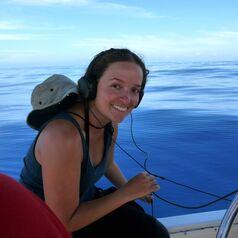
Enseignante chercheuse en éthologie, Université Paris Nanterre – Université Paris Lumières Depuis 2008 Juliana López Marulanda s’intéresse a l’écologie et le comportement des cétacés. Elle possède de solides compétences dans la collecte de données acoustiques et comportementales chez les mammifères marins. Elle a participé à un projet de recherche sur le comportement de pêche des dauphins de Guyane (Sotalia guianensis) au Brésil pendant ses études de premier cycle. De retour dans son pays natal, elle a cofondé et dirigé une organisation à but non lucratif en Colombie (www.macuaticos.org) pour la conservation des mammifères marins. Elle a conçu et développé un projet de recherche pour diagnostiquer la composition taxonomique, la distribution spatiale, la structure sociale et les menaces de conservation de la communauté des mammifères marins dans le golfe de Tribuga, dans le Pacifique Nord colombien. De ce projet, il a acquis les compétences nécessaires pour concevoir et gérer des expériences sur le terrain. Au cours de sa première année de maîtrise, il a étudié les changements dans la fréquence respiratoire des globicéphales noirs (Globicephala macrorhynchus) par rapport au bruit sous-marin et a constaté que les changements respiratoires chez cette espèce ne semblent pas être un bon indicateur du stress. Au cours de sa deuxième année de maîtrise, elle a étudié la perception sensorielle des grands dauphins (Tursiops truncatus) captifs et a trouvé des preuves de magnétoréception en détectant des champs magnétiques expérimentaux (Kremers et al., 2014). Au cours de son doctorat, elle a étudié la communication chez les grands dauphins à l'Institut de Neurosciences Paris-Saclay encadrée par le Pr. Olivier Adam et le Dr. Fabienne Delfour. Elle a analysé la production des sifflements des dauphins captifs en relation a ces séances de training et elle a trouvé une augmentation significative des sifflements après les interactions avec les humains (Lopez-Marulanda et al., 2016). Elle a participé au développement d’un système d’enregistrement audio-vidéo appellé BaBeL, que consiste a 4 hydrophones et une caméra 360º. Ce système permet la localization du dauphin emetteur d’un son et ainsi permet faire le lien entre la production sonore et les observations comportementales. Le système BaBeL a ete testé avec des dauphins en liberté (Lopez-Marulanda et al., 2017) et avec des dauphins captifs (Lopez-Marulanda et al., 2019) en plusieurs delphinariums d’Europe. Actuellement elle est enseignante-chercheuse temporaire à l'université de Paris Nanterre dans le Laboratoire de Éthologie Cognition et Développement (LECD).