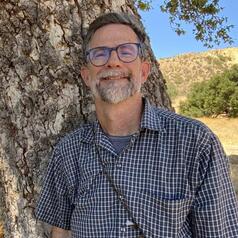
Professor of Sociology; Director, Master of Science in Criminology and Criminal Justice, University of Michigan-Dearborn From 1992 until 2000, I was a public health field worker, specializing in tuberculosis control, first in New York City and then in Chicago. I earned my PhD from Loyola University Chicago in 2001, and wrote my first book based on my dissertation field work, Consumed in the City: Observing Tuberculosis at Century’s End (Temple University Press, 2004). At UM-Dearborn, I teach a variety of classes, including Medical Sociology, Urban Sociology, Sociological Theory, Deviant Behavior, Restorative Justice and Inside-Out Prison Exchange. I have published numerous articles on substance abuse, from crack cocaine in small towns in Ohio to heroin in the city of Detroit, and on urban green space. Lately I have been spending a lot of time in alleys.
Lecturer in East Asian Religions, Arts & Sciences at Washington University in St. Louis Alessandro Poletto (he/they) specializes in the social and religious history of premodern Japan, with an emphasis on Buddhism in the early medieval period (tenth to the thirteenth century). He earned his PhD from Columbia University in 2020 with a dissertation entitled “The Culture of Healing in Early Medieval Japan: A Study in Premodern Epistemology,” in which he examined discourses and practices concerning healing and disease, with particular attention to the relationship between Buddhist healers and other technicians involved in the treatment of illness, namely court physicians and onmyōji. His other research and teaching interests include the understanding and ritual resolution of natural disasters in premodern East Asia, the history of the cultural exchanges between the Korean peninsula and the Japanese archipelago, and Buddhist material culture and archeology in East Asia. His current research focuses on the material and textual dimensions of various types of deposits — within statues or under the ground — in order to get a grasp of Buddhism as practiced by lay Buddhists in early medieval Japan. Dedicatory or votive materials discovered inside Buddhist statues or in underground deposits (commonly known as kyōzuka) illustrate the motivations behind the undertaking of a certain burial of sutras, or the production of a copy of a specific sutra, allowing us to see the hopes, aspirations and anxieties of the people engaging in such practices, but also the ways in which they attempted to shape their destinies, and those of deceased dear ones, through their dedicatory good acts. Before joining Washington University, Alessandro was a JSPS postdoctoral fellow at Kyoto University. He holds a B.A. from the University of Naples “L’Orientale,” and an M.A. from Osaka University.
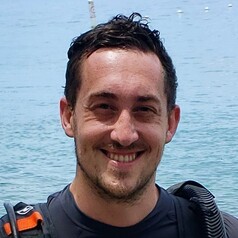
Senior Instructor in Emergency Medicine, University of Colorado Anschutz Medical Campus I am an emergency physician based in Colorado, with a background in delivering high-quality medical care in some of the world's most remote locations. My clinical experience spans from the Alaskan arctic to the tropical island of Saipan, with multiple periods of volunteering in clinics located in Nepal's Khumbu Valley and Peru's Sacred Valley. This journey has broadened my medical expertise and enriched my understanding of diverse healthcare systems. My passion for altitude medicine stems from a Wilderness Medicine fellowship at Massachusetts General Hospital, an experience that profoundly shaped my career path. This specialized training, coupled with significant clinical exposure in the high-altitude regions of Peru and Nepal, has deepened my interest and expertise in this field. Currently, I am leading multiple research projects focused on high-altitude pathology and treatment. These initiatives are aimed at enhancing our understanding of altitude-related illnesses and developing innovative treatment strategies through unique investigational techniques and evidence-based medical practice.
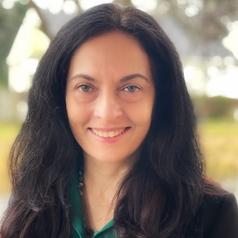
Assistant Professor of Pediatrics, Emory University I am an Assistant Professor of Pediatrics and am currently part of the team at ACME POCT (Atlanta Center for Microsystems Engineered Point-of-Care Technologies), the Test Verification Center for RADx (Rapid Acceleration of Diagnostics) Tech that is involved in validating tests that are used to detect and diagnose SARS-CoV-2 infections. I co-lead the Analytical Testing Lab of RADx at ACME POCT. Since December of 2020, we along with the Variant Task Force (comprising leaders in the diagnostics industry, NIH, FDA, and academia) have been involved in “testing the tests”. We ascertain that diagnostic tests are capable of accurately detecting all rapidly arising SARS-CoV-2 variants and to establish a biobank at Emory University that includes all the known variants of concern (VOC) that are circulating in the US. A major portion of this endeavor involves using clinical samples of specific variants to verify that diagnostic tests detect all the circulating variants as effectively as wild type SARS-CoV-2. In the past year, we are analyzing multiplex tests. These are home tests being developed for simultaneous detection of Influenza A, Influenza B and SARS-CoV-2 using a single sample. In addition to working to facilitate EUA for over-the-counter multiplex tests, our team also working on analytical studies for other point of care device for detection of viruses involved in common curable liver disease.
Executive Director of the Mossavar-Rahmani Center for Business and Government, Harvard Kennedy School Dan Murphy is executive director of the Mossavar-Rahmani Center for Business and Government (M-RCBG) at the Harvard Kennedy School where he works in support of the Center’s mission “to advance the state of knowledge and policy analysis concerning some of society’s most challenging problems at the interface of the public and private sectors.” Before joining M-RCBG, Dan served for nearly five years as executive director of the Fairbank Center for Chinese Studies and Harvard China Fund, which together are world-leading research centers for the study of China. During his tenure Dan broadened awareness of the Fairbank Center and China Fund both within Harvard and beyond; reinvigorated programming and engagement with stakeholders; and played an important role in fundraising efforts which left both units in solid financial standing. In 2019, he was a key member of the team that traveled with Larry Bacow to Greater China for meetings with academic partners and government officials. Before coming to Harvard Dan served as the inaugural program director for Yale Center Beijing. In that role, he worked in partnership with deans, faculty, and contacts in China to produce programming at Yale’s facility in Beijing. From 2008-14 Dan was at the National Committee on U.S.-China Relations, finishing as director of special initiatives. At the National Committee, he grew the Public Intellectuals Program, which connects America’s next generation of leading scholars with policymakers and the media. He also led delegations of senior American Congressional staff on study visits to China, directed a range of other programming, and led successful grant initiatives that were funded by the State Department and private foundations. Dan received a full scholarship to pursue graduate studies at the Johns Hopkins University-Nanjing University Center for Chinese and American Studies, where he studied politics. He also holds an M.A. in Chinese Studies from the University of Massachusetts, Amherst and a B.A. in English and Chinese Language and Literature from Connecticut College. In 2001, Dan was a Thomas J. Watson Fellow. Dan is a member of the National Committee on U.S.-China Relations and serves on the advisory board of SupChina. He speaks fluent Mandarin.
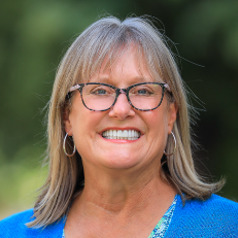
Professor and Director of Environmental Science, Oklahoma State University Karen Hickman, Ph.D., is a grassland ecologist and professor of natural resource ecology and management at Oklahoma State University. She serves as the director of the environmental science program in the Ferguson College of Agriculture. Her research focuses on invasive forages and grassland/rangeland ecology in the Central and Southern Great Plains. Hickman is president of the Society for Range Management. She also is owner/operator of her family's farm and ranch in northwest Oklahoma.