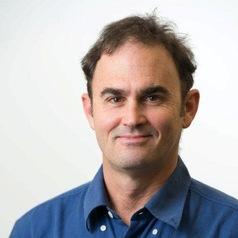
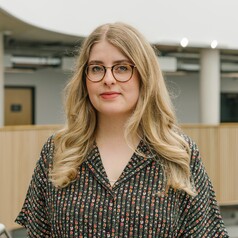
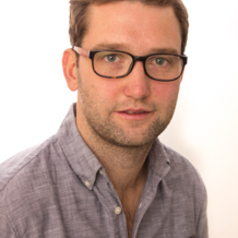
Professor, School of Psychology, University of Adelaide Professor Peter Strelan is Head of the School of Psychology at The University of Adelaide. His research interest is predominantly on forgiveness, with a specific focus on the relation between justice and forgiveness.
Senior Research Fellow, CAEEPR, Griffith University Dr Phillip Wild has a PhD from the University of Queensland specialising in the field of macro-economic modelling. His main area of research since 2009 has been in Energy Economics with a particular focus on wholesale electricity market modelling of the Australian National Electricity Market (NEM), integration of variable renewables (e.g. wind, solar PV, hybrid gas-solar thermal), levelized cost modelling, the role that renewable hydrogen might play in decarbonisation pathways and network balancing, energy policy issues linked to these research topics, agent based modelling and econometric modelling of National Energy Market (NEM) spot price and load time series data.
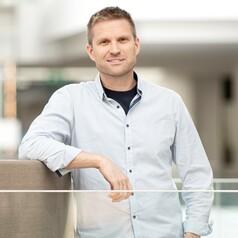
Professor & Director, Centre for Applied Energy Economics and Policy Research, Griffith University Dr Söderberg has spent his career studying the essential services (electricity, district heating, water and sewerage and municipal solid waste), using an economic lens.
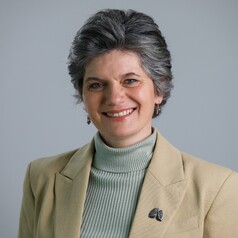
Associare Professor, College of Medicine and Public Health, Flinders University Associate Professor Sonja Klebe is a senior staff specialist in Diagnostic Pathology at Flinders Medical Centre and a Clinical Academic Associate Professor at Flinders University. She has a special interest in pleuropulmonary pathology and molecular pathology with a focus on mesothelioma and asbestos-related diseases. Sonja graduated from Medicine at the Free University of Berlin, with a MD in Biochemistry. She completed a PhD in Immunology and Gene Therapy at Flinders University in Adelaide in 2000 and obtained her Fellowship from the Royal Australasian College of Pathologists (RCPA) in 2005. She is a Member of the International Mesothelioma Panel, the Pulmonary Pathology Society and the International Mesothelioma Interest Group (IMIG) and IASLC staging committee. She is also a member of Lung Expert Group for development of Lung Cancer Structured Reporting Protocol for the RCPA and heads the mesothelioma structured reporting. She is a contributor to the WHO blue books. She regularly serves as an expert on diagnosis in mesothelioma to the courts. She has been an invited speaker for the Australian Society of Cytology Annual Conference, the Australian Lung Cancer Conference, World Lung Cancer Conference and the Australasian Pleuropulmonary Society as well as COSA. She has successfully supervised 7 honours and 6 PhD students to completion. Her interests have focussed on clinically relevant basic research applications, and her 7-year appointment as Chief Examiner for the RCPA underscores her standing as an expert in pathological processes. She has published 5 book chapters and over 100 peer-reviewed publications.
University Teacher in Sociology, University of Sheffield Dr Briony Hannell is an early-career feminist researcher and sociologist based in the Department of Sociological Studies at the University of Sheffield, UK. She completed her PhD in Politics at the University of East Anglia, UK, in 2021. Her research interests span across (digital) media, culture, and communications, feminist sociology, cultural studies, internet studies, digital sociology, youth studies, and fan studies. She is primarily interested in young people, citizenship and participation, and digital (anti)feminisms. Her research on young people, feminism and anti-feminism, fan culture, digital culture, and Tumblr has been featured in The Observer, Vice, The Independent, Dazed, WIRED, BBC Radio, and more. Her first book, Feminist Fandom: Media Fandom, Digital Feminisms, and Tumblr was published by Bloomsbury in early 2024.
Associate Professor in Psychology and Neuroscience, University of York Psychologist and neuroscientist who conducts research into episodic memory, spatial navigation, forgetting, and sleep. I use experimental psychology, brain imaging (fMRI and MEG), polysomnography, and computational modelling to understanding how the brain allows us to remember things over long periods of time. I am particularly interesting in understanding why and how we forget. Ultimately, I want to know whether we can minimise forgetting when we want to remember things, such as in an educational setting, and increase forgetting when we want to forget, such as when we have intrusive memories of traumatic events.