Associate Professor (Reader) in History, University of Plymouth Reader in history – Teacher of Students – All Round Friendly Guy – Keeper of Buster "The History Dog". I've taught history at the University of Plymouth since 1992. It is a great subject, and I'm teaching it at a great university. Author of The War for England’s Shores (United States Naval Institute Press, Annapolis [MD.], 2023). Qualifications BA First Class Hons History Loughborough 1989 PhD Leicester 1993 31 years of teaching experience and a lifetime of research in history. Roles on external bodies Naval and Maritime History is one of my passions (along with "old stuff", stories and places generally) I am one of the trustees of the museum and collections Britannia Royal Naval College.
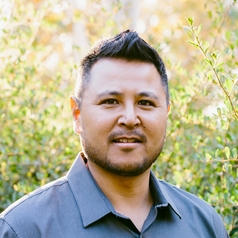
Associate Professor of Chicana/o and Central American Studies, University of California, Los Angeles Robert Chao Romero received his Ph.D. from UCLA in Latin American history and his Juris Doctor from U.C. Berkeley. His research explores the little-known history of Asian-Latinos, as well as the role of Christianity in social justice movements in Latin America and among U.S. Latinas/os. Romero is the author of several books, including, “The Chinese in Mexico, 1882-1940” and “Brown Church: Five Centuries of Latina/o Social Justice, Theology, and Identity.” “The Chinese in Mexico” received the Latina/o Studies book award from the Latin American Studies Association and “Brown Church” received the InterVarsity Press Readers’ Choice Award for best academic title. Romero is also an attorney, ordained minister, and faith rooted community organizer.
Academic Dean, Centro Latino & Associate Professor of Mission and Global Transformation, Fuller Theological Seminary Academic Dean of Centro Latino and Associate Professor of Mission and Global Transformation at Fuller Theological Seminary. Ordained Pastor in the Evangelical Lutheran Church in America since 1988. Dissertation: Equipping Hispanic Immigrant Pastors for Holistic Mission (2018) Co-author of Faith-Rooted Organizing: Mobilizing the Church in Service to the World (IVP, 2014), Buried Seeds: Learning from the Vibrant Resiliency of Marginalized Christian Communities (Baker Academic 2022), God's Resistance: Mobilizing Faith to Defend Immigrants (New York University Press, 2023). Co-founder of multiple national initiatives engaging faith communities in social justice issues, including the New Sanctuary Movement and the Evangelical Immigration Table.
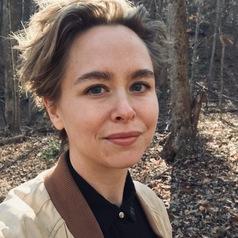
Assistant Professor of Anthropology, University of South Carolina Dr. Fisher is an Assistant Professor of anthropological archaeology at the University of South Carolina who studies the deep histories of environmental justice conflicts through community-engaged archaeology. Since 2013, she has been conducting research in and with the community of Yaxunah, Yucatán, Mexico. Her research investigates the historical-ecological dynamics of colonial and modern cattle farming in Yucatán, as well as the history of gold mining in the Carolinas. Her research interests also include the entangled histories of global food systems, interactions among Indigenous and colonial ecological knowledges, and the application of archaeological approaches to environmental justice conflicts.
Professor of Atmospheric and Planetary Sciences, Purdue University Dr. Johnson’s work has tackled a wide range of topics and scientific methods including airborne measurements of water vapor in pre-depression areas over the Atlantic, laboratory studies of water ice nucleation in the atmospheres of Earth and Mars, and high-resolution single cloud models for comparison with maritime cumulus observations. Her current research interests span clouds in atmospheres on Earth, Mars and Exoplanets, the formation, presence, and properties of clouds in the early Lunar atmosphere, and Titan Methane-Ethane-Nitrogen cloud microphysics. Most recently she has developed a novel single particle light scattering instrument to directly measure how atmospheric particulates (clouds and aerosols) interact with radiation across diverse planetary atmospheres.
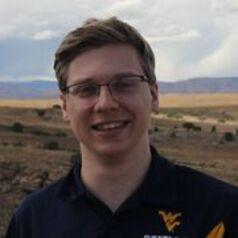
PhD Candidate in Mechanical Engineering, West Virginia University BIO Trevor Smith graduated from WVU in 2021 with a BS in Mechanical Engineering and a BS in Aerospace Engineering. Now he is pursuing his PhD in Mechanical Engineering, studying computational swarm robotics. Outside of research he enjoys robotics competitions and outreach. He competes in the University Rover Challenge Team as an Overall Team lead and as and inter-subteam. In addition to being a member of the WVU Robotics club (that teaches primarily freshman and sophmores about robotics), he mentors local high school Vex Robotics teams. RESEARCH STATEMENT Robotic swarms are a newly emerging field in robotics that provides the advantages of high adaptability and non-single point failure, over conventional single agent robots. Since robotic swarms leverage simple and local agent rules, they can achieve tasks that are intractable for conventional robots to solve. This is because each robot in the swarm only has to solve a simple problem, which collectively emerges to solve the complex global task. While conventional robotics require an individual robot to directly solve the entire complex problem. This process perfectly mirrors computational methods such as Computational Fluid Dynamics (CFD). Where instead of trying to analytically solve a complex flow field (conventional robotics), the flow is discretized into multiple simple fluid elements that each solve for the local flow at that element (robotic swarms). Therefore, if each robot in the swarm is envisioned as a finite element, computational methods, such as CFD, can be applied as agent level rules. This mitigates the great difficulty of determining appropriate local agent rules to achieve a given global task, due to the implicitness of global swarm robotics solutions. Thus my research is in developing a generalized method for designing swarm robotics algorithms using computational methods