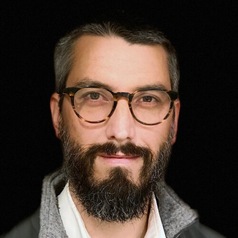
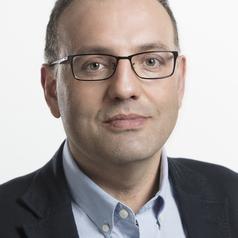
Associate Professor of Earth Sciences, USC Dornsife College of Letters, Arts and Sciences My research focuses on understanding the dynamics of the lithosphere-asthenosphere system at time scales relevant to the seismic cycle. My work revolves around modeling seismic and geodetic data with the long-term goal of improving resilience to seismic hazards.
Assistant Professor of Governance, Utrecht University Erna Ruijer is assistant professor at the Utrecht University School of Governance (USG). She worked as a researcher in the multidisciplinary EU Horizon 2020 project ROUTE-TO-PA. In this three your project she worked with 12 partners from 6 different countries. Her research activities focus on the re-use of open data for public problems, data and social equity, and data collaboratives. Erna teaches in the bachelor and master program. Erna obtained her Ph.D. in Public policy and Administration at the Douglas Wilder School of Government and Public Affairs, Virginia Commonwealth University, USA. Before returning to academia Erna worked as a policy maker for the city of Amsterdam and as a consultant at a firm specialized in government communication.
Catedrático de Ingeniería Química. Centro Singular CRETUS, Universidade de Santiago de Compostela Catedrático de Ingeniería Química en la Universidad de Santiago de Compostela (USC) desde el año 2008. Desarrolla su actividad investigadora en el Centro Singular CRETUS de Tecnología Ambientales, fundamentalmente relacionada con la aplicación de los conceptos de evaluación del ciclo de vida, huellas ambientales y economía circular al desarrollo de productos y procesos. Esta actividad ha dado lugar a la supervisión de 27 tesis doctorales, cuyos egresados trabajan en diversas empresas e instituciones: AZTIC, CETAQUA, CETIM, CLEARIVER VENTURES, CONTACTICA, FEUGA, Fundación ONCE, IMDEA, INDITEX, ITENE, LACTOGAL, Opel (Alemania), Pontificia Universidad Católica del Perú, Universidad de Antioquía (Colombia), Universidad Federico Santamaría (Chile), Universidad de Manchester, Universidad de Niza y Universidad de Santiago de Compostela. El impacto de la actividad investigadora se refleja en más de 400 publicaciones (con un índice h = 68 -base de datos Scopus-), reconocido en diversos rankings de investigación como pertenecer al 2% de los científicos más citados del mundo según el denominado "Ranking Stanford" o al ranking de investigadores españoles del CSIC. El impacto social de la actividad puede establecerse según varios indicadores: (1) 165 citas en 125 documentos de estrategia política ambiental de la Comisión Europea y de 25 países (Alemania, Argentina, Australia, Canadá, EE.UU., España, Francia, Irlanda, Nueva Zelanda, Países Bajos, Reino Unido); (2) 40 contratos de I+D+i con empresas públicas y privadas y (3) 8 patentes o marcas de garantía de calidad (2 en explotación) reconocidas por la Oficina Española de Patentes y Marcas, la Oficina Europea de Marcas y la Agencia de Patentes de EE.UU. Destaca su actividad divulgadora en medios de comunicación, charlas y conferencias en centros de enseñanza secundaria y universitaria, así como en foros organizados por diversas instituciones sociales. • Portal de Investigación de la USC : https://investigacion.usc.gal/investigadores/58858/detalle?lang=es • Google Académico: https://scholar.google.es/citations?hl=es&user=mxyLWl4AAAAJ
Postdoctoral research fellow, Leiden University With my research I aim to obtain reliable estimates of environmental hazards associated with chemicals and nanomaterials. The majority of my work revolves around freshwater ecosystems.
Conjoint Professor in Respiratory and Sleep Medicine, Child Health Research Centre, The University of Queensland Conjoint Professor Paul Robinson is the Deputy Director of the Children's Health Environment Program within the Child Health Research Centre (CHRC), and Senior Staff Specialist in Respiratory and Sleep Medicine at the Queensland Children's Hospital. His research program performs translational research outlining the role of peripheral airway function tests in early lung disease detection and ongoing monitoring of established disease. He has led the development and standardisation of novel measures of lung function across the entire age range from infancy onwards, facilitating the development of commercial equipment available for widespread use. His research focuses on defining the clinical utility of two specific peripheral airway function tests (Multiple breath washout, MBW, and oscillometry) in important obstructive lung diseases (e.g., asthma, cystic fibrosis, and post bone marrow transplant pulmonary graft vs host disease) and in understanding the impacts of environmental exposures. Structure-function relationships have been explored using state-of-the-art imaging techniques, with the aim of also developing new strategies to reduce any radiation exposure associated with these to advance incorporation into clinical care (e.g., ultra-low dose CT). These novel lung function tools are used not only in the hospital setting but also in the school and home setting, enabling the successful development of a parent-supervised remote monitoring strategy for asthma which has been shown to reflect clinically meaningful outcomes missed by conventional approaches. In collaboration with industry, this strategy is now being employed in a series of research projects. Involvement in longitudinal birth cohorts has outlined the early lung function trajectories in health, and the identification of risk factors affecting normal lung development and contributing to the early development of asthma. Studies investigating environmental health have highlighted the adverse effects of ultrafine particle air pollution. Professor Robinson's standing as an international expert, both in terms of clinical and research experience, has led to broader leadership roles across national and international levels.
Associate Professor, School of Public Health, The University of Queensland Dr Osborne, BSc(Hons), MAgSc, PhD is an epidemiologist and toxicologist with research interests in using environmental epidemiology to examine aetiology and pathological pathways of disease. He has worked on a range of projects examining environmental exposures and health outcomes including exposure to metals, pollen, mould, chronic exposures to low levels of chemicals, pesticide and cyanotoxins. He also has experience examining how exposure to the environment may increase health and wellbeing (green/bluespace and solar irradiance and vitamin D). He has developed skills in the linkage of environmental and population health data in an interdisciplinary context, and has expertise in design, linkage, hypothesis formulation, analysis, interpretation, translation and dissemination. He has experience in designing and collecting epidemiological data and initiating studies of primary collected data (HealthIron, HealthNuts, Cornwall Housing Study, Survey of Recreational Water Users, Monitoring of Meniere's Symptoms). He also has used secondary data from existing cohorts (NHANES, UK Biobank, 1958 Birth Cohort, British Household Survey, Melbourne Collaborative Cohort Study, South Asian Clinical Toxicology Research Collaboration), as well as linkage of previously unconnected "big data" sets in mashups on novel platforms (MEDMI project). He has used traditional statistical methods such as linear/logistic regression, time series analysis, interrupted time series and Cox regression to ascertain associations between exposures and outcomes, as well as integrating confirmatory structured equation modelling with environmental/health data sets to construct conceptual diagrams of associations and assess pathway directions. He currently researches pollen and health outcomes as well as chronic kidney disease in low to middle income countries. He has supervised 6 PhD students to completion (2 primary supervisor, 4 co-supervisor) and currently supervises 4 PhD student. He has been associate editor of Archives of Environmental and Occupational Health since 2011 and is on the editorial board of International Journal of Epidemiology, International Journal of Environmental Research and Public Health and Pediatric Allergy, Immunology and Pulmonology. He is a member of Australasian Epidemiology Association, International Society of Environmental Epidemiology and International Epidemiology Association. He has previously worked at the Universities of NSW, Sydney, Exeter, Melbourne, Portsmouth, Queensland and Flinders, the Murdoch Children's Research Institute and the Cancer Council Victoria. He completed his PhD at the School of Population Health, University of Queensland/National Research Centre of Environmental Toxicology working on the toxicology and public health effects of cyanobacterial toxins in southeast Queensland.