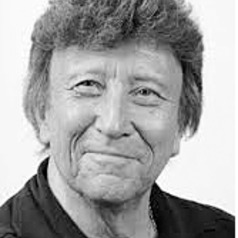
Research Group Leader, Water-Energy-Carbon, The University of Queensland Steven is a water leader with senior experience in research, industry, and government, developed through roles with The University of Queensland, CSIRO, Brisbane Water, Sydney Water, and private consulting. He has worked with urban water, wastewater, stormwater, and related energy and greenhouse gas issues since 1990. His work addresses urban water security, water-energy nexus, and circular economy . He creates collaborations, tools, models and knowledge to address all flows of water – and related energy - into, out of, and within cities. This enables evaluation and management of key concepts such as: (i) net zero carbon water cycle, (ii) hybrid, decentralised and integrated systems performance, and (iii) sustainable urban design and planning. Steven’s work is enhancing performance benchmarking of cities, shaping development, guiding policy and infrastructure investment locally and internationally. He has secured and delivered over $8m funding for his research since 2005, most since 2013. This includes multiple international and national projects for the Asian Development Bank, Water Research Foundation (USA), and CRC Water Sensitive Cities. He has authored over 60 Scopus-listed articles in high-quality journals, 20 books or major CRC public reports, 10 book chapters and over 67 conference articles (over 200 total articles). Steven is a long-term and regular funded plenary and invited keynote presenter to peak international forums including: World Water Forum, World Water Congress, World Water Week and Singapore International Water Week. Steven’s strong multi-disciplinary work spans environmental, chemical and civil engineering, natural resources management, and urban planning and design. He has developed urban metabolism theory, including its links to integrated water management and industrial ecology.
Adjunct Professor, Griffith University, Griffith University Raymond Evans is a well-known Australian social historian, specialising in such fields of research as race relations, war and society study, gender relations, convict studies, popular culture, conflict study, federation research, deviancy study and frontier relations. In recent times, he has been concentrating historical research into various aspects of frontier study, such as assessing violent frontier death-rates, contributing to the genocide debate as well as determining historical culpability for the colonial dispossession process.
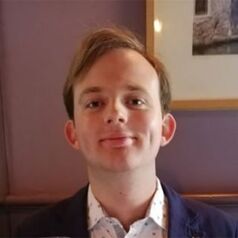
Research Associate in Climate Change Mitigation, University of Sheffield 2016: BA (Hons) Geography, University of Oxford 2021: DPhil (PhD) Geography and the Environment, University of Oxford
Professor, Computer Science, University of Waterloo Lila Kari is Professor in the School of Computer Science at the University of Waterloo, and Adjunct Professor in the Department of Computer Science at the University of Western Ontario, Canada. She received her M.Sc. in 1987 from the University of Bucharest, Romania, and her Ph.D. in 1991 for her thesis "On Insertions and Deletions in Formal Languages", for which she received the Rolf Nevanlinna doctoral thesis award for the best doctoral thesis in mathematics thesis in Finland. Author of more than 250 peer reviewed articles, Professor Kari is a recognized expert in the area of biomolecular computation, that is using biological, chemical and other natural systems to perform computations. In 2015 she received the Rozenberg Tulip Award for the DNA Computer Scientist of the Year, awarded at the 21st International conference on DNA Computing and Molecular Programming, Harvard University, USA, award that recognizes a prominent scientist who has shown continuous contributions, pioneering, original contributions, and who has influenced the development of the field. Her current research focusses on comparative genomics, biodiversity informatics, as well as theoretical aspects of bioinformation and biocomputation.
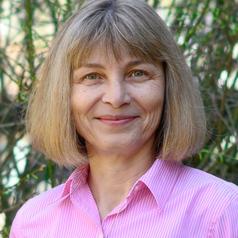
Associate Professor Biology, Western University Kathleen Hill is an Associate Professor in Biology at Western University, London ON Canada. She is a geneticist with research expertise in mutation detection, mutagenesis, mutation signatures and genomic signatures. Her PhD thesis research studied pervasive patterns in DNA sequence composition using Chaos Game Representation. Her postdoctoral training [Biochemistry, Mayo Clinic, Rochester, MN] investigated the origins of mutations in haemophilia. Her research in Molecular Medicine at City of Hope [Duarte, CA] characterized mutations arising with development, ageing and carcinogenesis. At Western University, her team has expertise in mutation research, environmental mutagenesis, population genetics and genome evolution. Her research uses molecular assays, bioinformatics tools and in silico supervised and unsupervised machine learning approaches to study mutations and genome composition. Her trainees study patterns and associations in mutation data in chromosomal and genome landscapes to gain insight into mutagenesis and selection in models of genetic disorders and carcinogenesis. Kathleen designs and teaches university courses in science communication, genetics, political biology, and bioethics for undergraduate and graduate students.
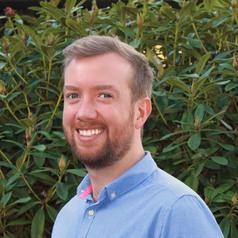
Adjunct Senior Research Fellow – Climate Science, Te Herenga Waka — Victoria University of Wellington Dr Nathanael Melia is a Senior Research Fellow (Adjunct) in Climate Science at the New Zealand Climate Change Research Institute (NZCCRI) at Victoria University of Wellington. He completed his BSc and MSc in Meteorology at the University of Reading. After a brief stint as a military officer in the RAF, he returned to the Meteorology Department at Reading for a PhD with Prof. Ed Hawkins and Keith Hains on opening Arctic sea routes. In 2016 he moved to Aotearoa New Zealand, with his wife working remotely on his decadal sea ice forecasting postdoctoral research. He worked at the New Zealand Forest Research Institute (Scion) for three years on several climate-related topics, from policy and mitigation to extreme weather events and climate change. Nathanael started at NZCCRI in 2020, working with Prof. Dave Frame on climate change emergence; in 2021, he transferred to an adjunct position while he began Climate Prescience Limited to deliver climate change risk assessments to New Zealand based entities.