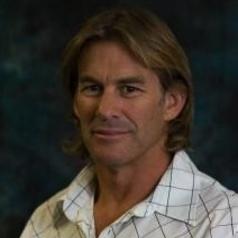
Assistant Professor of History, Brigham Young University Daren Ray specialises in the history of Africa. He earned his PhD and MA in African history at the University of Virginia (2014/2008) and his BA in history at BYU (2006). He previously taught at the American University in Cairo, Connecticut College, and Auburn University. His multidisciplinary research focuses on the creation of ethnic and religious identities in east Africa and has received support from Fulbright-Hays and Social Science Research Council fellowships. He has published chapters in two books (Borderlands in World History and The Swahili World), articles in History in Africa and The Muslim World Journal, and co-edited a special issue on Muslim Modernities in The Muslim World Journal. His first book, Ethnicity, Identity and Conceptualizing Community in Indian Ocean East Africa, draws on linguistic, archaeological, ethnographic and archival research to demonstrate how communities in Africa adapted pre-colonial identities to modern contexts such as British imperialism, African nationalism and global Islamic movements. His next project will offer a social history of waqfs (Islamic land trusts) in the western Indian Ocean that examines how east Africans reframed Islamic and British legal institutions to accommodate their notions of family and social obligations.
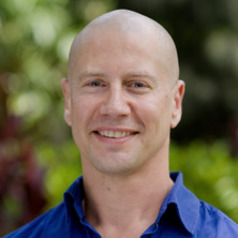
Associate Professor and Director, Occupational Respiratory Epidemiology, The University of Western Australia Peter Franklin is a researcher with interests in environmental impacts on human health. His research has been focussed on the impacts of air pollution, predominantly indoor air pollution, on the respiratory health of children and adults. He currently heads the indoor air pollution node of the Collaborative Research Centre for Asthma and Airways. He is also the Environmental Co-ordinator of the WHO Collaborating Centre for Research on Children's Environmental Health at the Telethon Institute for Child Health Research. His research interests also involve measures of infant and pre-school lung function and how these tests can be utilised in environmental health research.
Professor of Toxicology, School of the Environment, The University of Queensland I head the Adaptive Biotoxicology Lab at the University of Queensland, which studies two broad areas of toxicology: how divergent evolution of venom systems results in differential effects upon human health and variable response to antivenom treatments; and the ecotoxicological effects of endocrine disrupting oil spill metals upon the health of wildlife and indigenous communities within the Amazonian ecosystem. I have long studied the multifaceted roles of venoms in nature, from their employment in predation and defense to their use as tools for interspecies competition. Despite their critical roles and unique properties, our comprehension of venom systems' evolutionary trajectories remains in its infancy. Advancing our understanding of venom evolution necessitates an appreciation for the rich biochemical, ecological, morphological, and pharmacological diversity that characterizes venoms and their delivery mechanisms. A pivotal obstacle in this field has been the limited taxonomic breadth of species studied, leaving vast arrays of venomous species unexplored. My research endeavors are intrinsically transdisciplinary, synthesizing ecological, evolutionary biology, and functional genomics methodologies to decipher the evolution of venom systems. This includes pioneering work on the Komodo Dragon's venom, known for its potent hypotensive and anticoagulant effects, and the investigation of Antarctic octopus venoms, which exhibit unique adaptations to extreme temperatures. I have recently expanded my laboratory's research ventures into the realm of ecotoxicology, specifically examining the repercussions of oil spill-related metals on Amazonian wildlife and the health of indigenous communities reliant upon these ecosystems for their food. These endocrine-disrupting contaminants, prevalent in oil spill sites, pose significant threats not only to the physiological integrity of local fauna but also to the health and traditions of indigenous populations whose lifestyles are closely interwoven with their natural surroundings. Through a concerted effort that bridges fieldwork, laboratory analysis, and community engagement, my research now seeks to uncover the impact of these pollutants on biological systems and contribute to the development of strategies that safeguard both wildlife conservation and public health.
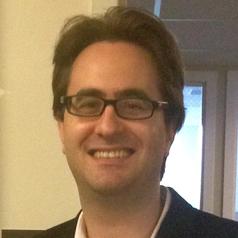
Senior Researcher, Historian and Complexity Scientist, University of Toronto Dan is an historian and complexity scientist. He is Senior Researcher and Project Manager of Seshat: Global History Databank. He is also Affiliate Faculty at the Complexity Science Hub, Vienna, in the Social Complexity and Collapse Research Group, and Senior Researcher in the Social-AI lab at the University of Toronto. His current research employs comparative historical and social scientific methods to explore the causes and limiting factors to economic growth, societal development, and general wellbeing. In particular, he is interested in understanding the role of prosocial cultural traits in promoting equitable distribution of resources and limiting predatory activity in past societies. He holds a PhD in Classics from New York University, where he studied economic and social development in the high Roman Empire.
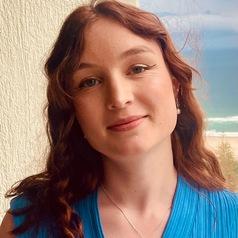
PhD Candidate in Publishing Studies, The University of Queensland Emily Baulch is a PhD Candidate in publishing studies at The University of Queensland (UQ). She studies reading practices and the publishing industry. Her work was published in Bookshelves in the Age of the COVID-19 Pandemic. She is also a sessional academic at The University of Queensland, where she coordinated the third-year course, Publishing, Editing, and Authorship. Emily also completed a research placement at The University of Queensland Press in 2022.