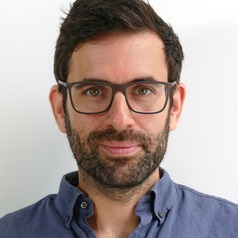
Chancellor's Fellow Sociology and History of Biomedicine, The University of Edinburgh I am a Chancellor’s Fellow and Senior Lecturer in the History and Sociology of Biomedicine at the University of Edinburgh. I lead the Epidemy Lab (http://epidemy.org), which is concerned with the history and present of epidemiological reasoning in the twentieth century. The lab's research activities are funded by an ERC Starting Grant since 2020 and by the British Academy since 2022. My first book, Mapping AIDS, was published with Cambridge University Press in 2018 and considers the visual and medical history of AIDS/HIV. I also published a co-authored monograph with Christos Lynteris, Sulphuric Utopias, with MIT Press 2020, which tells the technological history of fumigation and the political history of maritime sanitation at the turn of the twentieth century.
Lecturer, Computer Science, Loughborough University Shirin Dora is currently a Lecturer in Computer Science in the Department of Computer Science at Loughborough University. He completed his PhD from Nanyang Technological University in Singapore on the topic of developing biologically plausible learning approaches for spiking neural networks. During his PhD, he developed a keen interest in the mechanisms of perception and cognition in the brain. This led him to pursue a post-doctoral research in computational neuroscience at the cognitive and systems neuroscience group at the University of Amsterdam. In his postdoctoral research, he collaborated with experimentalists in building deep biologically plausible models of perception and multisensory integration in the brain. From October, 2019 to September, 2021, he was a Lecturer of Data Analytics in the Intelligent Systems Research Centre at Ulster University in United Kingdom.
Postdoctoral researcher, Palaeontology, University College Cork I am a palaeobiologist, skilled in the analysis of pigmented soft tissues in fossil and extant vertebrates. A particular focus of my studies is the preservation of melanosomes in fossil vertebrates. My work so far have produced the first report of a tissue-specific chemical signal in melanosomes in extant amphibians, reptiles, mammals and birds and the first report of similar chemical signals in fossils, spanning in age between 10 and 280 millions years old. During my PhD I have specialised in the study of metal-melanin associations using synchrotron-based chemical analysis. My research interest also include the investigation of the taphonomic processes that lead to the preservation of soft tissues and biomolecules using taphonomic experiments at high pressure and temperature.
Lecturer in Modern South Asian Studies, Oxford School of Global and Area Studies., University of Oxford Thiruni Kelegama is a Lecturer in Modern South Asian Studies. Working at the intersection of political geography and development studies, her research looks at political and infrastructural transformations triggered by development in the Global South. It builds on a foundation in the political economy of development and deals with the politics of access and territorialisation.
Associate Professor of Agricultural and Resource Economics, Colorado State University Dr. Jude Bayham’s research focuses on the intersection of the natural environment, public policy and human health, including wildfire management in the wildland urban interface, the impact of human behavior on infectious disease management and impacts of air quality on human health. Dr. Bayham also teaches courses on the economics of outdoor recreation, data-driven decision making and economic research methodology.
PhD Student in Journalism, University of Colorado Boulder Ashley Carter is a third-year PhD student at the University of Colorado Boulder. Her research focuses on LGBTQ+ issues, including diversity initiatives within media organizations. Ashley also works as a freelance writer for Triathlete and competes nationally in the sport.