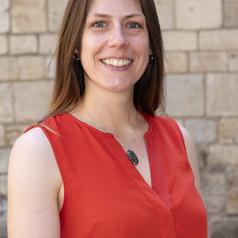
Lecturer in Russian, University of Glasgow Before joining the University of Glasgow, I was a Lecturer in Russian at the University of Oxford (2021-2022) and an Andrew W. Mellon Postdoctoral Research Fellow and Lecturer in Slavic Languages & Literatures at Stanford University (2018-2021). I received my PhD in Slavonic Studies at the University of Cambridge in 2018. My research explores queer gender and sexuality in Russian, Ukrainian and Church Slavonic culture. As a gay man living in Moscow when Russia introduced its law against the "propaganda of non-traditional sexual relations", I saw first-hand how culture, history and religion can be manipulated to fuel discrimination. My research is premised on telling queer counternarratives about Russian culture and especially religion, to shine light on a rich queer heritage too often obscured from scholarly perception. I am particularly interested in bringing queerness to light in contexts that are usually deemed conservative and heteronormative, such as within the Orthodox Church. On the one hand, I am interested in thinking through how sexual minorities negotiate their relationships with cultural and religious traditions that have marginalised them, and on the other hand, I look at queerness inherent to the traditions themselves. My publications focus mainly on the medieval and early modern periods, although I am moving increasingly into the nineteenth and early-twentieth centuries. I am also interested in the telling of cultural and historical narratives about gender and sexuality in the present, and in queerness in contemporary pop culture.
Lecturer in Archaeology, University of York Steph is a specialist in the Mesolithic of Northern Europe, with a particular focus on hunter-gatherer mobility, and using lithic raw materials to trace the movement of communities. Steph completed her BA in Archaeology (2010), MA in Archaeology with Prehistory (2011), and AHRC funded PhD (2017) at Durham University where she developed an ever-increasing love for the Mesolithic of Scotland, and prehistoric occupation of coasts and islands. Post-PhD, Steph worked as a commercial archaeologist for Archaeological Services Durham University as both a field archaeologist and palaeoenvionmental specialist, before joining Newcastle University as a Lecturer in Prehistoric Archaeology (2018-2019). Steph joined York in 2019 as Associate Lecturer in Archaeology and was promoted to Lecturer in 2023. She maintains research interests in early prehistoric Northwest Europe with a particular focus on Scotland, as well as broader hunter-gatherer interactions in relation to changing climate. Steph is a stone tool specialist and has recently conducted analysis of Mesolithic assemblages from the UK and Denmark, as well as later prehistoric lithic material in Lebanon and Saudi Arabia. In 2023, Steph was part of an interdisciplinary team from the departments of Archaeology, Health Sciences, and Environment & Geography awarded a York Environment Sustainability Institute Discipline Hopping Fellowship for the project Craftwell. The Discipline Hopping programme was delivered via NERC funding, and the project aimed to investigate the connection between outdoor heritage crafting and mental health and wellbeing in the student population. Steph delivered the outdoor workshop component of the project, working with participants to create replicas of archaeological objects inspired by Stone Age beads or Anglo-Saxon pottery.
PhD Candidate, Conservation Policy, University of Oxford I am a PhD candidate in the Department of Biology at the University of Oxford. I am an ecologist with a background in researching how we can optimise environmental policy for the best outcomes for insect biodiversity. My research looks at the conservation outcomes of ecological compensation policies (e.g., Biodiversity Net Gain) with a particular focus on the proxy biodiversity metrics used in these policies and how they reflect other dimensions of biodiversity. Currently, I am using DNA metabarcoding to measure invertebrate community diversity to analyse against baseline Biodiversity Net Gain scores in England.
Assistant Professor of PrI am an Assistant Professor of Practice jointly affiliated with the W.A. Franke Honors College and the Philosophy Department at the University of Arizona. I teach ethics courses that contribute to various degree programs in the Honors College and Philosophy Department. These programs include the Health and Human Values minor, the Future Earth Resilience minor, the Civic Leadership Certificate, the Philosophy major, the Philosophy minor, and the bioethics minor. I also work with philosophy graduate students to prepare them for the job market. My research interests are primarily in areas of ethics and applied ethics, especially bioethics, environmental ethics, and the intersection of those areas. In the past, I have published work on topics such as marketing ethics, animal ethics, environmental hope, the ethics of procreation, epistemic supererogation, and apatheism. actice, W.A. Franke Honors College / Philosophy Department, University of Arizona
Professor (Full) of Watershed Management, Water Resources, Water Quality, Ecohydrology, Complex Systems, Ecological Economics, and Sustainability., UMass Amherst Professor Randhir’s primary interests include water resources, watershed management, water quality, ecological economics, complex systems, ecology, dynamic modeling and optimization, spatial analysis and simulation, Institutional economics, systems modeling, climate change, land use policy, international trade and development, common pool resources, and natural resources policy.
Freelance Reporter and Editor, The Conversation Danielle McLean is an award-winning freelance reporter and editor. Her work has been published in The New York Times, The Atlantic, Teen Vogue, The Washington Post's The Lily, CNN, and Higher Ed Dive.