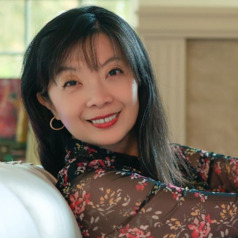
Chair & Professor of Dept. of Tourism, Hospitality and Event Management | Director of the Eric Friedheim Tourism Institute | Affiliate Professor of Dept. of Information Systems and Operations Management, University of Florida Dr. Rachel J.C. Fu has many years of experience in the tourism and hospitality business. Rachel is the Chair and Professor of the Department of Tourism, Hospitality, and Event Management (THEM) at the University of Florida (UF), where she is also the Director of the Eric Friedheim Tourism Institute (EFTI). Rachel is an affiliate Professor in the Department of Information Systems and Operations Management (ISOM) at the Warrington College of Business. Rachel spearheaded the creation of AI/Data Science tracks in THEM undergraduate and graduate certificate programs at UF. In the past decade, through serving as guest editor, associate editor, editorial board member (for 14 leading and well-respected international journals), reviewer (for 9 leading international journals), and chair/reviewer (for 4 major international associations), Rachel has provided leadership in academic and professional organizations. Rachel has published more than 200 papers, including refereed journal articles, refereed conference papers, a magazine article, newsletters, technical reports, and book chapters. Rachel's work has been featured in various media outlets including the Wall Street Journal, Condé Nast Traveler, Carnival Cruise Line, NBC, BBC, Bottom Line Personal, CNBC, ABC News, the Philadelphia Inquirer, Popular Science, AARC, KCBS, Recommend Magazine, U.S. News and World Report and UF News.
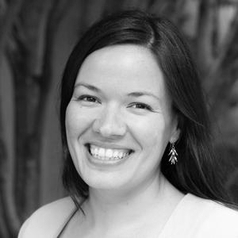
Associate Professor of Public Policy and Management, Harvard Kennedy School Elizabeth Linos is the Emma Bloomberg Associate Professor for Public Policy and Management, and Faculty Director of The People Lab at the Harvard Kennedy School of Government. The majority of her research focuses on how to improve government by focusing on its people and the services they deliver. Specifically, she uses insights from behavioral science and evidence from public management to consider how to recruit, retain, and support the government workforce, how to reduce administrative burdens that low-income households face when they interact with their government, and how to better integrate evidence-based policymaking into government. Her research has been published in various academic journals including The Journal for Public Administration Research and Theory, Public Administration Review, Econometrica, American Economic Journal: Economic Policy, Behavioural Public Policy, and others. Her work has also been highlighted in media outlets including The New York Times, The Economist, BBC, NPR, Slate, and the Harvard Business Review. As the former VP and Head of Research and Evaluation at the Behavioral Insights Team in North America, she worked with government agencies in the U.S. and the U.K. to improve programs using behavioral science and to build capacity around rigorous evaluation. Prior to this role, Linos worked directly in government as a policy advisor to the Greek Prime Minister, George Papandreou, focusing on social innovation and public sector reform.
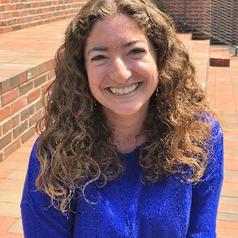
Research Director of the People Lab, Harvard Kennedy School Jessica Lasky-Fink is a Research Director of The People Lab. Much of her research focuses on using insights from behavioral science to improve the delivery of government services and programs, with a particular focus on the social safety net. Jessica holds a MA in International Economics and Development from Johns Hopkins SAIS, a BA in Political Science from the University of California, San Diego, and is currently a PhD Candidate in Public Policy at the University of California, Berkeley.
Professor of Social Work, Michigan State University My research interests include mental health, intraracial racism, Bleaching Syndrome, black/white conflict, organizational issues and race relations. My social work research interests extend to four areas: special populations, human behavior and the social environment, social welfare policy and services and research methods.
Lecturer and Post Doctoral Researcher in Biological Anthropology, Princeton University My research occurs in the spaces where humans and non-human primates interact. This includes applying wild field research to captive animals, investigating the impacts of anthropogenic changes to wild primates, and examining how social media can be inadvertently harmful to wildlife. I earned my PhD from Boston University in 2019, where I studied Biological Anthropology. My dissertation research, conducted at the Gunung Palung National Park on Borneo, applied newer foraging theories to wild orangutan dietary data to better understand what types of food resources we should focus on for conservation habitats, and to feed captive zoo and rescue orangutans. Since that time, I have worked with several orangutan rescue and rehabilitation centers, including the Orangutan Veterinary Advisory Group, and also with the Philadelphia Zoo. I am currently a lecturer at Princeton University in the Princeton Writing Program and the Department of Anthropology. I also work as a post-doctoral researcher with Dr. Erin Vogel examining the impacts of low food availability and near-annual fires on the health and diet of wild Bornean orangutans in a fire-prone peat swamp habitat. In addition, I am starting a nutritional ecology program at the Tsaobis Baboon Project in Tsaobis, Namibia. This project will investigate the impacts of climate change on diet, and the costs of motherhood on these highly social monkeys. My other work examines how well-meaning social media posts by researchers, rescue and rehab organizations, and veterinarians can be harmful to wildlife conservation. In this project, we have found that humans touching or interaction with primates, or featuring babies in YouTube videos leads to negative conservation comments such as endorsing orangutans as pets or blaming the local people for their endangerment. Our most recent publication finds that when we take pictures of ourselves handling or near our study subjects, despite adding the recommended captions explaining that we are trained researchers with proper permits, the public still is interested in owning wild primates as pets, or seeking out (often illegal) opportunities to interact with these animals themselves.
Lecturer in Architecture, School of Architecture, Design and Built Environment, Nottingham Trent University Dr Mike Siebert is a lecturer at Nottingham Trent University and has recently published his book ‘Applying a Systems Thinking Approach to the Construction Industry’ (https://www.linkedin.com/in/dr-michael-siebert-03a30116 ) where he suggests how a number of interventions could benefit the housing industry in particular in its transition to Net Zero. His research into the stark realities behind retrofitting our nation’s homes has led him to infrared fabric as the only viably scalable technical solution yet to be proposed.