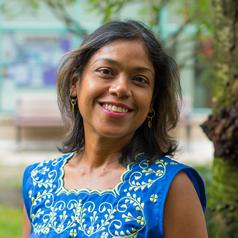
Professor of English, City University of New York I'm a romance fiction reader and scholar who teaches at LaGuardia Community College in the City University of New York. My most recent monograph is Creating Identity: The Popular Romance Heroine's Journey to Selfhood and Self-Presentation (2023, Indiana University Press). My article on representations of Black and BIPOC academics in romance novels from the 1980s and more recent ones is available at the open-access peer reviewed journal Esferas Literarias via https://academicworks.cuny.edu/lg_pubs/190/
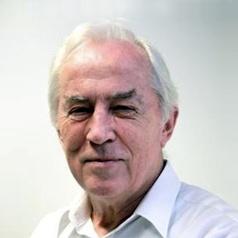
Emeritus professor in Computer Science and Engineering, UNSW Sydney I worked at the Garvan Insist of Medical Research for 20 years, initially as biophysicist but then as a computer scientist. At the Garvan I worked on one of the first medical expert systems to go into routine use. In 1990 I moved to Computer Science and Engineering at UNSW, where my research focus was mainly on better ways to build expert or knowledge-based systems and resulted in a family of techniques known as Ripple-Down Rules. This work was supported by a number of ARC grants, and has been successfully commercialised by Pacific Knowledge Systems (now Beamtree) and other companies internationally. I was one of the founders of PKS, but am not involved with Beamtree. I was also the Associate Dean (research) for the Faculty of Engineering at UNSW for 3 years and and head or acting head of the School of Computer Science and Engineering for 12 years. I retired in 2010 and am currently an advisor to Rich Data Corporation.
Assistant Professor, Computer science, University of British Columbia Vered Shwartz is an Assistant Professor of Computer Science at the University of British Columbia, and a CIFAR AI Chair at the Vector Institute. Her research interests focus on natural language processing, with the fundamental goal of building models capable of human-level understanding of natural language. She is interested in computational semantics and pragmatics, commonsense reasoning, multimodal models, and culturally-aware NLP models. Before joining UBC, Vered was a postdoctoral researcher at the Allen Institute for AI (AI2) and the Paul G. Allen School of Computer Science & Engineering at the University of Washington. Prior to that, She did her PhD (2019), M.Sc. (2015), and B.Sc. (2013) in Computer Science in Bar-Ilan University. Experience
Senior Lecturer, Nottingham Law School, Nottingham Trent University Peter is a Senior Lecturer at Nottingham Law School and practising Chartered Trade Mark Attorney. Prior to joining NTU in 2020, Peter worked for a leading International Firm of Trade Mark and Patent Attorneys in their Cambridge office He is the Deputy Course Leader on the IP Practitioner Portfolio of Courses. He teaches on and is module leader on the Professional Certificate in Trade Mark Practice, a course accredited by IPREG for trainee trade mark attorneys wishing to qualify. He is also module leader on the new Postgraduate Diploma in Commercial Intellectual Property course. Peter is module leader and tutor on the Fundamentals of Intellectual Property and Contemporary Issues in Intellectual Property and Technology Law modules taught on the LLM courses. He supervises dissertations in the field of Intellectual Property. Peter continues to practice as a trade mark attorney through his work volunteering at NLS Legal where he supervises the IP case work. The IP work at NLS Legal was shortlisted in 2021 for the “best new pro-bono activity” category. Peter studied Law with German (Ba Hons) and an LLM in International Commercial Law both at the University of Nottingham. He qualified as a trade mark attorney in 2014. Prior to joining Nottingham Law School in March 2020 Peter worked for a leading International Firm of Trade Mark and Patent Attorney in their Cambridge office.
PhD Candidate in Sociology, University of Warwick I am currently in the final year of my PhD in Sociology. My research broadly explores equine (horses, donkeys and mules) labour relations and protection in sub-Saharan Africa. Martha has gained valuable research, project management, and leadership experience in Canada, UK, Ethiopia, South Africa and Botswana. She previously worked as a Senior Research Associate at the University of Bristol where she led a study in Ethiopia investigating the socio-economic dimensions of the lives of working animals.
Director of Computing Informatics and Applications Research Group, Anglia Ruskin University Dr Lakshmi Babu Saheer is a researcher in Artificial Intelligence (AI) and its applications to different domains including climate change, sustainability, air quality, healthcare, image processing, natural language processing, speech, audio and many more. She leads several AI modules at the MSc AI course at Anglia Ruskin University and is the director of the Computing, Informatics and Applications Research group at the Faculty of Science and Engineering. Lakshmi completed her Doctoral studies in AI at the Ecole Polytechnique de Lausanne (EPFL) and Idiap Research Institute in Switzerland in 2012. She has been working on applied Artificial Intelligence (AI) research in both Industry and academia for over 20 years. She has worked with several international companies in different locations around the world including Siemens (India), Sony Ericsson (Sweden), V-Enable (USA), Idiap Research Institute (Switzerland) and Audio Analytic (UK). She has several awards including the Google Anitaborg Award and acquired Hasler Innovation funds of over £150,000 to run a start-up, Geneemo in Switzerland. She has worked in several roles including Research Engineer, Project Manager to Scientific Collaborator and CTO. Currently, she leads applied AI research mainly on sustainability, climate change and healthcare at the School of Computing, Information Sciences at the Anglia Ruskin University and is the director of the research group that applies AI to different domains. She works with several national and international collaborators from different fields and local authorities as stakeholder partners.