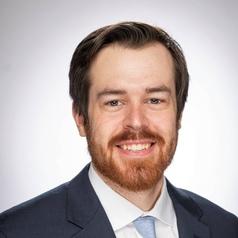
Senior Statistician and Research Lead, Vanderbilt University Luke Plutowski is a Senior Statistician at LAPOP Lab at Vanderbilt University, where he coordinate nationwide surveys in four countries, lead data visualization tasks, present results for non-technical audiences, and head lab research on statistics and survey methodology.
Professor of Political Science, University of Oregon Daniel Tichenor is a Philip H. Knight Chair, a professor of Political Science, and Faculty Director of the Wayne Morse Center for Law and Politics. His research focuses on immigration and refugee policy, social movements, the American presidency, Congress, political parties, and youth politics. He has published seven books and more than 80 journal articles and book chapters. His books include Dividing Lines: The Politics of Immigration Control (Princeton University Press), Rivalry and Reform: Presidents, Social Movements, and the Transformation of American Politics (University of Chicago Press), with Sidney Milkis, and Democracy’s Child: Young People and the Politics of Control, Leverage, and Agency (Oxford University Press), with Alison Gash. His forthcoming book is Unsettled: Governing Immigration in a Polarized Nation (Princeton University Press). His research awards include the American Political Science Association’s Gladys Kammerer Award, Jack Walker Prize, Mary Parker Follette Award, Polity Prize, and Charles Redd Award. He has been a fellow at Princeton’s School of Policy and International Affairs, a research fellow at the Brookings Institution, the Abba Schwartz Fellow at the John F. Kennedy Presidential Library, and a research scholar at the Eagleton Institute of Politics. He was named to the inaugural class of Andrew Carnegie Fellows in 2015. He is the recipient of the A.J. Ersted Award for Distinguished Teaching and the 2020 Williams Fellowship for “exceptional and innovative teaching.” He has testified and provided expert briefings to Congress on immigration reform and history, and provided commentary and essays for National Public Radio, The Atlantic, The Washington Post, The New York Times, The Utne Reader, and The Nation.
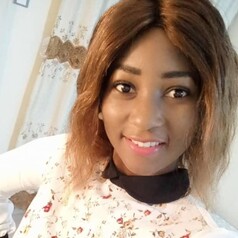
Research Associate in Statistics, University of Nigeria Currently working in the area of experiment design specially on Robustness of Orthogonal Uniform Composite Designs and their application to real world data
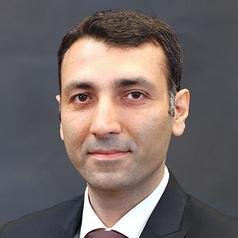
Assistant Professor of Agricultural and Biological Engineering, Mississippi State University Education: Ph.D., Biosystems Engineering, Mississippi State University. M.S., Mechanical Engineering of Agricultural Machinery, University of Tehran. B.S., Agricultural Machinery Engineering, University of Tabriz. Specialty Areas: Robotic Manipulators Robotic End-effectors Artificial Intelligence 2D and 3D Perception Sensors and Control Systems Research Interests: Agricultural Robotics and Automation Simulation of Automated Agricultural Systems Off-road Robots Precision Agriculture UGV and UAV Applications in Agriculture
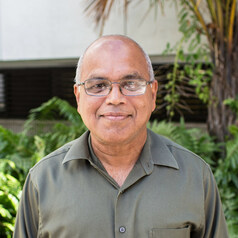
Professor of Agroecology, Florida International University Krishnaswamy Jayachandran is a soil microbiologist/soil scientist by training. He has co-founded the Agroecology Program through significant funding from USDA to promote education, research, training and outreach activities for students pipelining and capacity building. He enjoys teaching soils and ecosystems, advanced soil resources analysis, agroecology, soil microbiology, soil biology and ecology of South Florida. Research Areas His research expertise are on studying soil physical, chemical and biological properties in relation to nutrient cycling and soil quality in wetland and upland systems. Utilizing microbiology as a central tool, we conduct research on microbial structural and functional diversity by traditional and molecular approaches, environmental influence on microbes structure and function, pesticides fate and transport, apply enrichment techniques to isolate and characterize pesticides degrading microbes, biodegradation processes in soil and water. For the past few years, our laboratory is working on developing novel biological control strategies for the management of invasive exotic plant species in South Florida. In another novel project, we hypothesized to mitigate freshwater toxins as well as marine toxins by applying microbiological techniques. Our group also involved in biological energy production such as biodiesel and hydrogen through plants and microorganisms. His old expertise on arbuscular mycorrhizal fungi and plant growth promoting rhizobacteria, their interactions with plants, and significant role in conservation/restoration measures for natural and agricultural systems continues.
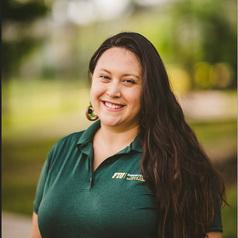
Post Doctoral Associate in the Institute of Environment, Florida International University Jazmin entered as a Ph.D. student in Agroecology program in 2017 with Dr. Krishnaswamy Jayachandran as her major adviser. Her current dissertation work investigates the application of Floating Treatment Wetlands (FTW) as a type of green infrastructure to manage nutrient runoff in South Florida through phytoremediation. By experimenting with cut-flower crops, she is identifying flowers that will grow well in these conditions, produce abundant blooms, and promote regular harvesting. This regular biomass harvesting increases the nutrient removal capacities of the FTW while also providing a product that can be sold in the market to help financially sustain the remediation efforts.