Lecturer in Terrorism and Counter-Terrorism Studies, Macquarie University Dr Farida is a lecturer, researcher, and consultant. She is currently a Lecturer in Terrorism Studies at the Department of Security Studies and Criminology at Macquarie university. She has also served as researcher and consultant for Counter Violent Extremism (CVE) programs in CSNSW. Dr. Farida's research sits at the intersection of Middle East politics, non-state groups, terrorism, and political violence. Her work primarily focuses on non-state actors' recruitment, mobilisation, and ideology. She has published on religion and politics, non-state actors identity building, and popular culture in relation to a range of contexts, and has a particular interest in understanding the function and impact of identity construction in popular, political, and religious discourses. Dr Farida has conducted field work studies on the recruitment and mobilisation of Hizbullah in Lebanon. Her research has been published in journals such as International Review for Social Research, Journal for Policing, Intelligence, and Counter Terrorism, and Handbook of Terrorist and Insurgent Groups: A Global Survey of Threats, Tactics, and Characteristics. She is also the author of Religion and Hezbollah: Political Ideology and Legitimacy (Routledge 2020).
Research Fellow, Social and Global Studies Centre, RMIT University Dr Alice Witt researches the exercise of governing power in the digital age, focusing on the intersections of regulation, technology and gender. In addition to contributions to edited volumes, her socio-legal work has appeared in journals such as the UNSW Law Journal, Artificial Intelligence and Law, and Feminist Media Studies.
Associate Professor of Japanese Studies, Monash University Beatrice Trefalt is Associate Professor of Japanese Studies at Monash University. She is a historian who works on post-war Japanese history, specialising in wartime experiences and their legacies. Her doctoral thesis examined the return to Japan of so-called stragglers (soldiers who did not know the war was over) until 1975. She has also written on war crimes trials, and on the search for human remains. Her latest publication is Trefalt, B. (2024). The 1955 Japanese mission to New Guinea: War remains and the politics of commemoration in the wake of the Asia-Pacific War. Human Remains and Violence : An Interdisciplinary Journal, 9(2), 60–75. https://doi.org/10.7227/HRV.9.2.4n
Lecturer in Japanese Studies, Monash University Bio: Jason Jones took to Japan early in life, when he began importing Japanese video games that were never translated for the international market. Being unable read the text and thus understand the storylines of these games, he began learning Japanese. This eventually led to him pursuing a PhD in Japan. Jason is Coordinator of Japanese Studies at Monash University. His work centres on cultural adaptation as represented in Japanese film, television, animation, manga, and other texts. His most recent research topics have seen him examining the world from the perspective of the Japanese sommelier in wine manga--yes, there is such a thing--and (re)visiting the 1960s, 70s and 80s to investigate the image-creating capacity of US media products in Japan, such as the oft-imitated dance show, _Soul Train_. Jason leverages the knowledge gained throughout his more than 10 years living in Japan to teach a range of units on various topics, including Japanese language, Japanese popular culture and screen translation. He is also an active subtitler and scripter for a number of international streaming services.
Honorary Fellow, Charles Darwin University I am an ecologist with principal interests in arid Australia. My career was spent with CSIRO, where eventually I helped lead the Organisation as Chief of Division and Executive Team member. In 2022, I published 'Australian Deserts: Ecology and Landscapes' (CSIRO Publishing). I live in Alice Springs.
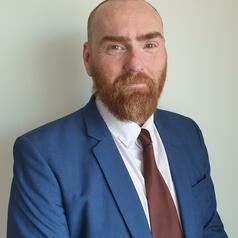
Doctor of Criminology, Australian Catholic University Nathan completed his doctorate at the School of Criminology and Criminal Justice at Griffith University. His primary research area is in the investigation process in missing body homicide investigations with a focus on investigative interviewing to retrieve the spatial memory of suspects and patterns of hiding behaviour. Nathan has conducted research investigating both perceptions of rape trial testimony and conducted interviews with incarcerated domestic violence offenders. He has additional knowledge in the psychology of criminal behaviour, theory of policing and research methodology. Currently he is researching the impact of the prison visitation process on visitors.