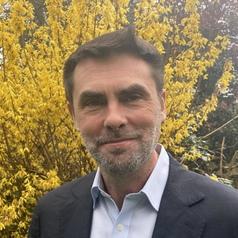
Professor of Housing and Planning, The Bartlett School of Planning, Faculty of the Built Environment, UCL Nick Gallent began his career at the University of Wales, completing doctoral research into the supply of housing in rural areas and the effectiveness of emergent 'planning and affordable housing' mechanisms, in 1995. He then worked at Cardiff and Manchester Universities before taking up a lectureship at UCL in 1999. He is a geographer by training and was elected a Chartered Member of both the Royal Town Planning Institute and the Royal Institution of Chartered Surveyors in 2002 and 2007 respectively. He became a RICS Fellow in 2014, a Fellow of the Academy of Social Sciences (AcSS) in 2015 and a Fellow of the RTPI in 2017. He maintains a range of professional interests and was Chair of the RTPI's Partnership and Accreditation Panel until 2018. He was Head of the Bartlett School of Planning for 8 years between 2011 and 2019. Nick Gallent is a housing specialist whose research focuses on UK planning policy as it pertains to housing delivery and as it affects rural communities. He has conducted research for a wide range of funding bodies. His research has been disseminated in 17 published books, mainly dealing with housing, planning, rural communities and the countryside, and in a large number of peer-reviewed articles and book contributions. Recent research has focused on: Planning for housing in the UK The UK housing crisis Securing affordable housing through planning Countryside planning and rural communities Rural housing markets, second homes and counterurbanisation Housing standards Community governance, planning and housing development Residential development processes and politics Nick Gallent is a university teacher with 25 years’ experience in higher education. He has taught across a range of topics but currently focuses on planning for housing and countryside planning, having co-authored key course texts on these subjects. He spent 14 years at UCL coordinating professional MSc planning programmes. He was Faculty Tutor for MSc Students across the Faculty of the Built Environment between 2010 and 2014, and in that capacity served as a member of UCL's MSc Scholarships Panel. Nick is a Fellow of the Higher Education Academy and completed professional training as a University teacher at Manchester in 1998. He has contributed, as guest lecturer, to teaching programmes at the Universities of Manchester and Nottingham, at London South Bank University and the LSE, and also at the Department of Urban Studies at Roma 3.
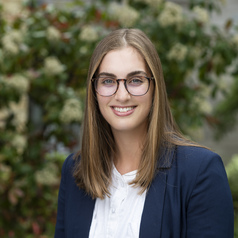
Lecturer, University of Oxford A biomedical scientist who made the jump into Higher Education, and Health Professions Education, research, theory and practice. A lecturer and researcher at the University of Oxford's Department of Education (Medical Education), and honourary research associate at the University of Johannesburg, Biomedical Engineering and Healthcare Technology (BEAHT) Research Centre, Faculty of Health Sciences. Academic qualifications: BSc (Human Physiology and Genetics), BMedSc(Hons) and MScMed (both in Medical Cell Biology), PhD (Health Sciences Education) ORCID: https://orcid.org/my-orcid?orcid=0000-0003-4973-0699
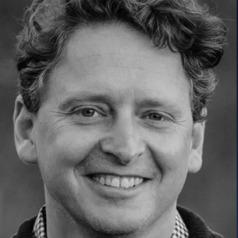
Associate Professor of Psychology, University of Tennessee In my scholarship, I have been captivated by one singular question: What are the psychological foundations of human relationships? That is, what sort of things are indispensable to the formation and function of human sociality? In the last 15 years of empirical experimentation and theoretical integration, my research program has yielded promising insights. My colleagues and I have found that much of human psychology is devoted to tracking shared awareness—the perception that ‘we are aware’ of something together. Our research focuses on (1) how, (2) why, (3) when, and (4) to what end, shared awareness is tracked by the human mind. To the question of how shared awareness is tracked by the human mind, we find that people imagine what we call a ‘collective mind’ – a singular, unitary, collective agent – or, more simply, a ‘we’. To the question of why shared awareness is tracked by the human mind, we find that when people imagine a ‘collective mind’ they are more confident in their knowledge, enjoy stronger memory recall, as well as experience more extreme emotions and passions. To the question of when shared awareness is tracked by the human mind, we find that situations in which people experience information in synchrony are especially likely to yield the perception of a ‘collective mind’. Finally, to the question of to what end shared awareness is tracked by the human mind, we find that perceptions of ‘collective mind’ underpin social identity formation, affiliative bonding, relational trust, and ultimately, behavioral cooperation, even when it is individually risky.
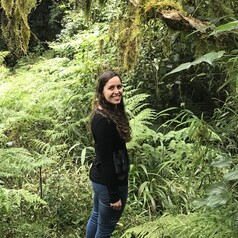
PhD Candidate, American University Sara Harmouch, a Lebanese national and doctoral candidate at American University’s School of Public Affairs, specializes in counterterrorism and violent extremism. She has firsthand experience with the impacts of terrorism and militancy through her upbringing and extensive fieldwork conducted across the Middle East and North Africa region. Harmouch consults for the U.S. government and the private sector and has recently briefed NATO on religious militant groups. Her research focuses on asymmetric warfare, militant groups, political violence, and threats to democracies. Her work has been featured in War on The Rocks, The Long War Journal, Lawfare, Voice of America, Orion Policy Institute, Irregular Warfare Initiative, Globe Post, and American Intelligence Journal, among others. Follow her on Twitter: @sara_harmouch
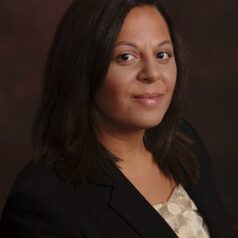
Associate Professor of Africana Studies, University of North Carolina – Charlotte Danielle N. Boaz is an Associate Professor of Africana Studies at the University of North Carolina at Charlotte, where she offers courses on human rights, social justice, and the law. Dr. Boaz is the author of Banning Black Gods: Law and Religions of the African Diaspora and Voodoo: The History of a Racial Slur. Her website, www.religiousracism.org, tracks cases of discrimination and violence against religious communities in North America and Brazil. Dr. Boaz is Co-Editor-in-Chief of the Journal of Africana Religions. From 2023-2024, Dr. Boaz is a public fellow with the Public Religion Research Institute.