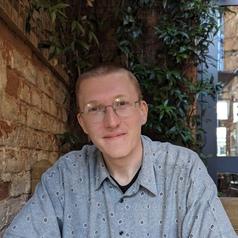
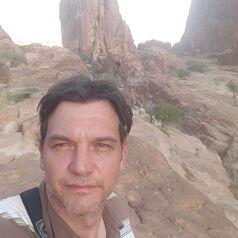
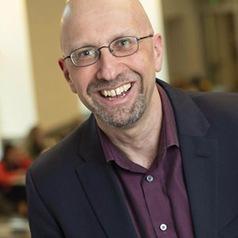
Lecturer in Political Theory, University of Leicester I joined the School of History, Politics and International Relations as a Lecturer in Political Theory in May 2022. Before this, I was a Dahlem Postdoctoral Fellow at the Free University of Berlin and worked as a historian of political thought at the Universities of Huddersfield and Edinburgh. At Leicester, I'm also the Admissions Tutor for Politics & International Relations. My major research to date has focussed on Indian liberalism with my first book, Uncivil Liberalism: Labour, Capital and Commercial Society in Dadabhai Naoroji's Political Thought (2022) exploring the contribution of Indian liberalism to global ideas of sociality and political economy. I have since worked on article-length pieces on the political thought of the founder of Hindu nationalism, Vinayak Damodar Savarkar. More recently, my second book-length project has turned to political emotion and republicanism in the political theory of the Global South with a particular focus on humiliation as a form of political domination.
Honorary Reader in the Department of International Development, University of Birmingham I have extensive worldwide experience of teaching, research and consultancy on public administration reform, decentralisation, and the regulation of privatised public utilities. My most recent research has focussed on decentralisation and conflict prevention, the management of urban water supply, and the relationship between language, governance and citizen participation. I am a regular writer for several subscription-only publications, including the Economist Intelligence Unit, Oxford Analytica and IHS Markit. I also write for the German Ministry of Foreign Affairs. Since 2011 I have been external trainer for the Peace and Security Division of the United Nations System Staff College (UNSSC) in Turin, Italy, for which I teach face-to-face courses on the role of decentralisation and local governance in the peacebuilding process of post-conflict countries (Kenya, Uganda, Somalia, Yemen, Bangla Desh, Ethiopia) as well as at UN HQ in New York. In 2013/14 I wrote a distance learning (DL) version of the course for the UNSSC and to date have taught 14 editions (most recently in April 2021).
Teaching Associate, Department of Political Science and International Studies, University of Birmingham I am a Teaching Associate at the University of Birmingham, interested in issues related to governance, the state, and crisis management. My recently completed doctoral research examines the use of post-crisis inquiries in the UK.
Associate Professor, FitzPatrick Institute of African Ornithology, University of Cape Town, University of Cape Town Robert has a broad interest in bird ecology, but is especially interested in between-species interactions. He comes from Pretoria, and grew up birding and ringing in the bushveld areas. He did his undergraduate studies at the University of Pretoria, studying mixed species bird flocks for his BSc Hons. These studies led to him being a field assistant in northern Finland. This stint became his MSc thesis at the University of Oulu, which tested the heterospecific attraction hypothesis that migrant songbirds attract to resident songbirds during their habitat selection decisions. He continued with his PhD in Oulu, further investigating the positive associations in Boreal bird communities, but incorporating the interplay of negative, predation and competition, interactions. He defended his thesis in 2006, and moved to southern Finland to take up a post-doc position at the University of Turku investigating various aspects of raptors and their impact on songbird community structure. During the avian influenza (AI) crises in 2007, Robert led AI surveillance efforts in Cambodia for the Wildlife Conservation Society, and assisted with surveillance work in Mongolia. He then returned to Finland where he held a series of research fellowships investigating avian habitat selection decisions in the face of ‘enemies’ and the life history of endangered wader populations in the Bothnian bay. Robert has also initiated three new research projects in the last few years that use unique study systems to answer questions of interest. He has been working on: 1) The importance of Sociable Weaver colonies in the Kalahari and their use by other avian species and other taxa. Investigating how these communities and their interactions change at weaver nests across aridity gradients. This work has also focused on the African Pygmy Falcon, an obligate user of these weaver nests, and their life history and interactions with their weaver hosts. 2) Understanding front-line defences in brood parasite – host interactions. For these studies he is using the redstart-common cuckoo system, unique because the redstart is the only known cavity nesting host of the common cuckoo, that present interesting challenges for the cuckoo. 3) An applied project to understand the role of farmers in vulture conservation in southern Africa. Taking interdisciplinary approaches to understand the factors that affect the use of poison by farmers and human-wildlife conflicts. And focusing on the role that supplementary feeding efforts by farmers can play, and assessing the services that vultures may provide in terms of carcass.
Associate Professor of Neuroscience, Brown University Karla Kaun is an Associate Professor in the Department of Neuroscience at Brown University. She is a behavioral neurogeneticist fascinated with the genetic, molecular and cellular mechanisms of memory and addiction. Her team investigates how alcohol and drugs of abuse influence the molecular mechanisms underlying memory formation to induce cravings by combining behavior with in vivo imaging, genetics, molecular biology, biochemistry and bioinformatics in Drosophila. Dr. Kaun is currently President for the International Behavioral and Neural Genetics Society and an Associate Editor for the Genetics Society of America peer-reviewed journal Genetics. She is the 2023 recipient of the National Association of Biology teaching Genetics Education Award and is an advocate for innovative teaching methods to decolonize STEM.
Professor of political science, University of New Hampshire Dante Scala is an expert on the New Hampshire Primary, presidential politics, NH politics, political campaigns and debates, and the U.S. presidency.