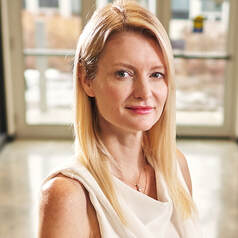
Emma G Duerden
Canada Research Chair, Neuroscience & Learning Disorders, Assistant Professor, Western University
Canada Research Chair, Neuroscience & Learning Disorders, Assistant Professor, Western University
0 articlesOur contributors
Meet the researchers, writers and practitioners bringing perspective to the global conversation.
Join the conversation14545 contributors
Canada Research Chair, Neuroscience & Learning Disorders, Assistant Professor, Western University
Canada Research Chair, Neuroscience & Learning Disorders, Assistant Professor, Western University
0 articles
Research Fellow, SPRU, University of Sussex
Research Fellow, SPRU, University of Sussex I am a Research Fellow working on a three-year project on the Governance of Discontinuity in Technological Systems (DiscGo). Stemming from research on socio-technical transitions this project studies the under-examined ‘flip side’ to innovation – how technology governance can address the crucial task of disengaging from well-established socio-technical systems. The project is in collaboration with colleagues at the INRA in Paris, TSG in Dortmund and led by Stefan Kuhlmann in Twente. The Sussex case study is civilian nuclear energy, where the governance patterns of France, Germany, the Netherlands and the UK will be examined. I am also the Tyndall Centre Coordinator for the University of Sussex, a leading research network on climate change and sustainability involving several Universities in the UK as well as one in China. Prior to joining SPRU I completed an MSc in Environmental Governance with Distinction at the University of Manchester, before completing a PhD on Public Engagement with Nuclear Power in the UK. Whilst writing up I worked as a Post-Doctoral Researcher on the ESRC Biosecurity Borderlands project, and then the ESRC Visualising Climate Change project also at Exeter.
1 articles
Professor of Science & Technology Policy in the Science Policy Research Unit, University of Sussex
Professor of Science & Technology Policy in the Science Policy Research Unit, University of Sussex With a background in astronomy and 'science studies' and a masters in archaeology and social anthropology (Edinburgh 1984), my PhD is in 'science and technology policy' (Sussex 1995). Having worked earlier for Greenpeace (including as an international and national board-member), I’ve also been employed as a building labourer, laboratory technician, hospital porter and factory, farm and mental health care worker. My 'transdisciplinary' research, teaching and policy advisory work at the Science Policy Research Unit at the University of Sussex focuses on issues of power, uncertainty, diversity and democracy across different areas of science, technology and innovation. A member of the Sussex Energy Group, I was formerly Research Director for SPRU (2006-13) and the Sussex Management School (2009-2012) and for fifteen years (2006-2021) co-directed the ESRC Centre at Sussex on Social Technological and Environmental Pathways to Sustainability (STEPS). Formerly a member of the Research Council of the ESRC and of the Sociology sub-panel in the 2020 Research Excellence Framework, I have served as an advisor for the UK, for other national governments and for the European Commission on issues including energy policy, radioactive waste, nuclear power, toxic substances, GM foods, uncertainties, science advice, ethics of new technologies and science and society. I am presently an independent advisor to the official evaluation of the UK Government's Nuclear Innovation Programme.
1 articles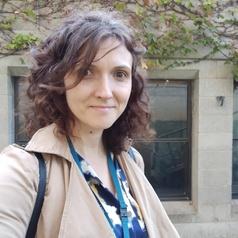
Lecturer in Philosophy, University of East Anglia
Lecturer in Philosophy, University of East Anglia I am a philosopher in the Department of Philosophy in the School of Politics, Philosophy, Language and Communication Studies, at University of East Anglia. My research focuses on issues related to mechanistic explanation and modelling in biology and cognitive science, artificial intelligence and creativity.
1 articles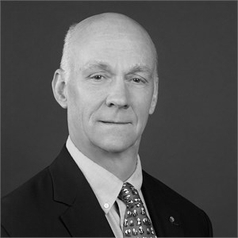
Professor of International Science, Public Policy and Human Development, Harvard University
Professor of International Science, Public Policy and Human Development, Harvard University William Clark is the Harvey Brooks Research Professor of International Science, Public Policy and Human Development at Harvard University’s John F. Kennedy School of Government. Trained as an ecologist, his research focuses on sustainability science: understanding the interactions of human and environmental systems with a view toward advancing the goals of sustainable development. He is particularly interested in how institutional arrangements affect the linkage between knowledge and action in the sustainability arena. At Harvard, he co-directs the Sustainability Science Program. He is co-author of Pursuing sustainability: A guide to the science and practice (Princeton, 2016), Adaptive environmental assessment and management (Wiley, 1978), and Redesigning rural development (Hopkins, 1982); editor of the Carbon dioxide review (Oxford, 1982); coeditor of Sustainable development of the biosphere (Cambridge, 1986), The earth transformed by human action (Cambridge, 1990), Learning to manage global environmental risks (MIT, 2001), Global Environmental Assessments (MIT, 2006) and The global health system: Institutions in a time of transition (Harvard, 2010); and co-chaired the US National Research Council’s study Our Common Journey: A Transition Toward Sustainability (NAP, 1999). He serves on the editorial board of the Proceedings of the National Academy of Science. Clark is an elected member of the National Academy of Sciences, the American Academy of Arts and Sciences, and the American Association for the Advancement of Science. He is a recipient of the MacArthur Prize, the Humboldt Prize, the Kennedy School’s Carballo Award for excellence in teaching, and the Harvard College Phi Beta Kappa Prize for Excellence in Teaching.
0 articles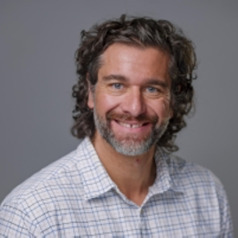
Senior Lecturer in Human Geography, University of Exeter
Senior Lecturer in Human Geography, University of Exeter Dr. Ricardo Safra de Campos is Senior Lecturer in Human Geography at the University of Exeter working on population movements in the context of climate change, with a research focus on migration, sustainability and wellbeing. His work has been published in interdisciplinary journals including Nature Climate Change, Proceedings of the National Academy of Sciences (PNAS), Global Environmental Change, Current Opinion in Environmental Sustainability, and discipline-specific such as Population, Space and Place. He is a contributing author on the Intergovernmental Panel on Climate Change (IPCC) Special Report on the Ocean and Cryosphere in a Changing Climate. Ricardo gave expert oral evidence on migration and climate change to EU Home Affairs Sub-Committee of the UK’s House of Lords in 2020. He serves on the advisory board of international research and policy initiatives on climate-related displacement in Africa, Asia and the Caribbean; and is on the editorial board for the journals Climatic Change; PLOSClimate; and Climate Mobilities, Frontiers in Climate.
0 articles