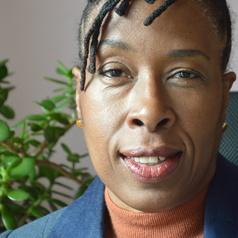
Academic Fellow & Psychologist, Melbourne School of Psychological Sciences, The University of Melbourne Dr Courtney Walton is a Registered Psychologist and researcher at the University of Melbourne, with expertise in mental health, particularly as applied to sport, exercise, and performance contexts. To date, Courtney has published over 70 peer reviewed scientific articles and book chapters.
Associate Professor, Sport Psychology, University of Toronto I am an Associate Professor and the Associate Dean, Graduate Education in the Faculty of Kinesiology & Physical Education at the University of Toronto. My research program in sport psychology draws on qualitative and quantitative methodological approaches and focuses on athlete mental health; stress, coping, and emotion regulation; and youth athletes’ experiences in sport and the influence of parents and coaches in youth sport. I am currently an Editor-in-Chief of the journal Psychology of Sport and Exercise, I am the Past President of the Canadian Society for Psychomotor Learning and Sport Psychology (SCAPPS), and a Member at Large with the International Society of Qualitative Research in Sport and Exercise. In addition to my research and teaching, I am also a Registered Psychotherapist and provides clinical psychotherapy services for athletes, coaches, and individuals working in various high-performance environments including sport, music, and performing arts.
Bowra Junior Research Fellow, University of Oxford Marta Zboralska is a Leverhulme Early Career Fellow at the Ruskin School of Art and Bowra Junior Research Fellow at Wadham College. Her current research project, Art After Witold Gombrowicz, maps responses to the Polish writer across the field of visual art. Demonstrating the author’s wide-ranging, transnational influence on artists – which has thus far escaped recognition – the project uses art-historical methodologies to study how Gombrowicz’s prose has been transformed into a variety of materials and mediums, traversing geographical contexts. Marta completed her PhD at UCL in 2020, with a thesis titled The Art of Being Together: Inside the Studio of Henryk Stażewski and Edward Krasiński. The final chapter of her doctorate won the Association for Women in Slavic Studies 2020 Graduate Essay Prize. She was an Arts and Humanities Research Council Fellow at the Archives of American Art, Smithsonian Institution, in 2017, and Project Assistant on the Getty Foundation-funded initiative Confrontations: Sessions in East European Art History in 2019-20. In 2022, her Art Journal article 'Living Color: Henryk Stażewski’s Interior Models' was shortlisted for the Royal Historical Society's Alexander Prize. Her latest article, ‘Henryk Stażewski’s Art in America’, was published in the Spring 2023 issue of Archives of American Art Journal. Before commencing her fellowship, Marta lectured at Oxford's Department of History of Art, UCL, and the University of Essex.
Professor of Psychology, University of Westminster Much of my research over the past two decades has centred on how people behave while they are online, as well as considering what the internet has to offer for psychologists in research and teaching contexts. Some of it has been methodological in nature, for example focusing on web-based psychological measurement, validity of online research techniques, and ethics of online data collection. Other work has focused on the application of these techniques to topics including online self-disclosure, self-presentation, privacy concern, effects of recreational drug use, and online fraud and deception. My current focus is generally on factors affecting how people engage with online technologies, potential influences of online stimuli on our behaviour, and questionnaire based measurement of cognitive problems.
Reader, Social Sciences, University of Westminster Dr Deborah Husbands is a sociocultural psychologist focusing on race and ethnicity. She engages with critical race theoretical frameworks such as intersectionality and uses qualitative research methods to explore the experiences of marginalised and minoritised groups. Deborah is a co-investigator on several research projects that include motivations for sharing political disinformation on social media, museum experiences and broadening participation through co-created inclusive digital museum audio, utilisation of a chatbot for advice on sexual health in minoritised ethnic populations, and boosting COVID-19 vaccination intentions through exposure to cultural facemasks in public health messages. Deborah’s current research investigates the role the impostor phenomenon might play in maintaining the awarding gap in racially-minoritised students in higher education. She works collaboratively with other universities to address issues contributing to an awarding gap. Additional research interests include the benefits of reverse-mentoring for improving outcomes for racially-minoritised students, decolonising the curriculum and exploring students’ sense of belonging. Deborah is a Chartered Psychologist, holds a Fellowship of the Higher Education Academy and is an Associate Fellow of the British Psychological Society. Deborah is also a Co-Chair for the EDI Committee, Outreach Coordinator for the School of Social Sciences, Co-Chair of the BME Network, and Lead for the Black History Year programme, all at the University of Westminster.
Lecturer in Psychology, University of Westminster Dr Rotem Perach is a Lecturer in Psychology at the University of Westminster. He is interested in applied social psychology including topics relating to collective resilience, misinformation, public health messaging, and facemasks. Rotem received his PhD from the University of Kent, and worked as a postdoctoral researcher in Goldsmiths, University of London, University of Sussex, and University of Westminster.