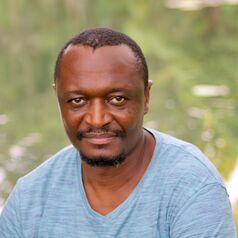
Professor of Climate Change, Food Systems and Health in the Centre on Climate Change and Planetary Health at the London School of Hygiene and Tropical Medicine, London School of Hygiene & Tropical Medicine Prof Tafadzwanashe Mabhaudhi is a globally recognised researcher, boundary spanner, and science advocate, working on complex water, energy, food and environmental systems at the interface of science, policy, and society. He has a track record of scientific leadership, capacity building and building partnerships needed to achieve outcomes and impacts from research, development and innovation. His goal is to work on research and development that informs policy, equality and transformation in Africa (and beyond). He is a professor of climate change, food systems and health in the Centre on Climate Change and Planetary Health at the London School of Hygiene and Tropical Medicine and director of the Institute for Natural Resources (NPC) in South Africa, and an honorary professor at the University of KwaZulu-Natal in South Africa and the University of Nottingham (Malaysia).
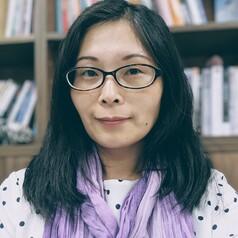
Associate Professor, National Taiwan University Kai-Ping Huang is Associate Professor of Political Science at National Taiwan University. Her research interests include party systems, formal institutions, and democratization focusing on East and Southeast Asia. Her work has appeared in the Journal of Democracy, Comparative Politics, Journal of East Asian Studies, Social Indicators Research, and several edited volumes.
Ph.D. Fellow, Center for Constitutional Democracy, Indiana University Alemayehu Fentaw Weldemariam, a Ph.D. Fellow at the Center for Constitutional Democracy at Indiana University, Bloomington, is an experienced educator, lawyer, peacebuilding practitioner, and country expert contributing to Ethiopia Insight and various media outlets, recognized for his astute observations in the Horn of Africa.
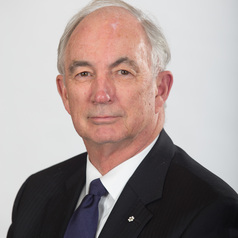
Professor Emeritus, Department of Geography and Environment, Western University Professor Emeritus Gordon McBean, Ph.D., has been at Western University since 2000, in the Department of Geography and Environment and with the Institute for Catastrophic Loss Reduction (ICLR). Previously, he was Assistant Deputy Minister, Environment Canada (1994–2000), responsible for weather, climate and air quality sciences and service; professor, atmospheric-oceanic sciences, University of British Columbia (1988–1994); and senior scientist, Environment Canada. Internationally, he was president, International Council for Science (2014–2018); co-chair, Future Earth Governing Council (2016–2018); and chair, Science Committees for Integrated Research on Disaster Risk (2006–2011) and World Climate Research Programme (1988–1994). Since his appointments to ICLR and Western, he has focused on science and policy issues such as climate change, disaster risk reduction and broader environmental issues. He is a Member of the Orders of Canada and Ontario; Fellow of the: Royal Society of Canada; American Association for the Advancement of Science; American Geophysical Union; International Science Council; American Meteorological Society; and other societies; and was awarded the 2023 American Meteorological Society Warren Washington Research and Leadership Medal; 2017 International Meteorological Organization Prize; 2015 University of British Columbia Alumni Award of Distinction; 2015 American Geophysical Union Ambassador Award; 2015 American Meteorological Society Cleveland Abbe Prize; 2007 Nobel Peace Prize, shared for his contributions to the Intergovernmental Panel on Climate Change; and 1988 Patterson Medal for distinguished contributions to meteorology in Canada.
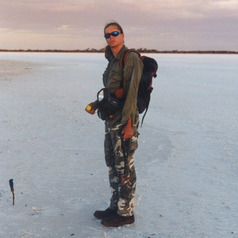
Senior Research Associate, Murdoch University Professionally I wear two hats: primarily as an Environmental Consultant (Short-range endemic invertebrates), and secondarily as research associate at WA Museum and Murdoch University. I am an invertebrate biologist specialising in arachnids and myriapods. I have been studying the scorpions of Australia for over 20 years and am Australia's leading scorpion taxonomist. I also work on pdeudoscorpions when time permits. For the last 10 years, I've also been researching the diversity of soil centipedes (geophilomorpha) and cryptic centipedes (Cryptopidae). In addition to systematic research, I do adhoc research on terrestrial salt lake invertebrates. Most of my research is oriented around systematics and I use both molecular and morphological data to infer phylogenies.
Associate Lecturer, School of Kinesiology and Health Science, York University, Canada Hernán Humaña teaches socio-cultural issues related to health, physical activity and sports as well as the history and politics of the Olympic Games at York University’s School of Kinesiology and Health Science. His upcoming books focus on his immigrant family’s sinuous journey toward representing Canada on the international stage, featuring his children Felipe and Melissa. The other book is a look into Chile’s violation of human rights affecting elite athletes during the dictatorship years.