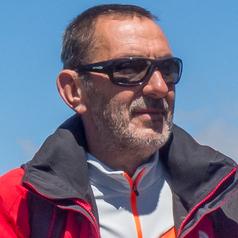
Principal Hydrologist, UK Centre for Ecology & Hydrology I lead the Hydrological Status and Reporting Group at CEH, which comprises scientists working on hydrological data management, hydrological monitoring and seasonal forecasting, analysis of past hydrological change and appraisal of future climate change impacts. Much of my work surrounds the analysis and exploitation of datasets on the UK National River Flow Archive (NRFA), the UK’s principal archive of hydrometric data. I lead the National Hydrological Monitoring Programme, which appraises current hydrological conditions in the UK through monthly Hydrological Summaries and also reports on major hydrological events (such as the winter 2013/14 floods). I contribute to the Hydrological Outlook for the UK, in partnership with other CEH scientists and a host of external organisations. One of my main research interests is the investigation of hydrological trends, to assess the evidence for climate change and other impacts on river flows in the UK and Europe. I have published extensively in this field and authored a recent synthesis of the evidence for climate-driven river flow trends in the UK. A major theme in my work is investigating hydrological extremes (floods and droughts). I am PI on a Belmont Forum project “DrIVER” (Drought Impacts and Vulnerability Thresholds in Monitoring and Early Warning Research), working with partners in Europe, the US and Australia to provide a scientific underpinning for future improvements in drought monitoring and early warning. I am Lead PI on a £1.5m NERC-funded project “Historic Droughts”, running from 2014 – 2018, which aims to develop an interdisciplinary understanding of the drivers and impacts of past droughts in the UK. Previous projects on extremes include the EU FP-6 Project “WATCH”, Water and Global Change, which delivered European-scale analyses of historic and future drought and flooding using observations and global hydrological models.
Investigadora Distinguida en Prehistoria, Universidad de Valladolid Doctora en prehistoria. Actualmente Investigadora Distinguida en la Universidad de Valladolid e Investigadora Asociada en la Universidad de Oxford. Sus líneas de investigación se centran en la ostearqueología humana y los análisis isótopicos de las comunidades de la prehistoria reciente en el occidente europeo, con especial interés en la subsistencia, la identidad, la desigualdad socio-económica y la violencia.
Colaborador de la Facultat de Biologia, Universitat de Barcelona Coordinador del Proyecto Neopangea. Miembro de la Alliance of World Scientists y colaborador de la Facultat de Biologia de la Universitat de Barcelona.
Research Manager, The Asenze Project, University of KwaZulu-Natal Kathryn Watt is a researcher based at the Centre for Rural Health, University of KwaZulu-Natal. Kathryn holds an MA in sociology from Stellenbosch University and has work experience at the DSI-NRF Centre of Excellence in Human Development at the University of the Witwatersrand and the South African Human Sciences Research Council. Her work has primarily focused on early childhood development and adolescent health and wellbeing in resource-constrained contexts.
Associate Professor in Education, University of East Anglia Kimberley’s research is primarily based within the framework of self-determination theory and aims to (i) accurately measure and map the motivational determinants of adaptive and maladaptive engagement in learning environments (i.e., education, sport, and exercise); and (ii) utilise this information to inform the implementation and evaluation of intervention programmes designed to facilitate optimal motivation, performance, and well-being in these contexts. Her interests in this area include the use of online platforms in intervention work with teachers and young people and focuses on the way in which we can develop and assess digital resilience. Kimberley is also interested in the influence of educational practices on sustained health-conducive behaviour (healthy eating and exercise). Her research as received funding from the ESRC, British Academy, and the UKRI among other organisations and charities.