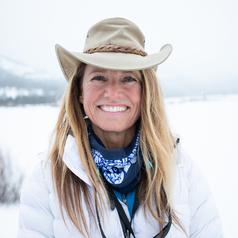
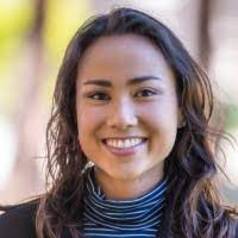
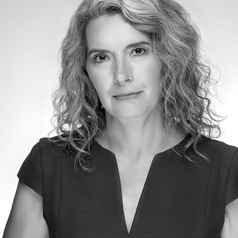
Professor of Environmental Studies and Faculty in Ecology and Evolutionary Biology, University of Colorado Boulder Joanna has spent her career publishing and teaching about evolution, ecology, and the critical conservation issues impacting wild mammal species interactions and adaptation. Joanna is currently a professor at the University of Colorado – Boulder (CU). Previous to her position at CU, Joanna was a professor at University of Texas, a visiting professor at Duke University, an associate professor at the University of Wisconsin – Madison, an assistant professor at the University of Oregon, and Program Director at the National Science Foundation. In addition to her teaching and research roles, Joanna Lambert is a scientific advisor to the Rocky Mountain Wolf Project, has served as an advisor to the United Nations Environment Programme, is the co-founder of the Northwest Primate Conservation Society, and is currently serving on the Species Survival Commission of the International Union for the Conservation of Nature (IUCN). She has held numerous editorial positions for journals such as Oecologia, PLoS ONE,Diversity, Integrative Zoology, Tropical Conservation Science, American Journal of Physical Anthropology, American Journal of Primatology, and African Primates. Joanna’s accolades include receiving the University of Texas Presidential Award for Distinguished Research, the Vilas Associate Award for Research at the University of Wisconsin – Madison, as well as the highest university – wide awards for both research (R.A. Bray Faculty Fellowship for Excellence in Scholarship) and teaching (Ersted “Crystal Apple” Award for Distinguished Teaching) at the University of Oregon. In 2003, she was named Oregon’s Emerald Professor of the Year. She was recently elected a Fellow of the American Association for the Advancement of Science (AAAS) – the largest scientific society in the world (est. 1848) – for her “outstanding contributions to the field of feeding biology” – as well being made a Fellow of the Linnean Society – the world’s oldest society (est. 1788) devoted to the study of natural history and where Charles Darwin first proposed his theory of evolution by natural selection.
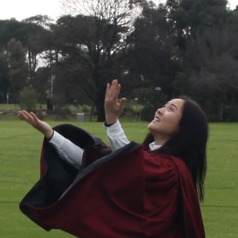
Associate Professor of Geospatial Science, RMIT University Dr Qian (Chayn) Sun is an Associate Professor at Geospatial Science, RMIT University, Australia. She is also a Spatial Scientist with over 15 years of experience in applying Geospatial technologies in multi-disciplinary projects and research, which includes Chayn’s geospatial professional work in government and engineering consultancies in New Zealand and Australia. Her research expertise lies in Spatial and Statistical Analysis and Modelling, eye tracking, applied remote sensing, machine learning, cloud-based open-source GIS applications, etc. Chayn is active in publishing high quality scientific papers, attracting grants and transforming research into industry practice. Her current research activities at RMIT are to look at the impact of urban vegetation on urban heat islands (UHI) effect, and active traveling with temperature and tree shadeways information services, using satellite imagery, Google street view photos and machine learning to generate granular urban liveability metrics etc.
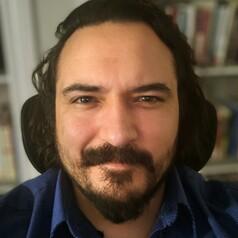
Community Support Specialist, Shkaabe Makwa Centre for First Nations, Inuit, and Métis Wellness at CAMH, Doctoral Student, University of Toronto Louis (ᐋᐧᐋᐧᐦᑌᐃᐧ ᒥᐢᑕᑎᒼ) is a Bear Clan member of Nisichawayasihk Cree Nation, a registered psychotherapist, and a board certified behaviour analyst. Louis has two decades of experience supporting the recovery journeys of people who find themselves in contact with the mental health and forensic mental health systems. Louis is a Community Support Specialist with the Shkaabe Makwa Centre for First Nations, Inuit, and Metis Wellness and a psychotherapy associate of the Weaving Wellness Centre, which provides culturally-integrated counselling services to Indigenous Peoples in Ontario, Canada. Louis is a Vanier Scholar and doctoral student at the University of Toronto with current research focused on articulating Indigenous conceptions of helping work within a psychotherapeutic context. Louis has published peer-reviewed research on the treatment of severe behavioural challenges in neurodevelopmental disabilities, forensic mental health populations, interprofessional care, cross-cultural psychiatry, and Indigenous issues. Louis hopes to contribute to positive social change through the advancement of culturally relevant wellness initiatives that promote the recovery and empowerment of marginalized peoples.
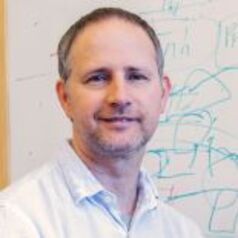
Professor, Department of Bioengineering and Therapeutic Sciences; Director, Institute for Human Genetics, University of California, San Francisco The Ahituv lab is focused on identifying gene regulatory elements and linking nucleotide variation within them to various phenotypes including morphological differences between species, drug response and human disease. In addition, our lab is developing massively parallel reporter assays (MPRAs) that allow for high-throughput functional characterization of gene regulatory elements and the use of gene regulatory elements as therapeutic targets or disease diagnostic markers.
Assistant Professor of Biology, Menlo College Dr. Gordon is Assistant Professor of Biology at Menlo College. This is her first year teaching at Menlo College. Dr. Gordon went to graduate school to become an undergraduate professor and work at a student-focused institution. Prior to joining faculty, Dr. Gordon taught graduate courses at UC San Francisco and undergraduate courses at University of San Francisco, San Francisco State University, and UC San Diego, as well as elementary courses at San Francisco public schools. At Menlo College, Dr. Gordon is focusing on improving STEM interest in STEM-underrepresented groups and connecting students to their surrounding biotechnology hub. Dr. Gordon first began research at the Ocean Institute in Dana Point, California, where she worked as a husbandry intern. She conducted an artificial reef habitation project with local swell sharks and launched an aquaponics education exhibit. Dr. Gordon went on to work as a husbandry intern in the lab of Dr. Deborah Yelon at UC San Diego, where she migrated to the laboratory bench to study zebrafish heart development. Dr. Gordon simultaneously worked in the lab of Dr. Maike Sander at Sanford Consortium for Regenerative Medicine as a lab assistant and, later, the lab of Dr. Amro Hamdoun at Scripps Institution of Oceanography as an undergraduate researcher and URS (David Marc Belkin Memorial Research Scholarship for Environment and Ecology). While learning about drug transporters and embryonic development with sea urchins in Dr. Hamdoun’s lab, Dr. Gordon pioneered a collaborative project between the labs of Dr. Hamdoun and Dr. Yelon, identifying a cell type in the zebrafish embryo that likely protects embryonic development from harmful small molecules (Gordon et al., Aquatic Toxicology, 2019). As a graduate student, Dr. Gordon joined the lab of Dr. Nadav Ahituv at UC San Francisco to investigate the genetic factors underlying the evolution of frugivory (fruit-specialization) in mammals. By studying the DNA of mammals that adapted to high sugar diets, bats and primates, Dr. Gordon and her collaborators can identify novel DNA targets for therapies for metabolic diseases in humans like diabetes. Dr. Gordon utilized both comparative genomics and functional genomics techniques for her investigation, and she also traveled to Belize to work with bats and other bat researchers across the globe at the “Bat-a-thon.” Dr. Gordon was awarded the NSF GRFP and also acquired an NIH EDGE CMT grant with Dr. Ahituv to advance her research. Dr. Gordon discovered many frugivory adaptations in the fruit bat kidney and pancreas, including differentially active genes and regulatory regions involved in fluid and electrolyte balance in the frugivore kidney and an increase in endocrine and a decrease in exocrine cells in the frugivore pancreas (Gordon and Baek et al., BioRxiv, 2023). More of Dr. Gordon’s work will be published in the coming years. Dr. Gordon’s research at Menlo College will be on general biology education. She will be testing a variety of techniques and collecting data. Ultimately, she intends to use her genetics expertise to develop new courses at Menlo College that are in line with student interests and prepare students to become positive leaders of change in fast-growing biotechnological spaces of genomics, gene therapy, and pharma.
Dean of Social Sciences and Professor of Political Science, University of Victoria My research focuses on Canadian citizenship law and the law and politics of the family. I have recently published a sole authored book: Canadian Club: Birthright Citizenship and Belonging (University of Toronto Press, 2022), and a co-edited collection: Neoliberal Contentions: Diagnosing the Present (University of Toronto Press, 2023).