
Hamado Sawadogo
Chercheur en agronomie , Institut de l'environnement et des recherches agricoles (INERA)
Chercheur en agronomie , Institut de l'environnement et des recherches agricoles (INERA)
0 articlesOur contributors
Meet the researchers, writers and practitioners bringing perspective to the global conversation.
Join the conversation14545 contributors
Chercheur en agronomie , Institut de l'environnement et des recherches agricoles (INERA)
Chercheur en agronomie , Institut de l'environnement et des recherches agricoles (INERA)
0 articles
Chercheur en agronomie, photographe, accueilli à l’Institut sénégalais de recherches agricoles (ISRA, Dakar), Cirad
Chercheur en agronomie, photographe, accueilli à l’Institut sénégalais de recherches agricoles (ISRA, Dakar), Cirad Quels sont les facteurs naturels et anthropiques qui conduisent à une fragilisation de l'agriculture africaine ? Dans quelle mesure l'agroécologie apporte-t-elle des réponses convaincantes ? Comment travaillent les chercheurs, les paysans et les militants qui portent le projet agroécologique pour l'Afrique ? Pourquoi la transition agroécologique tant espérée tarde-t-elle à survenir ? Pour moi, science et photographie constituent deux moyens complémentaires et indissociables pour aborder ces questions complexes. J’utilise régulièrement la photographie dans le cadre de mes missions de terrain, afin de témoigner des déséquilibres qui touchent les systèmes agro-sylvo-pastoraux africains, et pour mettre en valeur les personnes porteuses de solutions comme l'agroécologie. Au démarrage, tout cela n'était pour moi qu'une passion pour l'image. Mais progressivement, la photographie a pris toute sa place dans ma palette d'outils de chercheur de terrain. Je l'utilise aujourd'hui comme un moyen complémentaire de la méthode scientifique pour produire des connaissances et alimenter une réflexion transversale sur l'agriculture africaine. Agronome de formation, j’ai appris le métier de chercheur-photographe au contact du terrain, à travers de longues périodes d’immersion en brousse. Mes premieres missions m’ont conduites à étudier le fonctionnement des systèmes agraires et des filières agroalimentaires (« de la fourche à la fourchette ») dans divers contextes : Tanzanie (2009), Rodrigues et Maurice (2010), Yémen (2011), Kenya (2012) et enfin la Corse (2013-2016) lors de mes années de doctorat. Ces missions de longue durée (6 mois par pays en moyenne, sauf pour la Corse) ont été autant d’occasions pour aiguiser mon regard de chercheur et pour apprendre l’art de photographier. J’ai publié pour la première fois mes photos dans un ouvrage que j’ai rédigé à l’issue de ma thèse. L’ouvrage raconte, images à l’appui, l’histoire de la filière clémentine de Corse, et la manière dont cette dernière a su se démarquer en valorisant le terroir et la typicité. J’ai été recruté en tant que chercheur au CIRAD en 2017, puis affecté au Sénégal en 2018. Ma mission consiste à comprendre et appuyer la transition agroécologique au Sénégal et en Afrique subsaharienne. Depuis lors, je me déploie partout au Sénégal ainsi que dans d’autres pays (Kenya, Benin, Côte d’Ivoire) avec un travail qui s’organise en trois volets. Le premier volet consiste à comprendre la réalité du monde agricole africain au travers d’enquêtes menées chez les producteurs et les acteurs des filières agroalimentaires. Je mobilise des cadres analytiques et méthodologiques issus de l'agronomie système et des études de transition afin de comprendre les causes de blocage qui freinent le déploiement des innovations agroécologiques, que ces dernières émanent du monde de la recherche ou bien du monde paysan. Le second volet de mon travail consiste à accompagner les équipes de chercheurs qui conçoivent des innovations agroécologiques (outils de lutte biologique, systèmes de culture sans pesticides…). Mon rôle est de proposer des méthodes de co-conception qui prennent en compte les réalités et les contraintes les paysans africains. Le troisième volet de mon travail consiste à accompagner les mouvements sociaux qui émergent autour de l’agroécologie au Sénégal et en Afrique de l’Ouest. À ce titre je suis particulièrement impliqué dans la vie de la Dynamique pour une Transition Agroécologique au Sénégal (DyTAES), mouvement social que j'accompagne à la fois en tant que scientifique et que photographe. La DyTAES est un réseau sans reconnaissance légale, mais structuré, qui a réussi l'exploit de fédérer l'ensemble des acteurs de l'agroécologie sénégalaise (ONG, recherche, organisations paysannes, élus engagés…) dans un seul but : promouvoir l’agroécologie par le plaidoyer, la sensibilisation et l’accompagnement des territoires en transition. C’est la première fois qu’une alliance d’une telle nature apparait en Afrique.
0 articles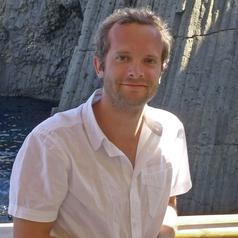
Géologue, PhD, BRGM
Géologue, PhD, BRGM Docteur en géologie, Nicolas Charles est géologue au BRGM, le Service géologique national. Il participe à de nombreux projets à l'international et en France sur la cartographie géologique et les ressources minérales. Depuis 2016, il coordonne un projet européen de formation en géosciences en Afrique (PanAfGeo) visant à renforcer les partenariats entre services géologiques européens et africains. Auteur de nombreux ouvrages de médiation scientifique sur le patrimoine géologique français, il anime aussi des conférences sur la géologie et les ressources minérales.
1 articles
Professor of Geography, University of New Mexico
Professor of Geography, University of New Mexico I am a geographer with a broad range of interests. In my research, I study how humans interact with plants, both intentionally and unintentionally. I have examined plant-people interactions from multiple perspectives, including ecology, cultural studies, history and ethnobotany. My spatial focus is on western Africa and the African Atlantic diaspora.
0 articles
Professor of Criminology, University of Huddersfield
Professor of Criminology, University of Huddersfield Prof. Rachel Armitage is a Professor of Criminology within the School of Human and Health Sciences at the University of Huddersfield. She founded the highly successful multi-disciplinary institute - The Secure Societies Institute (SSI), which she directed between 2014 and 2018. Prof. Armitage’s research focuses upon the role of design (place, space, products and systems) in influencing both anti-social and pro-social behaviour. She has conducted research on the subject of Crime Prevention through Environmental Design (CPTED) for over 20 years - evaluating the effectiveness of the Secured by Design (SBD) award scheme, investigating the links between housing design and crime risk, exploring the tensions and synergies between security and sustainability and studying international approaches to preventing crime through design. Her work has been referenced in local, national and international planning policy and guidance, and she aims to ensure that consideration for crime prevention is on the agenda of all agencies involved in planning and developing the built environment. More recently, she has conducted several projects exploring the role of design in counterterrorism at critical infrastructure sites, in particular, multi-modal passenger terminals. Rachel’s research on housing design has also focused upon the role of housing in the prevention of domestic abuse (specifically the Sanctuary scheme), and the impact of housing on mental and physical health. As well as her focus upon crime prevention within the built environment, Rachel works closely with many agencies to explore the impact of secondary victimisation of online child sexual abuse – particularly IIOC (Indecent Images of Children). Rachel is the Deputy Chair of Trustees for the Marie Collins Foundation; a Trustee of Acts Fast and a founder and trustee of the charity Talking Forward - a peer support group for families affected by online child sexual abuse. She is a founding member of the national Indirect Victims of Indecent Images of Children Investigations (IVIIC) National Strategic Group - working closely with key agencies to explore policy and practice responses to non-offending partners (NOPs) and children of IIOC offenders. Rachel has published extensively on the subject of designing out crime, including a sole authored book: Crime Prevention through Housing Design (2013) published by Palgrave Macmillan, and edited collections: Rebuilding Crime Prevention through Environmental Design (2019) published by Routledge, and Retail Crime – International Evidence and Prevention (2018) published by Palgrave Macmillan. She is on the Editorial Board of several journals including: Security Journal (Book Reviews Editor), the European Journal on Criminal Policy and Research, Crime Prevention and Community Safety and Frontiers in Psychology, Forensic and Legal Psychology. Rachel is an invited member of the Home Office Safer Streets Committee; the Home Office National Burglary Taskforce; the Home Office Vehicle Crime Taskforce; the Child Sexual Abuse Academic Network; the China Safe Cities Advisory Group, and the ActEarly City Collaboratory project (led by Bradford Institute for Health Research) to develop innovative approaches to the prevention of ill health.
0 articles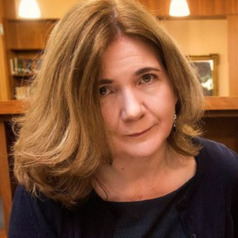
Professor of Modern Poetry, School of Arts, English and Languages, Queen's University Belfast
Professor of Modern Poetry, School of Arts, English and Languages, Queen's University Belfast I teach primarily in the areas of 19th and 20th century Irish literature, modern poetry - particularly contemporary Irish and British poetry - and modernist literature. I’ve supervised research students in the areas of 19th & 20th century Irish literature, 20th-century British, Irish, and American poetry, and 20th-century British fiction, and welcome proposals in the areas of modern British and Irish literature. I also supervise the critical component of creative writing PhDs (fiction and poetry). I convene and teach on the MA in Poetry: Creativity and Criticism, and also on the MA in English Literary Studies. My research interests are primarily in British and Irish Poetry of the 20th and 21st centuries, and in the literature and culture of the First World War, literary modernism, and war writing throughout the 20th century. I also have a particular interest in the work of Robert Graves – his poetry, historical fiction, criticism, and autobiographical writings. My first book was a study of the effects of the First World War on 20th-century Irish poetry; more recently, I co-edited (with Alan Gillis) The Oxford Handbook of Modern Irish Poetry. I've just edited a new edition of Robert Graves's First World War memoir, Good-bye to All That, for Penguin Classics (2014) and am currently working on a study of Graves's writings.
0 articles