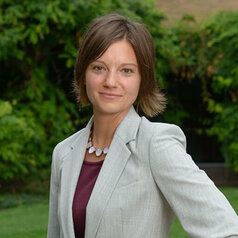
Associate Professor of Applied Social Sciences, Case Western Reserve University Dr. Voith has worked over the last decade to address violence against women and youth through counseling, agency- and community-based coordination efforts, and research. Her research focuses on the prevention and intervention of violence against women by working with boys and men to uncover the etiology of violence though the lens of trauma and health disparities. Her research shows that exposure to adversity and violence in family- and community-settings in childhood and adolescence are significant factors that, if gone unaddressed, can lead men to perpetrate violence in adulthood. Dr. Voith’s research aims to inform the development and evaluation of violence prevention programs with at-risk youth and improve batterer intervention programming with men.
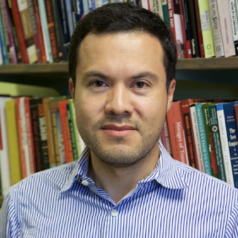
Associate Professor of History, Iowa State University I am a historian of religion, politics, and social movements in Latin America. I received my Ph.D. in Latin American History from the University of Texas at Austin. I am the author of "Guatemala’s Catholic Revolution," a book that chronicles the resurgence of Catholicism among Maya communities, employing a transnational approach that incorporates elite and popular notions of religiosity by drawing on documents housed in Guatemala, the United States, and the Vatican. It traces the emergence of progressive Catholic communities in Guatemala and beyond during the Cold War. My current research examines how Maya communities in rural, civil war-torn Guatemala developed a religious and political identity that drove the formation of several popular organizations. These groups became a nucleus for radical forms of activism, solidarity, and mobilization among urban and rural peoples. My articles and book chapters have appeared in several top-rated publications, including "The Americas," "The Oxford Handbook of Central American History," and "The Cambridge History of Religion in Latin America." My research and training have been funded by various sources, including the Social Science Research Council, the Center for Latin American and Caribbean Studies at the University of Wisconsin, Milwaukee, and the Center for the Excellence of the Arts and Humanities at Iowa State University.
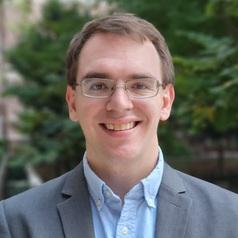
Assistant Professor of Political Science, University of Utah Josh McCrain studies American political institutions, Congress, lobbying, money in politics, media and politics, public policy, and political economy generally. He is also working on manuscripts on computational social science and applied data science using R. His research combines computational social science, causal inference approaches for observational data, and field experiments. He has also published a guide to working with congressional data in R: https://congressdata.joshuamccrain.com/
Assistant Professor of American Politics, Rice University Erik Peterson is an Assistant Professor at Rice University who specializes in American Politics and Political Communication. His current research focuses on the political consequences of the decline of local media outlets in the United States and the growth of online news consumption. In other work he considers the use and interpretation of research methods, such as experiments, to study these topics. His research has appeared in the American Political Science Review, the American Journal of Political Science and the Journal of Politics, as well as other academic journals.
Professor of Chemistry, Clemson University Dr. George Chumanov received BS/MS and PhD degrees in Physics in the area of optics, spectroscopy, and quantum electronics. His PhD research focused on the spectroscopy of biomolecules including Surface Enhanced Raman Scattering (SERS) of amino acids and proteins. He did postdoctoral training with Dr. Theresa Cotton at Iowa State University focusing on SERS of photosynthetic reaction centers and other transmembrane proteins. He took a position of Staff Scientist at Ames Laboratory of the US Department of Energy in 1993 where his research expanded to include photoinduced electron transfer phenomena at interfaces and plasmonic nanoparticles. His current interests are broadly defined as the synthesis and analytical applications of nanostructures including plasmonics, the development of new analytical methods, the application of various spectroscopic techniques to biomolecules, electron and scanning probe microscopy methods. He is very passionate about doing research as well as training students, and, in his free time, enjoys sports, mountain climbing, biking, gardening, and brewing.
PhD Candidate, Swansea University I became ill with a number of systemic autoimmune diseases in 2016 which took until 2021 to get diagnosed and left me with a wish to contribute to efforts to speed-up the diagnostic process and reduce its adverse impact on patients. I began working as a patient researcher on the Cambridge University lupus and related connective tissue disease studies in 2019 and in 2022 began a part-time PhD in Swansea University Medical School. My study is exploring the role of patient-clinician interactions, and their organisational context, in the sustained misdiagnoses of neuorologically mediated systemic autoimmune rheumatic diseases.