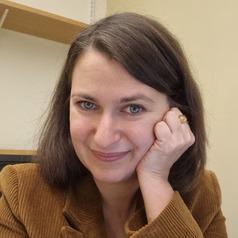
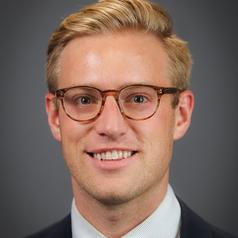
Assistant Research Professor of Nutrition, Tufts University Anastasia Marshak’s research at Feinstein International Center aims to make humanitarian programming more appropriate and impartial by showing the value of and advocating for more data- and evidence-driven approaches. Her main body of work focuses on improving the field’s understanding of the drivers of malnutrition in complex contexts. As part of this she develops and applies improved methods to identify those drivers. Anastasia also supports improved programming in the areas of early marriage and the long-term impact of conflict on livelihoods and access to services applying a variety of methods, including program evaluations. Recently, Anastasia studied the effects of human rights abuses that took place during attacks on IDP camps in northern Uganda as part of a trial for the International Criminal Court (ICC). In addition to her research, Anastasia teaches introductory and intermediate statistics at the Friedman School. Anastasia has expertise in quantitative analysis, research design, and nutrition. Prior to joining Feinstein, Anastasia worked for the MIT Poverty Action Lab and the World Bank in Sierra Leone. She holds a B.S. in quantitative economics and international relations from Tufts University and an M.A. in economics from Boston University. She holds a Ph.D. from the Friedman School of Nutrition in the Food Policy and Nutrition Program, with a focus on humanitarian assistance.
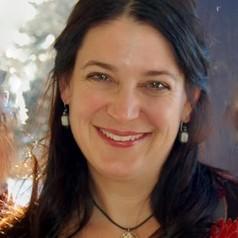
Research Professor of Global Affairs, Tufts University Dyan Mazurana, PhD, is a Research Professor at the Fletcher School of Law and Diplomacy, the Friedman School of Nutrition Science and Policy, Tufts University, and Research Director at the Feinstein International Center, Tufts University. Her research focuses on the areas of women, children, and armed conflict, gendered dimensions of humanitarian response to conflict and crises, documenting serious crimes committed during conflict, and accountability, remedy, and reparation. She serves as an adviser to several governments, UN agencies, human rights NGOs, and child protection organizations regarding humanitarian assistance and improving efforts to assist youth and women affected by armed conflict. This work includes the protection of women and children during armed conflict, including those people associated with fighting forces, as well as remedy and reparation in the aftermath of violence. Dyan has written and developed training materials regarding gender, human rights, armed conflict, and post-conflict periods for civilian, police, and military peacekeepers involved in UN and NATO operations. In conjunction with international human rights groups, she contributed to materials now widely used to assist in documenting serious violations and abuses against women and girls during conflict and post-conflict reconstruction periods. She has worked in Afghanistan, the Balkans, Nepal, and southern, west and east Africa. She has published more than 100 scholarly and policy books, articles, and international reports and her work has been translated into more than 30 languages. Dyan has a Ph.D. and an M.A. in women’s studies from Clark University.
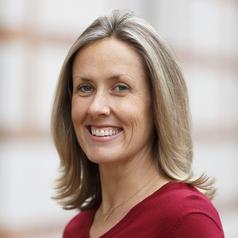
Fellow for the Middle East, Rice University's Baker Institute for Public Policy, Rice University I am a Fellow for the Middle East and Director of the Women's Rights, Human Rights and Refugees program at Rice University's Baker Institute for Public Policy. My book, 'Reluctant Reception: Refugees, Migration and Governance in the Middle East and North Africa,' was published by Cambridge University Press in 2021.
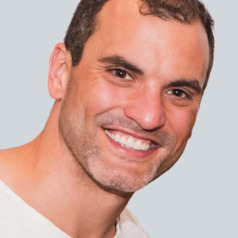
Executive Director of the Immigration Policy Lab, Stanford University Adam received his PhD from the University of California, Berkeley, and he is an affiliated scholar at the Institute for the Study of International Migration at Georgetown University. He has published various studies on forced displacement, conflict, and evidence-based interventions in journals such as International Organization, the British Journal of Political Science, Political Geography, and Economics & Politics, along with media outlets like the Washington Post and Foreign Policy. Prior to joining IPL, Adam led research teams and projects for the humanitarian NGO Mercy Corps; served as a senior conflict advisor for the World Bank; taught courses on migration and conflict at Berkeley and Yale University; and worked as a research analyst for USAID’s Office of Transition Initiatives in Syria. His approach to research, leadership, and management is informed by his deep policy engagement and close collaboration with local researchers, non-profits, and displaced populations in more than a dozen countries.
Assistant Professor of Political Science and International Affairs, University of Maine Dr. Nicholas R. Micinski is Libra Assistant Professor of Political Science and International Affairs at the University of Maine. His research focuses on global governance, particularly how states and international organizations respond to refugees, migration, climate change, and peacebuilding. Micinski has published two books: Delegating Responsibility: International Cooperation on Migration in the European Union (University of Michigan Press, 2022) and UN Global Compacts: Governing Migrants and Refugees (Routledge, 2021). Previously, Micinski was postdoctoral fellow at Université Laval, ISA James N. Rosenau Postdoctoral Fellow, and visiting researcher at the Center for the Study of Europe, Boston University.
Assistant Professor of History, University of Tennessee Nicole Eggers’ research interests include 20th-21st Century Congolese history, health and healing, refugees, and religion and politics in Central Africa. Her first book, Unruly Ideas: A History of Kitawala in Congo (Ohio University Press, 2023) follows the history of the influential religious movement Kitawala from its colonial beginnings in the 1920s to its present-day influence in some of the most conflicted parts of Eastern Congo. The study highlights practitioners of Kitawala as intellectuals and innovators and considers broad theoretical questions about how they have historically drawn on and reformulated practices of spiritual and social healing in times of upheaval, creating a historically situated framework for understanding how they and their communities have experienced and understood power and violence. In the process, the book engages a number of fields of inquiry: health and healing, violence and power, religion and rebellion, intersections of gender and power, colonial incarceration, prayer and spiritual agency, and nationalism and the post-colonial imagination. Eggers’ second book, tentatively titled Refuge in the Spirit: Religion in the Lives of Congolese Refugees, is a collaborative project centered around oral histories of Congolese refugee communities. For this project, Eggers and her collaborator, Dr. Roger Alfani, are investigating the significance of religion at different junctures of the Congolese refugee experience. With funding from an NEH Collaborative Grant, they have conducted interviews among Congolese refugees living in refugee camps in Kenya, Uganda, and Burundi, as well as among those who have left the camps to be resettled in Knoxville. The project seeks to illuminate how religion has functioned both as a space for building community for people who have lost their social safety net, as well as its role in addressing gaps — material, social, psychological, and spiritual — that state and international organizations too often neglect. Central to their investigation is the question of how people connect their experiences of social and physical security and insecurity to their understandings of spiritual security and insecurity. They argue that in-depth study of the religious lives of refugees is inherently valuable as a form of social and intellectual history that illuminates the complex inner lives and communal connections of people who are frequently viewed exclusively through the lens of trauma and crisis. In the classroom, Dr. Eggers is dedicated to teaching students how to ask evocative questions, think critically, and write effectively. One of her main goals is to teach students to reevaluate what they think they know about Africa and the study of history by introducing them to historical methods and narratives that highlight African experiences and voices. Dr. Eggers encourages active and creative student engagement with course themes and materials - both within and outside of the classroom - and strives to teach students that even when they are learning about places and peoples that are perhaps unfamiliar, they can learn to become critical consumers and producers of knowledge.