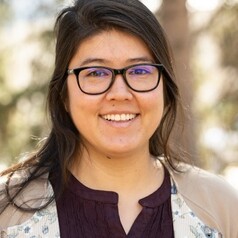
Postdoctoral Scholar in Forestry and Environmental Resources, North Carolina State University I am currently a postdoctoral scholar at North Carolina State University, where I manage the Crowd the Tap participatory science (citizen science) project that crowdsources the locations of lead plumbing and where I study participation in our project. My research shows that engaging participants through partner organizations can help increase the diversity of participants. I also do contract work with the North Carolina Environmental Justice Network supporting their participatory science where I support communities interested in protecting their air quality. I have a PhD in Ecology with a Human Environment Interactions Emphasis from Colorado State University where I studied how scientists communicate about and carry out environmental participatory science projects. Finally, I have a bachelor's degree from Lee University Biological Sciences.
Assistant Professor of Political Science, Western Michigan University Dr. Lauren Foley is an assistant professor in the Department of Political Science and director of the Capital Internship Program at Western Michigan University. She is the author of On the Basis of Race: How Higher Education Navigates Affirmative Action Policies, (NYU Press, forthcoming 2023). Her work has also appeared in Studies in Law, Politics, and Society and the Journal of Law and Education. She was admitted into the Michigan Bar Association in 2009.
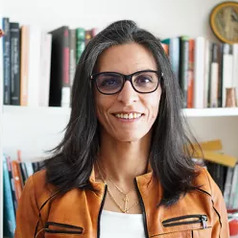
Senior Lecturer of Global Development Studies, University of East London Dr Afaf Jabiri is a Senior Lecturer and the Co-Director of the Centre for Social Justice and Change at the University of East London. Before joining UEL in 2017, she held posts at the Centre for Gender Studies, SOAS, and the Gender Institute at the LSE. For the past ten years, Dr Jabiri has led and contributed to interdisciplinary research projects, delivered undergraduate and postgraduate teaching in the areas of sociology, international development, gender studies, humanitarianism, postcolonial studies, forced and diaspora studies, supervised and contributed to doctoral training and published academic as well as policy-oriented research. Dr Jabiri joined academia after 17 years of work on issues related to gender equality, humanitarianism, refugees and migrants’ rights, peace, conflict resolution and transitional justice in the Arab region. She is a leading feminist activist in Jordan and across the Arab region, advocating for equality and social justice across the region. She publishes in both English and Arabic languages. RESEARCH Dr Jabiri’s research combines academic and impact-based research for policy reform and change. She takes an interdisciplinary approach in such studies, linking sociology, history, anthropology, international relations and law in her scholarship. Jabiri’s first book, Gendered Politics of Law in Jordan: Guardianship over Women (2016), examines the state as a gender regime and the historical representation of colonial and neoliberal politics in women’s lived realities of the concept of wilaya (guardianship). Her recent book-entitled Palestinian Refugees women from Syria to Jordan: Decolonising the Geopolitics of Displacements is based on four years of field research in Palestinian camps in Jordan––and including interviews with Palestinian refugee women, aid workers, and representatives of international organisations and NGOs in Jordan. The book examines the experiences of Palestinian women from Syria displaced to Jordan, embroiled between settler colonialism, militarism, nationalism, global refugee governance, and gender regimes subjecting them to multiple forms of structural, gender-based violence. To expose the history and geopolitics of intersecting oppressive systems working through and upon Palestinian refugee women's gendered bodies in humanitarian settings, the book argues for feminist analysis of the epistemic, settler- colonial violence of anti-Palestinianism, as well as highlights how local women’s groups and frontline workers attempt to fill service gaps. Using a rich theoretical lens to understand women's experiences in refugee camps, this book attempts to decolonise issues around migration, displacement, refugees, and women. Dr Jabiri has also undertaken research and developed impact case studies that contributed to both knowledge production and policy reform around development issues related to gender equality, gender-based violence during war and conflict in the context of Libya, Syria, Palestine and Yemen. She contributed to several global interdisciplinary action-oriented research projects related to global inequalities and gender-based violence. Current research: Dr Jabiri’s current research involves working on a research project on the Silence and Gender-based Sexual Violence (GBSV) during War and Conflict. The project aims to offer a comprehensive multi-level, interdisciplinary and gender approach to the understanding of GBSV and the silence around it in six countries: Sudan, Yemen, Iraq, Palestine, Jordan, and Lebanon. This aims to fill the knowledge gap between academic research and policy-based research pertaining to the context in which GBSV and rape occur and the factors that lead to women's silence and lack of reporting or disclosure. The project will establish a network of academic and non-academic members who are experts in different conflict and emergency settings contexts, with a long history and experience of working on the issue of rape and sexual violence in the contexts of Iraq, Palestine, Lebanon, Yemen, and Sudan, in addition to academic institutions from the Global North, Britain, USA and Belgium.
PhD Candidate, University of Sydney My research is centred around building a better understanding of the physiological and physical factors that determine human heat strain and the risk of heat-related health problems during work, physical activity and heat waves.
Research Fellow, University of Technology Sydney As a computational social scientist, I use big data, machine learning, and AI to understand human behavior and complex social phenomena. My primary focus is on inequality and biases in socio-technical systems.
Lecturer in Financial Computing, UCL Geoff Goodell is a Lecturer in Financial Computing at University College London. His work focuses on socio-technical systems in financial services. He is a member of the Bank of England CBDC Technology Forum and an associate of the Systemic Risk Centre of the London School of Economics. He is Convenor of two ISO working groups on distributed ledger technologies and an ISO advisory group on digital currency. He serves on the steering committee of the All-Party Parliamentary Group on Central Bank Digital Currency, the product advisory committee of the Digital Token Identifier Foundation, and the advisory groups of two European industry groups that focus on digital assets. Dr Goodell is a CFA charterholder and has a decade of private-sector experience in the financial industry, first as a strategist at Goldman, Sachs & Co and later as partner and chief investment officer at a boutique asset management firm. His research contributes to knowledge and policy at the intersection of finance, technology, and regulation.