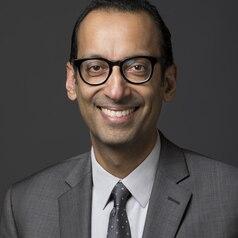
Professor of Management, Tufts University Alnoor Ebrahim is a Professor of Management at The Fletcher School, and the Tisch College of Civic Life, at Tufts University. His research addresses several core dilemmas of social change facing businesses, nonprofit organizations, and public agencies: What strategies should they adopt for delivering and scaling social change? How can they best measure and improve their impacts? How should they design their governance and accountability? How can they influence “system” problems such as global poverty that require collective action? Many of these questions are addressed in Professor Ebrahim’s book, Measuring Social Change: Performance and Accountability in a Complex World (Stanford University Press), which has received multiple awards, including from the Financial Times and Impact & Sustainable Finance Faculty Consortium, and The Alliance for Nonprofit Management. He is also author of the award-winning NGOs and Organizational Change: Discourse, Reporting, and Learning and is co-editor of Global Accountabilities: Participation, Pluralism, and Public Ethics (both with Cambridge University Press). Alnoor serves on advisory boards to the Stanford Social Innovation Review (SSIR) and the World Bank's Global Partnership for Social Accountability (GPSA). He previously served on an advisory board to IRIS+ at the Global Impact Investing Network (GIIN), a working group established by the G7 to create global guidelines on social impact measurement, on Acumen’s Lean Data advisory council, and on the board of Imago Global Grassroots. He has also worked with the NGO Leaders Forum, an annual gathering of CEOs of large humanitarian development organizations. His previous research on accountability mechanisms within the World Bank led to a Congressional Testimony on improving the Bank’s information disclosure policy. Professor Ebrahim teaches courses on leadership and strategy, and in executive programs at Fletcher, Harvard, and Georgetown. Prior to joining the Fletcher faculty, he taught at Harvard Business School, where he chaired two executive programs for social sector leaders, and also at Virginia Tech. Professor Ebrahim received his doctorate and master’s degrees from Stanford University, and his bachelor of science from M.I.T.
Research Associate, Rhodes University I am a coastal fisheries scientist focusing on recreational fisheries management and coastal fish movement ecology. I have PhD from Rhodes University (graduated in 2019), during which I investigated the coastal movement of a large iconic game fish species in Southern Angola. Following my Ph.D. I took up a position as a junior researcher at the CCMAR in Faro Portugal, where I investigated the movement behavior of a large coastal fish species using state-of-the-art electronic tagging techniques. I am currently holding a joint research position at Rhodes and the South African Institute for Aquatic Biodiversity (SAIAB)
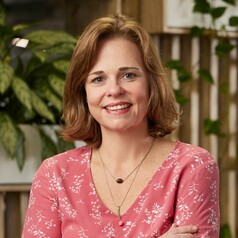
Director: Climate Change, Energy & Resilience, ICLEI Africa, ICLEI - Local Governments for Sustainability Dr Meggan Spires is the Director of the Climate Change, Energy and Resilience Workstream at ICLEI Africa. The workstream she manages serves ICLEI Africa’s network of over 400 cities, towns and regions in over 25 African countries, in terms of supporting their journeys towards climate resilience. Meggan and team manage a suite of multi-year, multi-country programmes and projects in fields such as energy access, climate change adaptation, climate change mitigation, disaster risk reduction, coastal management and ecosystem-based adaptation. The work involves capacity building, policy development, on-the-ground implementation, and unlocking climate finance at the city-scale. She has also performed the role of principal investigator for a number of cutting-edge research into development programmes on the continent.
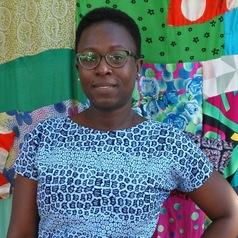
Postdoctoral Associate, University of Calgary I obtained a PhD in political science from the University of Stellenbosch in 2020. My area of interest is in the area of gender and politics. I have worked briefly as an independent consultant for Pure Earth (formerly Blacksmith Institute), an NGO that identifies, cleans up and solves pollution problems.
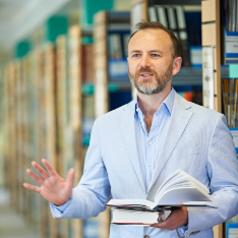
Associate Professor of Media and Culture, Anglia Ruskin University Sean’s research explores the politics of media and popular culture. He has published a number of books and has advised on television and radio programmes. He led the Film and Media unit’s submission to the REF in 2021, having coordinated its successful return in 2014, for which he convened an impact case study, which centred on a six-part television documentary series on which Sean was Series Adviser, and which drew on his book, 'Irish Blood, English Heart': Second-Generation Irish Musicians in England (Cork University Press). This AHRC-funded book was named Music Book of the Year in the Sunday Times. Sean is currently writing a book on popular music and political conflict, entitled Combat Rock. He is also developing research on popular-cultural invocations of the Anglo-Scottish border. Sean is co-convenor (and co-founder) of the Modern Irish History seminar at the University of Cambridge, which is supported by the Irish Embassy in London. He has been a member of the AHRC Peer Review College, and has appeared on Channel 4 News, the BBC World Service, RTÉ, DW-TV (Germany), CBC TV and Radio (Canada), and ABC Radio (Australia). He has written for the Irish Times, and has been cited in The Times, the Guardian, and NME. Research interests The Politics of Popular Culture Popular music Music Journalism Irish studies Migration/ethnicity
Professor of Practical Philosophy, Stockholm University Ulf Torbjörn Harald Tännsjö is a Swedish professor of philosophy and public intellectual. He has held a chair in Practical Philosophy at Stockholm University since 2002 and he is Affiliated Professor of Medical Ethics at Karolinska Institute. Tännsjö was Associate Professor of Philosophy at Stockholm University from 1976 to 1993 and Research Fellow in Political Philosophy at the Swedish Research Council in the Humanities and Social Sciences between 1993 and 1995. Thereafter, he was a professor of Practical Philosophy at Göteborg University 1995–2001. Tännsjö has been a member of the medical ethics board of the faculty of medicine at Göteborg University and the ethical committee of Karolinska Institute. He is a member of the medical ethics committee of The National Board of Health and Welfare (the Swedish Government agency responsible for the supervision, evaluation and monitoring of social services, health care and medical services, dental care, environmental health, and control of communicable diseases). Furthermore, he is a member of the editorial board of Monash Bioethics Review, Tidskrift för politisk filosofi (Journal for Political Philosophy), Philosophical Papers, the ethics section of the web psychiatric journal Psychomedia, Bioethics and the Journal of Controversial Ideas. Tännsjö is one of the few Swedish philosophers who is frequently heard in the public debate. His distinctly utilitarian ethical views have made him a controversial figure, notably within the medical establishment and for the Swedish Christian Democrats.[1] Tännsjö has been a member of the Left Party since 1970, and was involved in writing the first party programme after the party dropped the communist label in 1990. In 2001, he debated analytic philosopher and Christian apologist William Lane Craig on the subject, "If God Is Dead, Is Everything Permitted?".[2] Tännsjö is a supporter of the Campaign for the Establishment of a United Nations Parliamentary Assembly, an organisation which advocates for democratic reformation of the United Nations, and the creation of a more accountable international political system.[3] Recently, Tännsjö has published, in Swedish, an intellectual autobiography in two volumes.[4][5] A review of the second volume by conservative historian of ideas Svante Nordin calls Tännsjö’s views on abortion, euthanasia and other issues in medical ethics “consistently crazy”. Nonetheless, Nordin praises Tännsjö's intellectual honesty and integrity, noting that he is “not primarily looking to show that [his] opponents are bad people, but rather that they are wrong. This means that he endeavors to present even the opponent's argument relatively clearly.”[6]