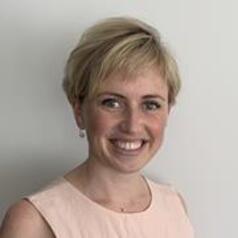
Professor of Russian history , City University of New York Susan Smith-Peter works on Russian history beyond the two capitals of Moscow and St. Petersburg. Beginning with a study of identity in the provinces of European (or central) Russia, she has branched out to investigate the regional identity of the Russian North and Siberia as well. She has published articles on topics related to civil society and regional identity in such journals as The Russian Review, Kritika: Explorations in Russian and Eurasian History and Russian History/ Histoire Russe. Professor Smith-Peter joined the CSI faculty in 2001 and teaches classes on Russian history, European intellectual and political history, and world civilization, among others. She has served as the history department representative to Faculty Senate and on various campus-wide committees. She is former chair of the Columbia University Seminar on Slavic History and Culture and has received a Fulbright for study in Russia, as well as grants and awards from the American Historical Association, IREX, Fulbright-Hays, the University of Illinois and CUNY.
Senior Lecturer in Environmental Change, Department of Economics, University of Strathclyde I am a University of Strathclyde Chancellor's Fellow (Society and Policy) since May 2019, having originally joined the Department of Economics (Fraser of Allander Institute) at the University of Strathclyde in September 2017, working on a collaborative project alongside the Department of Physics and the Stanford Photonics Research Center. My backrgound is in environmental science, though I pride myself in being a truly interdisciplinary researcher. My qualifications include an MA(Hons) in Geography and Environmental Science, and a Master of Research (MRes) in Civil Engineering, both from the University of Dundee. I completed my PhD at the University of Aberdeen in 2013 in catchment hydrology, undertaking research that explored the impacts of environmental perturbations on natural river dynamics in Scottish uplands. My research interests have continued to address the impacts of environmental change on large river systems. Between 2013 and 2016 I worked as a research fellow in the Department of Civil and Environmental Engineering at the University of Surrey, working on a NERC funded project that sought to assess and model the impacts of urbanisation and climate change on water quality in the Thames Basin. In 2016, I moved to the School of Mathematics & Statistics at the University of Glasgow, working on an EPSRC project that sought to determine the interlinkages and feedbacks that exist between water, energy and food systems in the UK. I am the Honorary Treasurer (and executive committee member) for the British Hydrological Society. I also serve as an expert reviewer for the Intergovernmental Panel on Climate Change (IPCC) for the upcoming Sixth Assessment Report, and I am part of the Position Statement authorship team for the American Geophysical Union, where I was recently involved in the determination of a climate change position statement for 2019. My research investigates the role natural resources play in economic systems, and identifying the impacts of environmental change on economic sectors at a regional, national and international scale. Through my involvement with the Global Environmental Measurement and Monitoring (GEMM) Network at Strathclyde, I seek to explore how advances in earth observational technologies can better inform us on the likely impacts of climate change at a sub-national level, helping to drive the development of relative climate and environmental policies. I am open to supporting PhD students that are interested in the role of the natural environment in economic systems, and undertaking transdisciplinary approaches to understanding the likely impacts of environmental change on human-environment systems (including economic impacts, health impacts, environmental system impacts and natural hazards).
Senior Lecturer in Discipline of International and Public Affairs, Columbia University Dr. Anya Schiffrin is the director of the Technology, Media, and Communications at Columbia University’s School of International and Public Affairs and a lecturer who teaches on global media, innovation and human rights. She writes on journalism and development, investigative reporting in the global south and has published extensively over the last decade on the media in Africa. More recently she has become focused on solutions to the problem of online disinformation, earning her PHD on the topic from the University of Navarra. She is the editor of Global Muckraking: 100 Years of Investigative Reporting from Around the World (New Press, 2014) and African Muckraking: 75 years of Investigative journalism from Africa (Jakana 2017). She is the editor of Media Capture: How Money, Digital Platforms and Governments Control the News (Columbia University Press 2021)
Doctorante en Écologie halieutique et biologie moléculaire, Institut national de la recherche scientifique (INRS) Étudiante au doctorat de biologie à l'INRS - AFSB dans les domaines de l'écologie halieutique et de biologie moléculaire. Mon sujet de recherche s'intitule "Biopsie liquide et approche omique pour le suivi de populations de téléostéens dans le golfe du Saint-Laurent". Je m'intéresse au développement de nouveaux biomarqueurs de l'état de santé des poissons qui soient sensibles, simples, pratiques, peu coûteux et minimalement invasif pour l'animal. Les espèces sur lesquelles je travaille sont toutes socio-économiquement importantes, mais les changements récents de l'environnement soulèvent des problèmatiques au niveau des pêcheries, puisque leur population est en diminution depuis plusieurs dizaines d'années. Pour ce faire, je m'inspire de l'étude du microbiome circulant, ou des différentes bactéries que l'on peut détecter dans le sang via leurs acides nucléiques. En effet, celui-ci est très sensibles et permet de détecter toutes sortes de pathologies ou de stress sur l'organisme chez l'humain, et j'essaye de l'adapter au téléostéens afin de mieux évaluer leur état de santé, puis par la suite mieux gérer la pêche sur ces espèces.
Social Scientist, University of Waikato I am passionate about creating and facilitating research which generates impact for next and end users. My work has focused on biodiversity, biosecurity, rural resilience and agriculture more generally.