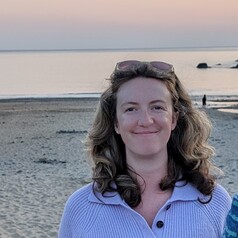
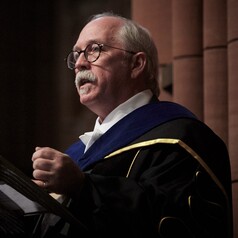
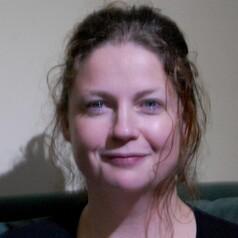
Research scientist, University of Bristol I am a researcher at the Royal Zoological Society of Scotland, working on a range of conservation genetics projects to support wildlife conservation. I am interested in the application of statistical genetic methods to the conservation of wild populations. I completed her PhD at the University of Bristol in 2022. My PhD project used genomic methods to understand hybridisation and introgression in the Scottish wildcat population.
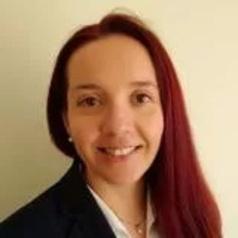
Reader in Engineering, King's College London Grazia's research focuses on solving the challenges related to the integration of power electronics devices in transmission and distribution systems, focusing on power quality issues. She has professional experience in addition to her academic accolades, and is also active in public engagement activities, with the aim of promoting STEM subjects within groups that are currently under-represented.
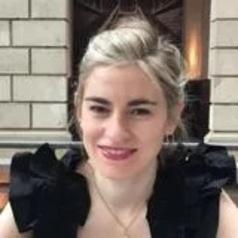
Lecturer in Engineering, King's College London Dr Laura Lander is a Lecturer at King's Department of Engineering. Laura's research focus aims to tackle the challenges of current energy storage systems and, ultimately, to develop high-performance sustainable battery devices. She applies a multi-scale research approach working at the interface between materials science and engineering including life cycle assessment and techno-economics across the battery value chain. Laura has a transdisciplinary background in energy storage technologies covering the design and characterisation of energy storage materials as well as the evaluation of environmental and economic implications of batteries in a real-world application context. She obtained her PhD from College de France in Paris and later joined the University of Tokyo, where she was awarded a JSPS postdoctoral research fellowship. She then moved to Imperial College London as a Faraday Institution postdoctoral researcher in the Electrochemical Science and Engineering group (Mechanical Engineering Department) before joining King’s College London.
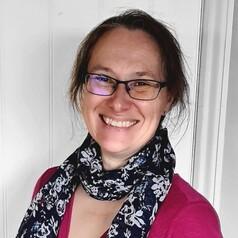
Senior Lecturer in Education, Anglia Ruskin University Sarah’s career began as a Year 5 primary school teacher in Suffolk. She later became a Special Educational Needs Co-ordinator (SENCo) and Senior Teacher. As a SENCo, she developed an interest in children and young people with social, emotional and mental health (SEMH) difficulties. Consequently, in Cumbria, she worked as a Specialist Teacher for social, emotional and behavioural difficulties (SEBD) and, latterly, autism spectrum conditions (ASC). In these roles, Sarah supported individual children, young people and their families, but also with a variety of settings delivering continuing professional development for school and local authority staff. Most recently, Sarah has lectured at the University of Northampton - mostly in Special Educational Needs and Inclusion (SENI) - and at the University of Birmingham on their Distance Learning SEBD and Autism (Children’s) courses. Whilst lecturing, she has worked with professionals from a variety of settings including: mainstream schools; special schools; pupil referral units; secure units; alternative provision and residential schools both here in the UK and Worldwide. Sarah’s research interests lie in the areas of Special Educational Needs, Disability and Inclusion, specifically attachment and relationships. Her PhD is entitled ‘The Attuned School’: the effects, and effectiveness, of developing relationships between pupils with attachment difficulties and significant adults. Sarah’s research explored whole school approaches to supporting individuals with attachment needs. She is also particularly interested in the cross-over in presenting behaviours between autism, pathological demand avoidance and attachment. With the latter, she has conducted small-scale research working with teachers on the Coventry-Grid (Moran, 2010) assessment tool.
Chair Professor, Environmental Engineering for Sustainability, University of Strathclyde Professor Kalin’s 35 year academic and professional career has focused on Environment Science and Engineering to underpin global sustainability. His scientific experience ranges from Hydrogeology and Water Resources evaluation of local to regional scale groundwater – surface water systems, study of global biogeochemical cycles and climate change, to isotope hydrology and geochemistry for water resource management. Prof Kalin's environmental engineering credentials include application of site specific groundwater treatment technologies, contaminated land remediation design (including sustainable remediation methods), and development of new chemical analysis techniques for soil, air and water to better manage risk to humans and the environment.
Senior Lecturer in Health Psychology, City, University of London I completed my PhD in 2009. I am also a fellow of the Higher Education Authority. I previously worked in the third sector with homeless persons who have drug and alcohol addictions. I teach health psychology, qualitative research methods and addiction.