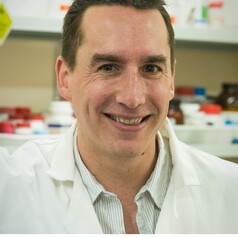
Professor of Biotechnology, Te Herenga Waka — Victoria University of Wellington I am a microbiologist and enzyme engineer, and my primary research focus is on discovery, characterisation, engineering and application of useful bacterial enzymes, and of novel antibiotics to counter the spread of multi-drug resistant bacteria. I have a particular interest in tailoring enzyme activities by directed evolution - a powerful engineering approach that applies Darwinian evolutionary principles at a single-gene level, using iterative rounds of focused mutagenesis followed by artificial selection of enhanced enzyme variants to improve desirable activities. I am also excited by the discovery of “unknown unknown” enzymes from soil-dwelling bacteria – enzymes we don’t presently know about that can catalyse useful chemical reactions, such as degradation of recalcitrant environmental pollutants. This approach tends to uncover enzymes that are relatively weak and ineffectual to begin with, but which can prove to be excellent start points for directed evolution, seeking to create practical solutions to major problems.
Research Associate, United States Studies Centre, University of Sydney Samuel Garrett is a Research Associate at the United States Studies Centre. He works across the Centre’s research programs, with a focus on US politics and economic security issues. Prior to joining the Centre, Samuel was a Junior Analyst with Geopolitical Futures, tracking daily geopolitical developments and long-term trends across the Indo-Pacific region. He was also a research assistant in the School of Medical Sciences at the University of Sydney, where he coauthored multiple research papers on anatomical history. Samuel holds a Bachelor of Arts and Bachelor of Advanced Studies (Politics & International Relations) from the University of Sydney, where he majored in Arabic. He completed an academic exchange at the American University of Beirut, and study programs at Humboldt-Universität zu Berlin and Universitas Kristen Satya Wacana in Salatiga, Indonesia.
Research Associate, United States Studies Centre, University of Sydney Ava Kalinauskas is a Research Associate at the United States Studies Centre. Ava sits on the Youth Advisory Council to US Consul General Christine Elder. She was previously a Program Assistant at Women In International Security Global (WIIS), a Washington DC-based organisation dedicated to advancing the UN “Women, Peace and Security” agenda. Ava holds a Bachelor of Arts Dual Degree from Sciences Po Paris and the University of Sydney. She graduated from Sciences Po with Cum Laude Honours, majoring in Political Humanities. At the University of Sydney, she was a Dalyell Scholar and a recipient of the IPAA NSW GC Remington award.
Associate Professor of Behavioural Science, Durham University Drawing on social psychological principles, I investigate how cues in the environment impact health behaviours, and how this knowledge can be translated into effective behaviour change interventions to improve health and reduce inequalities. The bulk of my work to date has looked at how cues such as labelling and advertising affect people’s decisions to eat (un)healthily, drink alcohol, and/or smoke tobacco. Another strand of my research has focused on developing and evaluating interventions to increase societal equality and egalitarianism more generally.
Professor of Behavioural Science, Durham University I am a Behavioural Scientist working at Durham University. My research focuses on how social hierarchies impact people’s thoughts, feelings, and actions. I am also engaged in translational work on behaviour change.
PhD Candidate in Behavioural Science, Durham University Jack completed his masters in 2020 as a member of the inaugural behavioural science MSc at Durham University with a dissertation focusing on meat consumption habits and producing interventions that can bring the UKs meat consumption in line with the goals outlined by the Committee on Climate Change and IPCC. Jacks is currently pursuing a PhD at Durham University extending their research on meat consumption by researching and developing food labels that can effectively reduce peoples likelihood to select a meat meal when making food choices. Their research interests broadly span many areas of the environment, he leads projects on meat consumption, environmental activism, diversity in environmental movements, and public perceptions of rewilding and greenspace management. In addition to this Jack has done research on conspiracy theories, risk perceptions and behaviours during the COVID-19 pandemic.