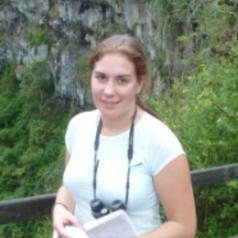
Lecturer in Psychology, University of Hull Dr Richard O'Connor is a cognitive developmental psychologist with research interests in cognition from infancy through to adulthood. Particular areas of interest include theory of mind, representation of objects and actions, and word learning. He joined the University of Hull in August 2016, after completing his PhD at the University of Cambridge and teaching positions at Royal Holloway and the University of Oxford.
Associate Professor, School of Public Health and Preventive Medicine, Monash University Adjunct Associate Professor Joy Lee leads the Asthma and Allergy Unit at the Austin Hospital and consults for Melbourne Allergy Asthma & Immunology Consultants, as well as in the public sector at the Alfred Hospital and Monash Medical Centre. She has a special interest in the management and treatment of allergic diseases, including allergic rhinitis and allergic asthma. She has experience in the use of immunotherapy for grass pollen and dust mite allergy as well as monoclonal antibody treatments for severe asthma and urticaria. Dr Lee has a PhD with the School of Public Health and Preventive Medicine at Monash University. Her thesis focus was on improving asthma inhaler usage and difficult to control asthma. She has also undertaken research on epidemic thunderstorm asthma. Dr Lee is an investigator in clinical trials for therapies in asthma and allergic nasal disease. Her research has been recognised with awards from both the Thoracic Society of Australia and New Zealand and the National Asthma Council. She is a sought-after speaker, media expert and medical educator.
Professor of Biology and Environmental Studies, Whitman College Research Interests: evolution and ecology, especially of birds; sources of bias in empirical research.
PhD student, School of Biosciences, The University of Melbourne Elliot Gould is a PhD candidate at the School of BioSciences, and a Quantitative Research Assistant on the repliCATS project at the School of BioSciences, University of Melbourne. Their PhD investigates the transparency and reproducibility of ecological models in applied ecology and conservation decision-making. Elliot seeks to use data science techniques to advance the open-science movement by improving the transparency and reproducibility within their home discipline of ecology and conservation science. Within this field, Elliot’s primary interest is in building ecological models for aiding ecological management and conservation decisions. Other research interests include decision-theory, Structured Decision Making, and plant ecology (especially grasslands of the Victorian Volcanic Plains). They have an enthusiasm for teaching and skill-sharing, particularly with regard to building a strong community of practice in emerging open-science methodology and computational biology within ecology and conservation.
Postdoctoral Researcher , The University of Melbourne I am a Post-doctoral researcher working with Fiona Fidler in the School of BioSciences at the University of Melbourne. My time is split between two very interesting and very different projects SWARM and Research on Research. The Research on Research project involves working on a range of projects aimed at understanding and redressing the reproducibility crisis. I am specifically interested in trying to improve reproducibility in ecology and related fields. At the Ecological Society of America 2017 conference Ashley Barnett and I presented a poster on the rates of questionable research practices in Ecology and Evolutionary Biology. The paper will hopefully be in the literature before too long but in the mean time, the headline is that we use questionable research practices a lot….but that’s the same as psychology researchers. The next thing on my list is working out how successful the Transparency and Openness Protocol (TOP) guidelines have been in increasing the openness of publications. The SWARM project aims to advance collaborative reasoning. There are two branches of this work: one involves developing an online interface to assist group collaboration, the other involves conducting experiments on reasoning and group work to help inform the online interface. I’m involved in the latter and am currently trying to understand how anchoring and production loss are likely to influence the answers group members give in collaborative reasoning tasks My training is in ecology. I submitted my PhD in January 2017 as part of the Quantitative and Applied Ecology Group, based in the School of BioSciences at the University of Melbourne. During my PhD I investigated uncertainty around ‘woodland birds’; how we classify them, why we classify them differently, how this effects our conclusions and what we can do about it. I was lucky to have supervision from Mick McCarthy, Libby Rumpff and Cindy Hauser from Melbourne Uni and Georgia Garrard of RMIT University. I began my PhD in 2013 with a thirst to save the environment. However, working around researchers doing ground breaking research changed my perspective slightly. The knowledge that goes into these researchers’ work is phenominal and has the potential to provide important ecological insights but so often the work falls short of being used. I see it as my mission to make sure that the (fantastic) research these people are doing is as useful as it can possibly be. In my ‘free time’ I put together a nomination to list the Temperate and Sub-tropical Woodland Bird Threatened Ecological Community as a Threatened Ecological Community under the Environment Protection and Biodiversity Conservation Act, working closely with researchers from all over Australia.
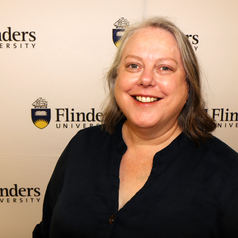
Lecturer, Flinders University Dr Caroline Phelan has an extensive clinical background working across the acute healthcare environment, in particular, critical care and pain management. She has worked in senior clinical roles, as well as in management, education and research positions. She works in the College of Nursing and Health Sciences at Flinders as a balanced academic and is the course coordinator for postgraduate palliative care programs. Her research interests include decision-making, palliative care, pain management and critical theory.