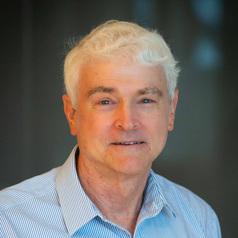
Research Fellow, Labour, Development & Governance Unit, University of Cape Town BA (Hons), University of Stellenbosch (1977); LLB, University of Cape Town (1980) Founding Director of the Labour Law Unit (now the Labour, Development & Governance Unit, University of Cape Town) (1987) Associate Professor of Commercial Law, University of Cape Town (1991-2000) Adjunct Professor, Law School, University of Cape Town (2001-2012) Director of the School for Advanced Legal Studies, University of Cape Town (1992) Senior Commissioner of the Commission for Conciliation, Mediation and Arbitration, South Africa (1996-99) Editor of the South African Industrial Law Journal (to 1999) Attorney of the High Court of South Africa Solicitor of the Supreme Court of New South Wales Arbitrator of the NSW Compensation Commission (2002-2006) Senior Fellow at the Law School of the University of New South Wales ( 20012-19) Accredited Mediator under the National Mediation Accreditation System (Australia) (ongoing) Director of CoSolve (www.cosolve.com.au) (2000-) Consultant to the International Labour Organisation (ongoing)
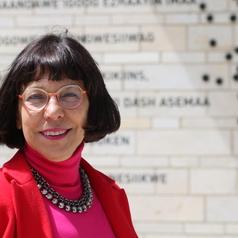
Professor, History, University of Winnipeg Serena Keshavjee grew up in Kenya and immigrated to Toronto with her family in 1969. She lives in Winnipeg, where she teaches Modern art and architecture at the University of Winnipeg. Her academic work focus on how artists use science, especially in the Modernist period.
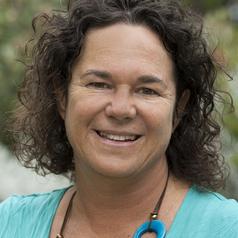
Deputy Director, Centre for Marine Ecosystems Research, and Associate Dean of Research, Edith Cowan University I have three main streams of research in coastal biology and ecology largely focusing on seagrass ecosystems. I use a variety of tools and methods such as ‘manipulated’ and ‘observational’ field and laboratory studies using ‘eco-physiological’ and ‘molecular’ tools. 1. Human impacts in coastal ecosystems Largely focusing on impacts through light reduction, climate change, and dredging How do plants respond to different stressors (developing sub-lethal indicators)? What levels of stress can they cope with? What are the consequences of disturbance? 2. Seagrass-grazing interactions How much is consumed? How do plants cope with grazing? 3. Seagrass evolution and taxonomy What are the evolutionary relationships in seagrasses, particularly Posidonia and Halophila?
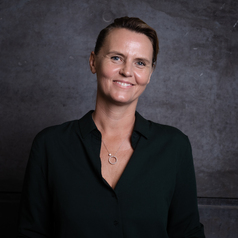
Researcher, Southern Cross University Dr Kate Neale is a childhood studies and disability studies researcher who explores the benefits of time spent gardening and in greenspaces on wellbeing and social connection. She has a particular interest in how gardening and greenspaces can help change the dominant narratives and common perceptions of vulnerable or priority populations. She believes gardening is a wonderful way to demonstrate meaningful participation on issues that affect us all and is passionate about the design of greenspaces that are truly accessible and inclusive to all. Her groundbreaking work has illuminated the positive impacts of horticultural activities on physical and mental health, social inclusion and access to support services. Her dedication to this field not only contributes to advancing our understanding of the positive effects of nature on wellbeing, but also empowers communities to create nurturing environments that foster growth and healing among communities.
PhD Candidate and Part-time Teacher, Aberystwyth University Sophie is currently a PhD Candidate at Aberystwyth University, specialising in Post-Devolution Welsh Gothic Literature. She is also a part time teacher for the university's School of Languages and Literature, currently teaching 19th Century Literature & Climate and Contemporary Writing. Born and raised in the Rhondda Valley, Sophie now resides in Lampeter, West Wales with her two-year-old daughter.