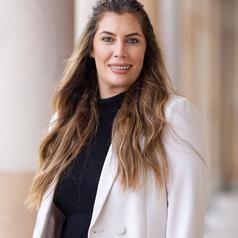
Senior Lecturer in Law at the University of Queensland, The University of Queensland Dr Dani Linder is a Bundjalung/Kungarykany/Yorta Yorta woman from Grafton, New South Wales, a public lawyer and legal academic at the University of Queensland. Dr Linder's research interests include: -Electoral law and policy reform; -International human rights law; -Indigenous people and Australia's criminal justice system - Indigenous cultural identity; -Indigenous political participation and disenfranchisement; and -Indigenous constitutional recognition.
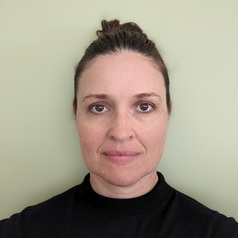
Accredited Practising Dietitian, PhD candidate, University of Wollongong Olivia Wills is an Accredited Practising Dietitian and member of Dietitian's Australia. She earned her Bachelor of Nutrition and Dietetics (Hons1) as a Dean's Scholar at the University of Wollongong in 2021. Currently, she is pursuing a PhD at the University of Wollongong, with a focus on multiple sclerosis and diet, driven by her passion for advancing our understanding of the impact of nutrition in health and disease. Olivia's research is supported by a post-graduate scholarship from MS Australia. Olivia is also working clinically, providing dietetic counselling services for a diverse range of medical conditions, including endocrine, gastrointestinal, metabolic and neurologic disorders, including MS.
Accredited Practising Dietitian, PhD Candidate, University of Wollongong Karen is an Accredited Practising Dietitian who has worked in the public hospital and private community settings. She is passionate about enabling people to make positive dietary changes, leading to improvements in health and wellbeing. Karen has previously worked in the information technology industry, having also completed a bachelors degree in applied mathematics and computer science. She is now bringing both skillsets together to undertake a PhD at the University of Wollongong, where she is exploring the role of diet in multiple sclerosis, aiming to improve the lives of people living with MS.
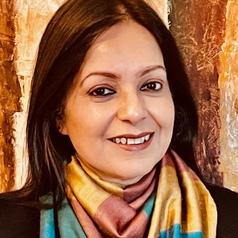
Professor of Literature, Australian Catholic University Debjani Ganguly specializes in post-1945 English and global anglophone literatures. Her research is informed by postcolonial and world literary theories, new formalisms, new materialism, media ecologies, philosophies of technology and digitality, human rights discourse, and environmental concerns. She is the author of This Thing Called the World: The Contemporary Novel as Global Form (Duke 2016) and Caste, Colonialism and Counter-Modernity (Routledge 2005), and the editor of the two- volume The Cambridge History of World Literature (2021). Her third monograph, Catastrophic Modes and Planetary Realism, is forthcoming from Cambridge University Press. She is the general editor of the CUP monograph series, Cambridge Studies in World Literature. Debjani is a Fellow and Life Member of Clare Hall, Cambridge, Fellow of the Royal Asiatic Society of Great Britain and Ireland, and advisory board member of the Harvard Institute for World Literature, the Trinity Long Room Hub at Trinity College Dublin, and the Academy of Global Humanities and Critical Theory (Bologna). As director of humanities institutes at the University of Virginia (2016-2023) and the Australian National University (2007-2014), Debjani Ganguly has fostered international projects and networks in the fields of environmental humanities, digital humanities, informatics, big data, and AI, human rights and refugee migration, and global south studies. Prior to her appointment at the University of Virginia, she directed the Humanities Research Centre (HRC) at ANU. Debjani completed her doctoral work at ANU in 2002 and served as tenured faculty in ANU’s School of Literature, Languages and Linguistics until 2015.
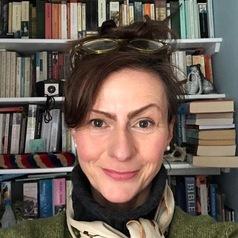
Professor of Modern British History, Durham University Prof. Julie-Marie Strange studied for her PhD at the University of Liverpool between 1996 and 2000. She began her career at Birkbeck, University of London, before joining the University of Manchester in 2003. She moved to Durham University in October 2019. Julie-Marie is an historian of modern Britain and Fellow of the Academy of Social Sciences with long standing research interests in the history of inequalities and emotions. She has published widely on death, grief and poverty, fatherhood and class, charitable fundraising, the emotional politics of money, and on pedigree dogs and pet keeping. More recently she has begun working on social class in the countryside. Julie-Marie has run research grants funded by the ESRC, AHRC and Leverhulme Trust. She has experience working with a range of non-HE organisations, including the National Trust, Salvation Army International Heritage Centre, Beamish: the Living Museum of the North and Blue Cross Pet Bereavement Support Service. She is a co-founder of The Pet Loss Network (petlossnetwork.org).
Masters student in Developmental Psychology, Queen's University, Ontario I am currently a second-year MSc. student studying Developmental Psychology at Queen's University in the Adolescent Dynamics Lab under Dr. Tom Hollenstein's supervision and will be continuing into my doctoral studies. I completed my BScH. degree at the same institution with a Specialization in Bio-Psychology. In terms of my research, my long-term goal is to gain a deeper understanding of adolescent digital experiences. Specifically, I aim to explore how youth engage with digital technologies, when, and for whom these technologies are most beneficial. Additionally, I am interested in how parents might be shaping such adolescent digital experiences. So far, my research has centered on Digital Emotion Regulation, examining how adolescents use digital technologies to manage their emotions (e.g., texting a friend for social support). However, my current master's thesis focuses how adolescents and parents navigate conflict discussions related to digital topics (e.g., screen time, videogaming, social media) in comparison to non-digital or traditional sources of conflict (e.g., chores, schoolwork, sibling disputes).