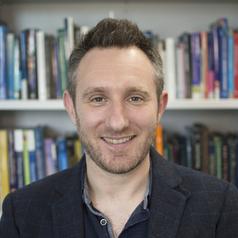
Royal Academy of Engineering Research Fellow, University of Oxford Robert House is a materials chemist working on next generation rechargeable battery technologies. His research focuses on new materials for lithium-ion, sodium-ion and beyond Li batteries and understanding the fundamental charge storage mechanisms and structural transformations which determine cell performance. Dr House is a Senior Research Fellow in the Department of Materials at the University of Oxford. In 2021, he was awarded an independent research fellowship by the Royal Academy of Engineering to work on developing lower cost, more sustainable alternatives to the Li-ion battery. Before this he was a Faraday Institution Research Fellow working on the CATMAT project researching high energy density cathode materials for next generation Li-ion batteries. He has a first degree in Chemistry from the University of Cambridge and completed his DPhil in 2020 at the University of Oxford under the supervision of Prof Sir Peter Bruce. In 2023, Dr House was included on the Forbes 30 Under 30 list for Science & Healthcare professionals in Europe.
Associate Professor, School of Psychology, University of Lincoln I am a Clinical Psychologist and Associate Professor in the School of Psychology at the University of Lincoln. I worked in the UK National Health Service for over a decade, in clinical practice, management and training. I joined the University of Lincoln in 2007, I lead the BSc Psychology (Coaching Psychology) pathway and teach on the MSc Counselling programme. I mainly teach the theory and practice of psychotherapy and coaching. My research centres on Character Strengths, the positive qualities of character (such as gratitude, wisdom, hope, curiosity, kindness and so on) related to wellbeing and productivity. I have authored two books, and dozens of articles and book chapters, and act as reviewer for several leading academic journals in applied psychology. I have delivered coaching, training and keynotes across a broad range of public and private sector organisations, and sit on the Faculty of the VIA Institute for Character.
Professor of Humanitarianism and Development, University of Bath Jason Hart is a social anthropologist by training (BA, MA, Ph.D University of London). He joined the University of Bath in September 2009 after seven years as a researcher and lecturer at the Refugee Studies Centre, University of Oxford. He is also Visiting Lecturer at the Centre for Children’s Rights Studies, University of Geneva Much of Jason’s work has explored the experience of and institutional response to young people on the margins of society and the global economy. Themes such as protection, child rights, peacebuilding, home, militarisation and asylum have been central to this research. Much of his research has been undertaken in situations of political violence and displacement. Jason has worked in South Asia (Sri Lanka, Nepal, India and Bhutan) and, increasingly, in the UK. However, his principal area of interest is the Middle East, particularly Israel / occupied Palestinian territories and Jordan. Jason has been employed as a consultant author, researcher, evaluator and trainer by various UN, governmental and non-governmental organisations. These include UNICEF, Save the Children, PLAN, Care International, and the Canadian International Development Agency. He has also served as an advisor to the UN in the formulation of studies, guidelines and policies.
Postdoctoral Research Fellow, Leibniz Centre for Tropical Marine Research I am a marine scientist originally from Mauritius Island. I have a PhD in the field of marine biochemistry from the University of Mauritius. After my PhD, I did my postdoctoral research at the Institut français de recherche pour l'exploitation de la mer (IFREMER) in France where my research work was focused on the toxic effects of harmful microalgae. Currently, I am a postdoctoral research fellow of the Alexander von Humboldt Foundation at the Leibniz Centre for Tropical Marine Research and the University of Oldenburg in Germany where I am investigating the nutraceutical potential of selected jellyfish species.
Professor Emeritus of Political Science, College of Saint Benedict & Saint John's University Current Position is Research Associate and Honorary Professor at Nelson Mandela University and Professor Emeritus of Political Science at the College of St. Benedict and St. St. John's University (USA) Author or editor of twenty books and more than 100 academic articles focused on Latin America and South Africa. Research focus is revolutionary parties and social movements. Over 50 years of university teaching with a focus on international relations.
Associate Professor of Economics and Public Policy, Arizona State University Dr. Lily Hsueh is an Associate Professor of Economics and Public Policy at the ASU School of Public Affairs and a Senior Global Futures Scientist at the Julie Ann Wrigley Global Futures Laboratory, Arizona State University. Hsueh is currently a Visiting Scholar at the Woods Institute for the Environment, Stanford University. Her areas of expertise are natural resource and environmental economics and policy, political economy, governance, applied econometrics, and mixed methods. Hsueh’s current research investigates how different forms and scales of alternative and decentralized governance systems (e.g., market-based policies, voluntary programs) interact with and shape the public provision of public goods and the management of natural resources and the environment. Prior to joining ASU, Hsueh held the National Research Council Postdoctoral Fellowship at the National Oceanic and Atmospheric Administration. Before academia, Hsueh served as a Senior Analyst in Economic Research at the Federal Reserve Bank of San Francisco. She received a Ph.D. in Public Policy & Management from the University of Washington and a MSc in Economics from University College London. Hsueh’s undergraduate degree was a BA in Economics from UC Berkeley.